Posts

Showing posts with the label Dewick's Plusia

Our ever-changing moths
Image
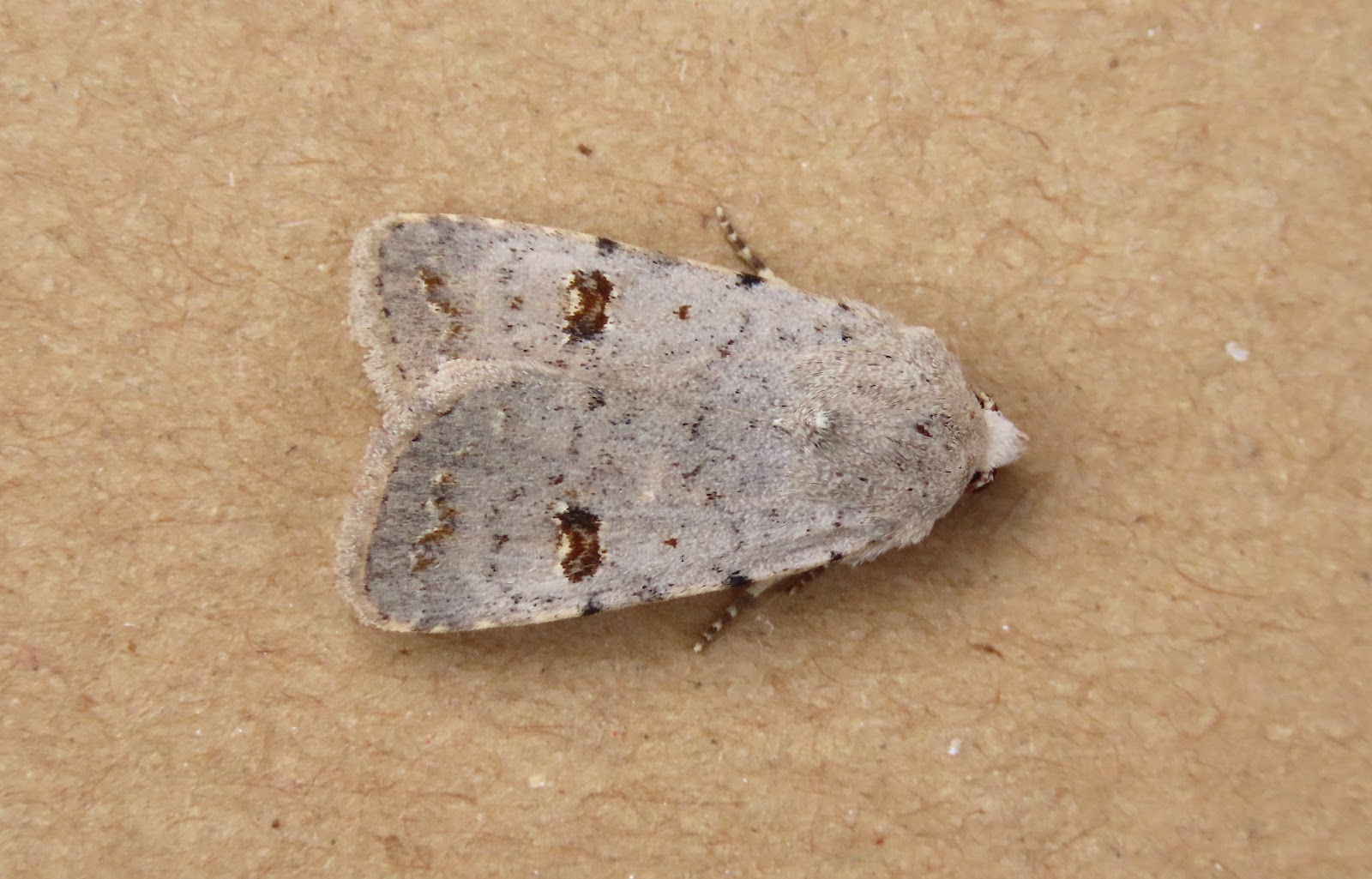
This morning saw the capture of a Clancy's Rustic (above) at the MV - the first to be recorded here in Banstead and my 652nd species (of which 413 are macros) for the garden. This species was unknown in the UK until my friend Sean Clancy caught and identified one in New Romney, Kent in 2002. As much as it is a moth that has only been reliably recorded in the country for 21 years, it is no longer a rare migrant but has now become a colonising resident. It's appearance in Banstead was not unexpected, in fact was overdue, having colonised southern coastal counties and is now making inroads into Surrey and the London area. Our moth fauna is in a state of flux - of course, no group of creatures stays still, but the range of many moths have exhibited great changes in recent years, particularly migrants colonising the south-east of England. Others, pure residents, have suddenly increased in numbers so that they now appear in areas that they shunned not that long ago. I thought it migh...
Huffing, puffing, ranting

Image
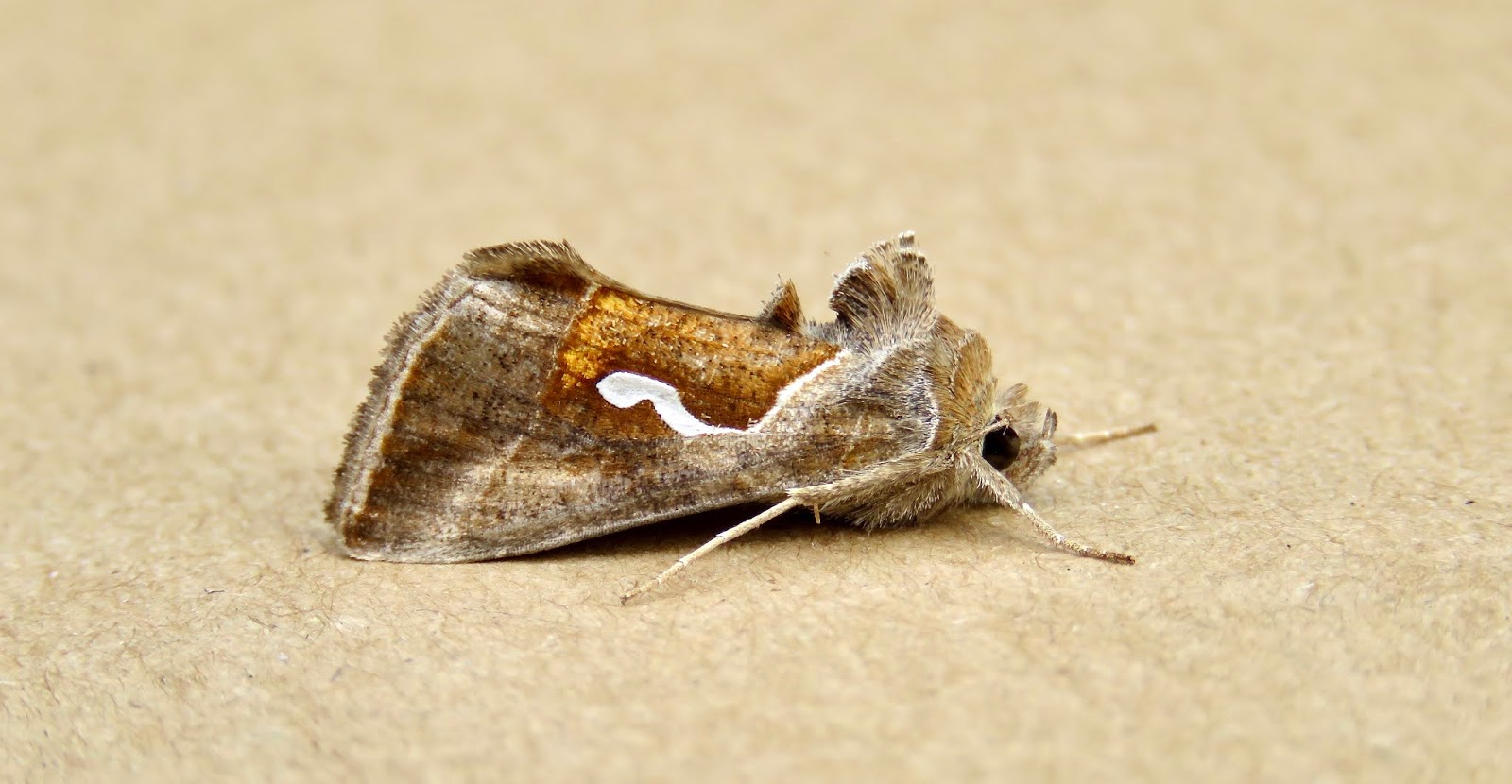
I have been engaged in a lot of huffing and puffing around the local patches for little birding reward - however, the inverts have saved recent days, with a male Lesser Emperor at Spynes Mere (Holmethorpe) yesterday afternoon, and a smart Dewick's Plusia (above) in the garden MV this morning. This is the third Banstead record in 12 months, leading me to suspect that it is now established in the area. I haven't had a rant on here for a while, as the solidity of my inner calm defences has been strong enough to deflect all of the negative bullets and arrows that have been fired my way, but yesterday's visit to Holmethorpe tipped me over the edge. For those of you that have not visited this group of sand pits before, let me give you a bit of background. The area has been plundered for sand and Fuller's Earth for many years. There are two substantial waterbodies, Mercer's Lake and Mercer's West. The former used to be viewable from a footpath that runs around its circ...

The one that almost got away

Image
These warm, oppressive nights might make sleeping difficult for us humans, but night-flying insects positively thrive in them - just check a moth trap the morning after one! The past two nights have seen obscene numbers of Jersey Tigers at the garden MV - 53, followed by 59 - which is small fry compared to some totals that have been posted. Last night's highlight was a new macro moth for the garden, a Dewick's Plusia. A former rare migrant, it is now slowly establishing itself (maybe just temporarily) in south-east England. Beddington Farmlands, some six miles to the north of me, is one such location and I had expected one to show up here eventually. This is the 627th species of moth here in Banstead, of which 407 are non-micros. As I went to pot it, it flew off. Had this been 30 years ago I would have been hyperventilating as it would have been a very rare migrant. As it was, a shrug of the shoulders accompanied my smile. The photograph above, in true Blue Peter style, wa...

Dewick's and Rosy

Image
Dewick's Plusia  Rosy Wave You might be getting a bit tired of these Dungeness moths by now (at least those of you that are still left visiting this ailing blog), so I promise that this will be the final revisiting of my 'summer sojourn'. The first image is a bit of a cheat as the Dewick's Plusia actually came from Sissinghurst, some dozen miles inland. I had seen this species before, back in 1988, from Greatstone, where it had settled on the glass of a lit window of an estate agents shop. The second moth is of one of three Rosy Waves that were trapped in Barry Banson's Greatstone garden. I helped him process his two traps each morning which was tremendous fun and very rewarding. Back to more local stuff from now, and with a scorchio weekend promised maybe something of note will come along...

Dewick's Plusia breeding in the UK

I might be a bit previous in claiming this, but apart from the finding of larvae it seems as if Beddington Sewage Farm is home to a population of Dewick's Plusia. Several weeks ago Peter Alfrey, whose home borders the farm, had a moth of this species fly into a lit room at a time of little migrant activity. This has been followed by his recording of several more since. Today Johnny Allan found an adult at rest on vegetation close to the birder's hide. A hunt, at the right time, for larvae will be made. Foodplants include Common Nettle, Yarrow and Chamomile. It will be interesting to see how far and quickly this population will spread.