Posts

Showing posts with the label Mediterranean Gull

Holmethorpe Med

Image
After several days of uncomfortably hot temperatures, it was back to just having to endure a moderately 'hot' day, with the added bonus of a moderate easterly breeze. Yesterday afternoon, Gordon Hay took on the role as a 'Mad dog' or an 'Englishman' by going out to Holmethorpe in the midday sun, and finding a Lesser Emperor, a species of Odonata that we both thought long overdue at the sand pits. This morning, I tried to emulate him. On arrival there was not an awful lot yet on the wing, so I walked along the northern side of Mercer's Lake and kept one eye on the water's edge for any dragonfly action. A few were flying as I reached the north-eastern corner, so edged down to be closer - Black-tailed Skimmers and Emperor Dragonflies, with a few Common Blue Damselflies for company. A fallen tree, partially submerged and only 25m from where I stood, was acting as a perch for a number of Black-headed Gulls. I idly scanned them, realising that in the water alo...

Underwings and darvic rings

Image
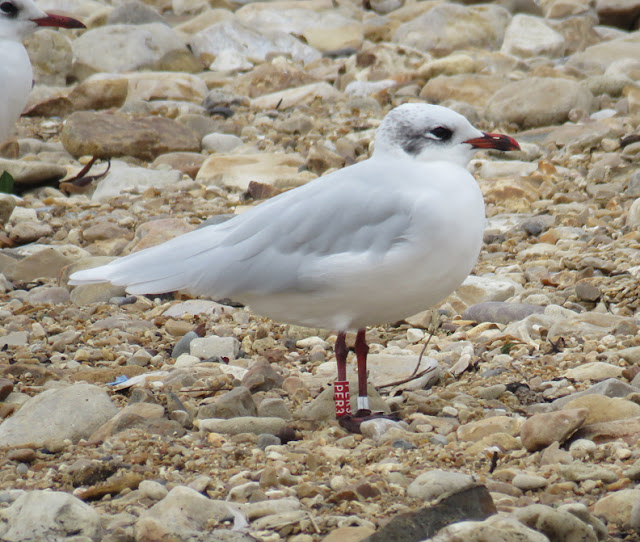
The month of September is only four days old, but the weather has turned characteristically autumnal - breezy and showery with a touch of mugginess. Few butterflies were on the wing, although those hardy Vanessids still manage to take strong and meaningful flight. This Painted Lady landed for long enough to show off its delicate and intricate underwing pattern. On of the best in my opinion. Details of the colour ringed Mediterranean Gull that I saw yesterday on the River Arun at Ford has come back speedily from Hungary. They are: Ringed as a nestling on 17 June 2016 at Bugyi, Pest, Hungary . Subsequently seen as follows: 9 July 2016 Rudmannser Tech, Austria 22 April 2018 Antwerp, Belgium 13 January 2019 Vila Nova de Milfontes, Portugal 18 January 2019, Icklesham, GB 27 March - 17 April 2019 Hayling Island, GB

Messing about by the river

Image
This morning I embarked on a six hour walk along the western bank of the River Arun, starting at the Black Rabbit Pub, Arundel, stopping at the A259 road-bridge, then retracing my steps. Apart from a brief stretch through Arundel, this is a walk in the open, with the billiard-table flat flood-plain open to the big skies and intensively farmed, although there are many reed-fringed dykes, small copses, hedgerows and rank grassy fields dispersed across the agriculture. Whereas the river banks are reed-fringed north of Arundel, the river to the south looks altogether more estuarine, with open muddy slopes contrasting with concrete banking. My birding highlight was a flock of 40 Yellow Wagtails (two of which above), that were found in a field south of the railway bridge. Another five were recorded back towards Arundel. Migrant passerines were thin on the ground, with a handful of commoner warblers being joined by a single Common Redstart and small numbers of Swallow and House Martin...

Well Choughed

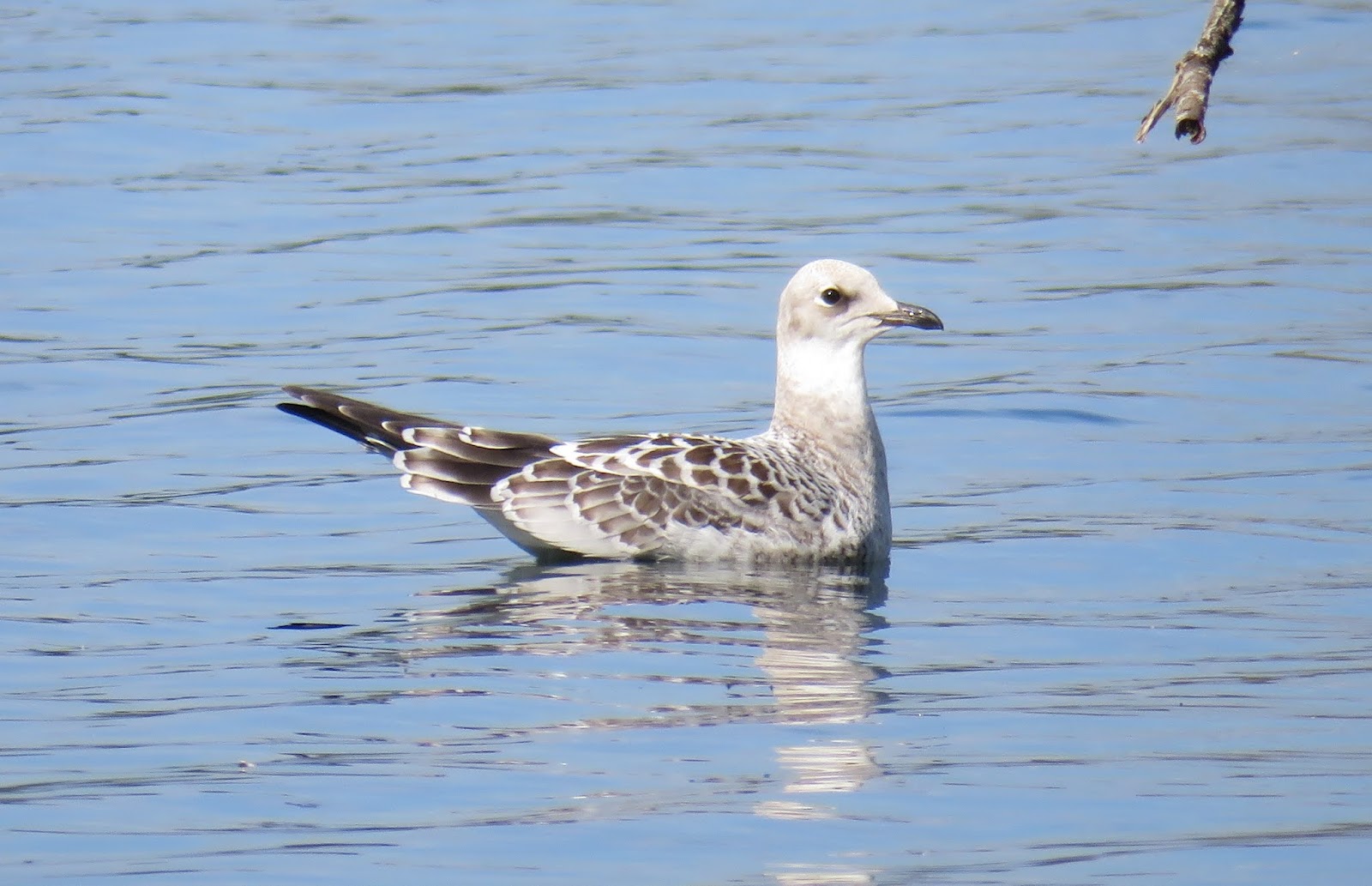
Katrina and I are down in Porth, a small Cornish town due east of Newquay. Some friends of ours have just moved down here and we are availing ourselves of their hospitality. They insisted that I bring my optics along and have a bird watch and I am happy enough to oblige! An Internet search revealed little about the general area for birding. It is easy to assume that any part of the British coast, particularly one this far down in Cornwall, will have a rich ornithological history. My arrival was one of not knowing what to expect. It certainly has potential, with a rocky coast punctuated by sandy bays, cliff tops with discrete areas of Tamarisk scrub and ribbons of hedgerow. Today saw two highlights in my couple of hours of birding - a low-flying and vocal Chough plus a second calendar year Mediterranean Gull. A modest but pleasing start.

The birds in Spring 2017

Image
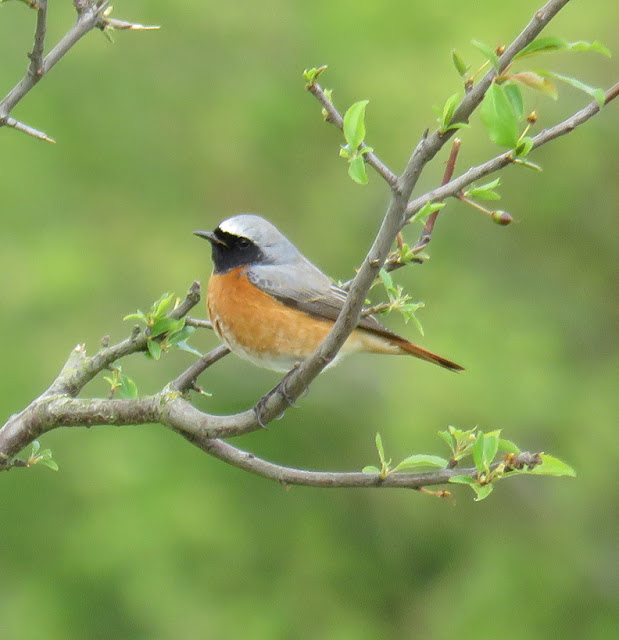
Common Redstart, Priest Hill, April Well I did put a lot of effort in locally, honest! For a change and to 'bird off piste' I adopted an area of abandoned playing fields between Banstead and Ewell known as Priest Hill. It has recently been handed over to the Surrey Wildlife Trust to manage, although there is not an awful lot that can be done bird-wise, save fence off areas from the hordes of dog-walkers and their canine friends in an attempt to protect the handful of Skylarks that breed there. Almost daily visits throughout the spring did produce a few passage migrants, most notably Jack Snipe, Common Snipe, Ring Ouzel, Grasshopper Warbler, several Common Redstarts, plenty of Wheatears and a very healthy population of Common Whitethroats were in song throughout mid-April and into the summer, with the odd Lesser Whitethroat for good measure. I neglected Canons Farm, but did manage to bump into a Ring Ouzel on May Day. Northern Wheatear, Priest Hill, May Common Wh...

News on the Polish Med Gull

Image
Last week I mentioned an adult Mediterranean Gull that I saw on Charmouth beach, sporting a red plastic ring (PER3). Through the excellent Colour Ring Birding website, I reported the details and received the following information from the Polish scheme behind the ringing of this particular bird: Ringed on 13/05/2007 as a 3rd calendar year female, nesting at Polder Bukow, Krzyzanowice, Slaskie, POLAND, by Jakub Szymczak So the bird was two years old when ringed, which makes it 12 years old. This colour ring reading can become addictive!

A Pole in Dorset and a moan

Image
Just back from a short break in Dorset, and although the optics and camera came along, they played second fiddle to everything else... highlights were up to three Mediterranean Gulls on Charmouth beach, including this adult (above) sporting a red plastic ring (PER3) which suggests that it was ringed as part of a Polish study. Also seen were at least two Dippers (at Lyme Regis (below) and Charmouth). There has been a bit on social media recently about some people's dislike of the shortening of bird's names into an attempt at creating a 'cool birding patois'. I couldn't agree more - you can stick your Spot Shank, Pink Stink, Grot Finch, Yank Start and Spot Flit up your... People also still seem to be congratulating each other on having the ability to spend lots of money, drive hundreds of miles and look at other birder's finds; they still refer to seeing said bird as 'scoring', 'bagging' and 'nailing'; also continue to take selfie...

Mediterranean Gulls

Image
A fortnight at Dungeness will inevitably throw up a number of highlights and provide plenty of photographic opportunity, even for those of us with a modest bridge camera. So please excuse me as I milk my 'Dunge time' to produce a number of posts - some will be of rarity, others not so much - but each one will hopefully illustrate what a wonderful place Dungeness is, and the wealth of wildlife that can be seen there. First up is the Mediterranean Gull. Most days would produce them, usually the first sign being their distinctive call as they floated by overhead. The Firth hide on the RSPB reserve was a good place to observe them at close quarters, although they would stay for a just brief period, time for a quick wash and preen before heading off. Is there a finer sight than an adult Mediterranean Gull? Yes - two of them! They would often come down to bathe with Black-headed Gulls just outside the hide This second-summer (or third calendar year bird if you prefe...

Well, where did they all come from?

A benign afternoon - mild, sunny and a gentle westerly wind - is not the stuff that is usually the catalyst for the rewriting of Dungeness sea watching records. It began with Owen L reporting that there were 40 Mediterranean Gulls on the sea off of the fishing boats. Dave W then went to take a look to be stunned with ten times as many - some quite far out, others sitting in flocks on the sea. During his period of observation many of them started to drift off into Lade Bay, with Dave himself following in their wake. These events in turn encouraged Martin C and Tony G to sea watch from the boats and myself to take up position between there and the lifeboat. In one and a half hours I recorded 313 Mediterranean Gulls moving west, along with 310 Kittiwakes. Most of these were fairly close, although, thanks to the good light conditions, birds could be picked up further out. They came past in groups, the largest being a loose flock of 46, although my favourite were the 23 that hugged the wate...

It's all about timing

Image
The past few days has seen some unusual behaviour from the ragged collection of birders who sometimes call Canons Farm 'home'. And that is the twitching of uncommon gulls - uncommon in the fact that the species that were involved were uncommon on site, but also uncommon in actually being grounded, and not just flying through, high above the fields as they normally do. A first-winter Mediterranean Gull kicked the whole thing off by appearing (for at least two hours) in the preposterously named Infront George Field - and Skylark Field, on Saturday afternoon. Then yesterday an immaculate first-winter Iceland Gull joined in the fun by spending an hour of two in the same fields, then moving onto, and settling down in, Tart's Field (all our fields have names!). A good excuse for another dodgy record shot? I reckon so: And this morning a couple of superb adult Mediterranean Gulls decided to crash the party, choosing Skylark Field and Broad Field to hang out, long enough f...

An ex-Kittiwake

Image
I started the morning at Canons Farm, but it was hard work. David and I were distracted by a phone call from Gordon Hay, who had been experiencing a far better time than us over at Holmethorpe, what with him having seen Little Gull, Mediterranean Gull, Redshank and LRP. However, being slaves to the patch we soldiered on. After I parted company with David I roamed more empty fields and found myself back at the car... Before I knew it I was pulling up at Holmethorpe where, after meeting up with Gordon and Ian Kehl, I was soon scoping an adult winter plumaged Little Gull that was feeding over the surface of Mercer's Lake. Both of my fellow birders then had homes to go to, so I strode out to check the gulls that were following a tractor ploughing the fields on Mercer's Farm. Gordon had earlier seen an adult Mediterranean Gull here, so I was pleased to confirm that it was still present. I later saw it on Spyne's Mere. I ended up at the Watercolours Lagoon, mom...