Posts

Showing posts with the label birds

Birds and football

On the evening of 26 April 2022 I met up with fellow birder-cum-football fanatic Jake Everitt to watch the Sutton United v Crawley Town league clash. As we stood in the balmy sunshine, appreciating the home team's demolition of their West Sussex opposition (3-0 final score) we started to talk about the football grounds we had visited and - more pertinently - the species of bird we had seen while watching football. I was surprised to learn that there was another person barmy enough to keep a 'birds seen at football' list - I thought that I was alone in such a niche pastime. As it turned out Jake had been to many more grounds than me and also seen plenty more birds. My records of a Little Egret and Lapwing flying over Gander Green Lane just didn't cut it. There and then we decided to embark on a season-long competition (2022-23) to see who could record more species of bird from football grounds than the other, with the rules of combat being thrashed out. They were: The wi...
Farewell, farewell

Early March. Sometimes, out of the storm clouds comes sunshine, out of the murk, clarity. Dawn at Gorey, on the Channel Island of Jersey was bright but misty. The rising sun soon burnt off the mist to reveal a morning of rare brilliance. The light was ethereal, liquid, slightly hazy. A deep azure-blue upper sky became pearly white towards the horizon. The sea had been tamed, a benign swell softly lapping against the honeyed shingle. The houses, that rose steeply from the beach, dazzling white and with unblemished grey-tiled roofs, were as a film set. Palm trees competed with the riotous flower beds for my attention, with even Agapanthus coming into bloom. In the near distance Gorey Castle rose majestically from its rocky base, all-seeing over the centuries. It was all calm, all peaceful and a strange prelude to visiting my younger sister for the last time. She had been admitted to a hospice a few days earlier, a long illness finally overcoming her. I had visited her the previous evenin...

Virtually nothing

Image
It isn't news. It should really come as no surprise to any of us. Our wild bird population is in free-fall, cartwheeling downwards to some horrible, unimaginable base figure.  For years we have been talking about the demise of such species as Turtle Doves and Spotted Flycatchers, but these migrant losses have been explained away as not really being of the UK making - it is the expansion of the Sahel desert you see, or the southern-Mediterranean hunters blasting them out of the sky. Our Lesser Spotted Woodpeckers are suffering at the hands (wings?) of nest site competition from Ring-necked Parakeets, not our fault but that of a foreign interloper. Our Willow Tits are being removed from southern England because of the drying out of habitat, a world-wide symptom of climate changing, so not our fault really. And now, any collapse of any bird population in the UK will be down to the bird-flu pandemic, handily attributed to unhygienic poultry-farming in some far-off country. The reasons ...

Silent winter

Image
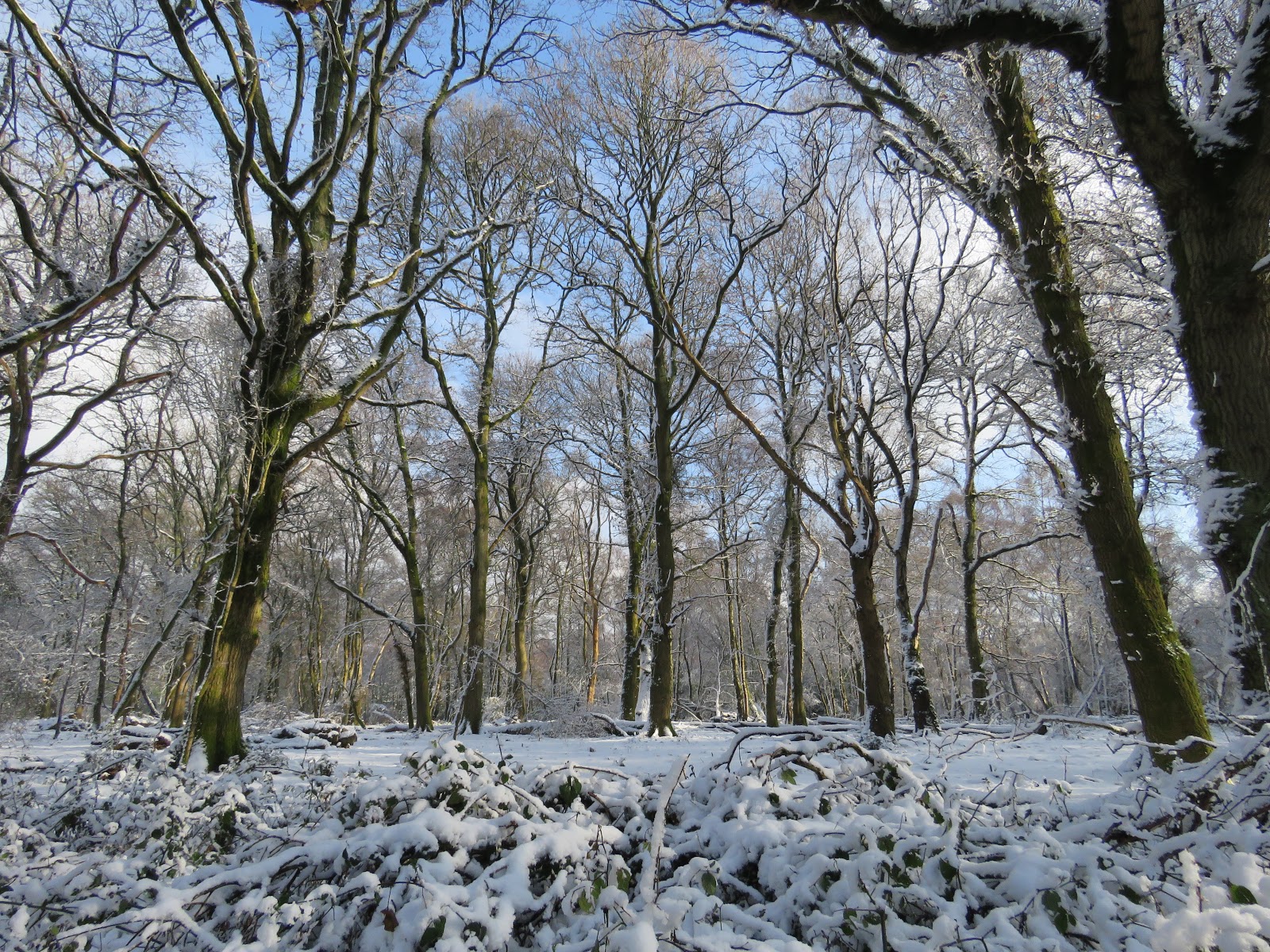
Ranmore Common yesterday morning. Four inches of snow had fallen overnight. A Christmas Card cliche of snow and crystal-clear light, the ice crystals sending sparks of brilliance into the air. The stillness was eerie, the only sound being the pattering of the melting snow as it fell from the trees and onto the white cushion below. And that was the only sound. No birds. No birds at all. I walked for miles along the woodland rides, through dense forest and across clearings. Silence. I stopped and scanned tree tops, across wooded valleys, looking for the tell-tale signs of birds on the move, of feeding flocks. Nothing. In three hours, within the wood, I recorded a handful (c20) of mixed tits, two Nuthatches, four Goldfinches and seven Siskins. And a few Robins - we need them in the snow to keep up the Christmas theme, don't we... It wasn't much better overhead, with just a single Red Kite, a Common Buzzard and a few Wood Pigeons and corvids. This lack of birds is replicat...

Where?

Canons Farm isn't exactly a place that is synonymous with large gatherings of birds, but it has its moments. In any normal winter we have come to expect a certain suite of wintering flocks - several hundred mixed thrushes, three figure Linnet counts, clouds of Stock Doves and Woodpigeons sharing the soil with plenty of Starlings, Skylarks, Meadow Pipits and Yellowhammers, plus a swathe of corvids, which all means that even on a quiet day there are plenty of birds to look through. This winter things are different. There are barely any birds on show. All the above are present in disturbingly reduced numbers. To scan across the open fields is an exercise in desperately trying to find something to look at. I have ducked into the neighbouring Banstead Wood for some ornithological respite, but the hoped for roving flocks of tits and crests are also missing in action. Other sites reflect this morose situation. Priest Hill, Epsom Common, Mickleham, Box Hill, Epsom Downs, Walton Downs, ...

Call me old fashioned but...

...I really cannot get used to the current running order of the ornithological systematic list. I grew up with the beginning of the list starting with the Divers, followed by Grebes and then into Fulmar, Shearwaters and Gannet - you knew where you stood (or, at least, where you listed). And then, some years ago, it was all change and somebody decided that we ought to start off with the Swans... wtf? I didn't roll with that one at all. And then in 2015 it was decided to follow the systematic list as used in the  Handbook of the Birds of the World (HBW) and BirdLife International Illustrated Checklist of the Birds of the World (Volume 1) .  So now we are asked to start with Common Quail, then whip through the game birds before - yes, you've guessed it - we are back to Swans and Geese again. Ducks are next to show up (as expected) but not for them to then be followed by Pigeons!! Then Sandgrouse??? Then Swifts???!!!! And when Divers resurface (geddit?) and we are then treated...

Of Fuz-clackers and Willy Wickets

Image
Looking through Bucknill's 'The Birds of Surrey' you are obviously transported back in time - the book is now 118 years old. What is most striking comparing it to a modern day county avifauna is that the Victorians just didn't count the birds that they came across - no flock sizes, no estimation of visible migration, just vague statements - 'large numbers', 'many', 'an increase' - all a bit frustrating, and little to be able to compare with today's data. At the back of the book is a charming table called 'Glossary of local names' which lists at least 150 alternative names given to birds by the folk of southern England back in Victorian times, and these are a few of my favourites... Blue-felt (Fieldfare) Chattermag (Magpie) Cherry-chopper (Garden Warbler) Clod-bunting (Corn Bunting) Cricket-chirper (Grasshopper Warbler) Cuckoo's Mate (Wryneck) Deviling (Barn Owl) Ditchwatcher (Pied Wagtail) Emmett (Wryneck) Fallow-ch...

Missing

Image
There's a kind of hush all over our countryside. A disturbing quietness that is not just aural but also visual. Where once were Lapwings, finches and buntings there are... well, not a lot actually. A brief visit to Canons Farm this morning was soul destroying. In recent years it has come to be expected that the days of bird numbers at this site have long gone, but even so we do, from time to time, witness a build up of Linnets, Chaffinches and Skylarks, plus a few cherished Yellowhammers. The winter months are normally blessed with several hundred Redwings and Fieldfares. And if we are really struggling for something to look at then we have always been able to fall back on scanning through the hundreds of corvids, Wood Pigeons and Stock Doves. But not now. Not this winter. The place is barren. And it isn't just Canons Farm that appears to be bereft locally. With all of the time that I'm spending in the woodlands looking for Hawfinches it has not gone unnoticed that - g...

Part 2: Winners and Losers - passerines

Image
And now for the passerines - as per yesterday's post, all my own data... House Martin  LOSER Declining summer visitor, passage migrant This species is greatly reduced as a breeding bird. In the 1970s it was easy to find nests on houses in Sutton and flocks above suburbia in the height of the summer were to be expected. This is not the case now. Extreme dates: 3 April 2010 ( Holmethorpe ) - 22 October 1978 ( Beddington SF ). Spring passage can be small and brief (peak count of 350 at Holmethorpe on 3 May 2010), while that of autumn heavier and more protracted, as evidenced by 6,710 south on 21 September 2017 at Canons Farm, Banstead ; 2,185 south-west on 9 October 1999 at Holmethorpe ; 1,900 south-west on 25 September 2014 at Canons Farm, Banstead ; 600 on 12 September 1976 at Beddington SF ; 500 on 31 August 1976 at Beddington SF and 20 September 2017 at Holmethorpe . Tree Pipit  LOSER Summer visitor, passage migrant and former breeder. ...