Posts

Showing posts with the label books

Bird book of the year

Image
I cannot claim to be a world lister. Apart from several birding jaunts around central and Southern Europe, I've only ventured further afield twice - to Israel and Malaysia. Although my enjoyment was immense, my fear of flying has got in the way. Even family holidays have had to take this into account, with my reluctance to board any plane being conquered only every 3-4 years or so - and even then alcohol and/or tranquillisers were a necessary part of the process. Not a good base then to even think about world listing. When Lynx Edicions announced the publication of their book, 'All the Birds of the World', I was not initially stirred. And then I saw some of the plates. Wow! I had to get it. It has been so popular that the first print run could not meet demand, so I had to wait five weeks for my copy to arrive, but it was so worth the wait. It's big. And thick. And heavy. Each page a delight of avian promise, with all of the taxonomic treatments from the four major world...

Books

My natural history library sprawls across several rooms, my families acceptance of it much appreciated. I have, in the past, had mini-culls, normally of books that had served their purpose and become redundant, superceded by more up-to-date publications, although some of these 'retired' tomes will forever be held onto - there is too much history between us. One section of this collection is dedicated to that of 'nature writing', populated by the likes of Macfarlane, Mabey, Dee, Cocker, Deakin, Oates, Dunn, Goulson and Marren. These are books not to be used as reference but to be read for pleasure and nourishment, not that you do not learn an awful lot from them as well. The most fluid part of the library is that of subscription journals and bird reports. It has had to, over the years, suffer major culling due to shortage of space. - and, if I'm being honest, because they largely go on the shelf after their initial read never to be taken down again. My Surrey, Kent a...

Natural history books of the year

Image
The following three natural history books were published during the year and deserve as much publicity and praise as they can get. If you haven't read them then I can whole-heartedly recommend each and every one. Greenery by Tim Dee is part travelogue, using the season of Spring as a framework on which to hang a series of essays covering much more than the awakening of the natural world. It is a thought-provoking book that ends with the author pondering his own life's journey, the fall into autumn being mirrored by his own bodies frailties. Powerful stuff and, as always from Mr Dee, superbly written.  His Imperial Majesty by Matthew Oates is the author's love letter to the Purple Emperor butterfly. For a book that is dense with intrinsic information it is nothing but a joyful read. The insect’s life cycle, distribution, abundance and a site gazetteer is amalgamated into the story of all those obsessives who spend each summer in HIM's presence.  Owls of the Eastern Ice...

Book poverty

Image
Apparently today is 'World Book Day'. I've just found that out. I've also just found out that 1 in 8 disadvantaged children in the UK do not own a single book. Not one. It got me thinking back to my childhood days, that were fortunately filled with books. Books were just there. Obviously my parents provided them, and when I couldn't read them myself they read them to me. As soon as I could read, I did. All the time. I can vividly remember a particular book where there was an illustration of a city, seen from above, with the roads lined with buildings, showing where the shops were, the churches, the schools, the police station, the library - and I would lie on the floor tracing a route through this printed city with my finger. Another cherished possession was a set of 'The Illustrated Encyclopaedia of Animal Life' which arrived at my home volume by volume over a period of months, clad in a garish yellow cover (see above). These were pored over relentlessl...

It's all about the hunt

Image
I was recently watching the comedian Stewart Lee on TV. He talked about his love of music and how, when touring the country, he used to visit the local record shops in the hope of tracking down the albums that populated his 'most wanted' list. After twenty years of this devotional persuit he still had many gaps on that list, and each time he unearthed one it was a delicious victory. He left the shop clutching the newly possessed vinyl with a sense of pride and achievement. Then along came the Internet and within 24 hours he had bought all of his 'missing' albums. Their ownership was hollow. The joy of the hunt had gone. I can identify with that. As much as instant gratification is bestowed upon you the anticipation and, at times, lengthy wait to possess whatever it is that you have been persuing, is missing. Our hunter gatherer urges have once again been cauterised. Take this object of desire: I have been scouring all the second-hand book shops that I come ...

In preparation for summer

Image
The days are deniably drawing out, even if we have to share this daylight lengthening with bouts of 'Beasts from the East Parts 1, 2 and, apparently, 3'. To get us in the mood for those warm days, drowsy with the buzz of insects and perfumed via the waft of wild flowers, here's a selection of books - all highly recommended - that will only make us yearn all the more for their return. In Pursuit of Butterflies by Matthew Oates Matthew Oates has spent the past 50 years of his life in love with butterflies and has forged a career out of studying, counting and being enthralled by them. The book is autobiographical, but it is much, much more than a 'been there, saw that' memoirs. Each page is packed not only with anecdote, but also with information - information that is anything but dry. I have learnt so much about butterflies from reading this that when I now go out into the field I am looking at them in a very different way. No longer are they just colourful an...

Written off?

New nature writing. Nature narrative. Call it what you will, but the past few years has seen a massive increase in the publication of books that define this genre. I first started to take to it via the works of such writers as Roger Deakin and Richard Mabey. Then along came the likes of Mark Cocker and Tim Dee to add to the mix. I saw - I bought - I read. Anything by Marren, Jaimie, Goulson and, of course, Macfarlane. There are some wonderful books to be had from that team of authors... But recently I have started to withdraw from that sort of book. It might just be overload, too much gorging on rich fare. But I think there's another reason behind my retreat - I believe that the publishers know that there's a few bob to be made from such natural history works and so they are keen to keep pumping them out, with quality control slipping in the process. In quite a few instances, the authors are not up to scratch or the subject matters tired. I've started to read (and put dow...

Take note

Is the field notebook becoming a threatened species? I ask, because I rarely see anybody using one nowadays. It was a staple of the birder's weaponery 'back in the day', as much a part of the ornithological arsenal as your bins, scope and ex-army jacket. Don't get this confused with the posh log book back at home, where the field notes were written up all neat of hand and full of additional flourish - I'm referring to the small, pocket-sized notebook where the day's counts and descriptions would be jotted down whilst in the field. These could get dirty, spattered in mud, wet with rain, crinkled at the edge and have pages torn from its innards - it was a tool of the field and if I ever left home without one I felt bereft. And if I did forget it then I have been known to then use any scrap of paper, inside of a field guide or back of a hand to scribble down all of that important info. Well, I say important meaning that it was to me. I did take it all a little to s...

Desert Island Books - Part Two

Image
I was introduced to Love and War in the Apennines by Eric Newby by fellow birder Mark Hollingworth, who sold it to me as 'the ultimate love story'. It tells the tale of the author's experiences during the Second World War, beginning with his arrest while participating in an action with the Special Boat Service off of the Italian coast. With the subsequent Armistice between the Allies and Italy, he is released, but needs to evade the marauding German forces at the same time as nursing a broken ankle. His injury slows down his colleagues escape, so he is abandoned in a farmer's barn, from where an Italian doctor takes him to a hospital. Here he meets a young woman who visits the patients in the hospital - she teaches him Italian, he teaches her English - and they fall in love. But the Germans are closing in, so he is moved between houses before being finally taken up into the mountains, where he is sheltered by peasant families. Here we are introduced to the bravery of...

Desert Island Books - Part One

Image
Up in Shetland, Jon Dunn has put together his 'Desert Island Books' list. Now, I do like a good list, and there isn't enough of this sort of stuff in blogland - and I am not above pinching someone else's idea. So here is my version (with a nod to Jon...) The rules dictate that I am allowed but eight choices. Impossible! How can I possibly whittle my favourites down to a mere eight books? This is calling for some hard choices to be made. My first decision is to keep this list solely populated by natural history or travel-themed works. This will make the task ahead a little easier - a little being the operative word, as it is still very difficult. I am also of a mind to remove any field guide or reference work, leaving publications that have a bit more of a personal slant to them, whether that comes from the author or some connection that I have made with the book. This will bring the list of choices down to a mere 40 or 50. But I need to be brave, be cruel to be kind...

Too many books?

Image
For the first time in my life I'm starting to question whether or not I need to buy any more natural history books. Or at least, if I do buy them, where are they going to go? We have two large alcoves fitted with bookshelves in our sitting room. There is floor to ceiling shelving along our upstairs landing. We have a book case in one of the bedrooms. Most of these are stuffed with natural history books. My books. There is no more room. Everybody else's books have to fight for space under beds, in boxes or stacked along window sills. I don't know how the natural history books took over, but they have. I'm a little ashamed... Any regular visitor to this blog will know that I keep lists. Needless to say, I have a list of my natural history books. It is even broken down into subjects. No, really. Would you like to see? Birds (151), Lepidoptera (51), Natural History Literature (26), Fungi (5), Botany (60), Insects (28), Mosses (6), Orthoptera (4), Dragonflies (7) and...

New nature writing

I'm a sucker for books, particularly of natural history books, and especially those that could be termed as having a literary bent. In recent years the market has been flooded with them, coining the phrase 'new nature writing'. One of the architects of such works, Mark Cocker, has written an interesting piece about this subject for the New Statesmen. You can find it easily by clicking here. My bedside table currently has three natural history books awaiting my attention: The Natural History of Selborne (Gilbert White), Island Going (Robert Atkinson - thanks Pete!) and Common Ground (Rob Cowen). Two of these are works from many years ago. Whether or not I am largely an avid reader of such publications because they invoke a sense of nostalgia is a moot point - but the prerequisite of any book worthy of my (or your) attention should be that they are well written. I think it is fair to say that the level of penmanship in this particular field of subject is very high indeed...

The accumulation of stuff

It should come as no surprise that after 40 years of immersing myself in natural history that I should accumulate a lot of 'stuff' because of it. This has been driven home to me over the past couple of days because I have been emptying various cupboard spaces and populating new book cases that we have had built to accommodate all the said 'stuff'. Two things - I already knew that this mountain of 'stuff' was getting out of hand and my denial that 95% of this stuff was mine (and not my wifes or two daughters) was getting more preposterous by the day. So what is this stuff? To start with, over 350 books, all natural history themed (and let's not get started on the other non-themed books that I own and read). I did carry out a cull several years ago, but regretted it afterwards and vowed not to do it again. And then there are the annual reports and publications that I have been sent in lieu of being a member of numerous societies and clubs. They look nice all...

Book token to spend? Look no further...

I've 'bigged up' quite a few of these books before, but they are all worthy of your consideration, especially if you are going to have a book token or two to spend after Christmas... The Old Boys Regular visitors to this blog will know that HG Alexander's Seventy Years of Birdwatching has the accolade of being the most influential book in my life. I read it in 1974 and I have most probably read it 20 - no, 30 times since. He helped me form my birding template, simple as that. When I take the book off of the shelf I handle it as if it were a precious relic. I did not read F Fraser Darling's Island Years until very recently. I was given a copy by a grand lady who was in her 90s and thought that it would speak to me. It did. They are the memoirs of a man, his wife and young son as they try and forge a life on an uninhabited Scottish west coast island in the pursuit of seals and birds. Birding To See Every Bird on Earth by Dan Koeppel is written by a son in ...

A note to Father Christmas

Hopefully I've been a good boy over these last 12 months. Could I please ask for the following books to be placed under the tree in the early hours of Christmas Morning... The Fly Trap by Frederik Sjoberg Swedish biologist regales us with his memoirs of catching hoverflies on a small island. Finally an English version has been published, this book was recommended to me by Pete Burness. A Buzz in the Meadow by Dave Goulson I thoroughly enjoyed his bee book 'A sting in the tale' and this follow-up is an account of his attempts to entice invertebrates into a French garden through selective planting and management. Just up my street. Claxton by Mark Cocker A collection of essays written by the birder-author based on his observations in the Suffolk countryside. This man is up there with Roger Deakin and Richard Mabey as far as I'm concerned. That should see my reading material sorted up until the new year...

Do I really need a book about seaweed?

Image
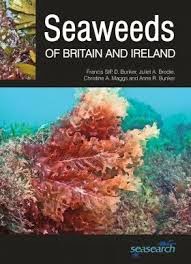
I cannot walk into a bookshop without heading straight to the 'natural history' department. This normally results in disappointment as the bookseller invariably stocks his/her shelves with a mixture of the banal  - 100 Penguins to see before you die - the twee - Lady Cattermole's Edwardian Ladies Country Diary - or the plain useless. Where have all the field guides gone? What about a few proper monographs? Atlas's? ANYTHING... I happened to be in Torquay at the weekend and there is some sort of sea safari park along the promenade. You can access the shop attached to it without needing to pay to look at penguins, so, under the vain hope that THERE WOULD BE BOOKS, I went in. And there were! I ended up buying the rather splendid Seaweeds of Britain and Ireland , a photographic guide that claims to be able to help you confidently identify over 200 species of them. As with most things, there are plenty that do need a microscope to clinch an identification, and I'...

The Old Ways

Image
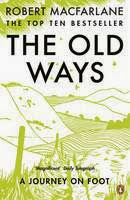
I have just finished reading Robert Macfarlane's The Old Ways  and it is a book that will long remain with me. The human relationship with the creation and maintenance of pathways is explored, looking through the ages and across the types of land (or sea) affected. The link between walking and thinking is explored. We meet a colourful cast of characters whose lives are woven into the natural world via an intimate understanding of it through the medium of travelling and embracing the landscape around them. The book is also an homage to Edward Thomas, writer and poet who died at the Battle of Arras during the First World War. He lived and wrote about his beloved 'South Country', centred on Hampshire and Kent. Bouts of depression were walked off in the chalky hills and these journeys led to an outpouring of writing prior to, and during, his fateful journey to France. We are also introduced to Eric Ravilious, English water-colourist who, like Thomas, died while on activ...

The bee's knees

Image
The latest book to tickle my fancy is Dave Goulson's ' A Sting in the Tale '. Dave is an academic who has studied bees since he was knee-high to a grasshopper (or should that really be knee-high to a bee?). This study has taken him, at times, to the other side of the world, and although such trips are recalled, they are usually done so in the context of the UK's bumblebees. This book functions on many levels - it is an accessible life-history of UK bumblebees but also pure entertainment, in that it is written in such a jargon-free style and the author's enthusiasm for the subject comes across - he wants us to embrace the bee. Whether or not the reader is 'into' natural history this book works. It has changed my perception of bees - after reading this work you cannot look at them again in the same light. The book is cleverly constructed so that the reader is not bombarded with facts - make no mistake, these are there and in plenty, but the narrative whi...

Take a look at these...

Image
My first recommendation today is for the second book in the British Wildlife Collection series, the subject being Meadows ( click here for details) . If it is half as good as the first (Mushrooms) it will be well worth purchasing. I'm not on commission by the way, but I am keen for independent publishers like British Wildlife to succeed, as it benefits those of us who like natural history books that are well produced, are written for the informed amateur and that add something worthwhile to the body of  literature. Secondly, please take a peek at Parus's blog ( click here ). I do like to read about other's birding experiences, especially when they are laced with humour and self-deprecation. This site does exactly that. It is now May (just in case you hadn't noticed). When I used to do nothing but bird (as opposed to look at other things that are in the wild), May was second only to October as my 'favourite' month. Now, what with other interests vying for...

Books that I urge you to read

Image
Over the past few years I've recommended a number of books. Most of these have possessed a literary bent and are books that not only inform and entertain the reader but also transport them to the very places that the author is writing about. Each can also skilfully express the spiritual and personal side of observing nature, something that is entirely missing from academic tomes. In no particular order I would strongly urge you to pick up the following: Waterlog by Roger Deakin . One man's journey around Britain finding wild places in which to swim, be they pond, river, moat or loch. The author is a keen observer of wildlife and with each swim unlocks the inter-connectivity of all around him. Congo Journey by Redmond O'Hanlon. This is a book that leaves you frightened, soaked in sweat, confused and knackered after reading it. Mr O'Hanlon is an Oxford academic who decides to go in search of a mythical dinosaur that is said to still exist by the pygmy tribes of the...