Posts

Showing posts with the label yew

Of fallen yews and spotlit owls

Image
This Yew has been teetering on the edge of collapse for some time now, the soil beneath its roots having been eroded by the River Mole. Sometime over the past few weeks it went beyond the tipping point, and now it lies across the water, ripped and bloodied. I always think there is something sad, but noble, when an old tree bows out. For those of you that don't follow the 'birding scene', an ultra-rare Tengmalm's Owl has been found on Shetland. This has unleashed the normal rum cast of twitchers to bunk off work take a hasty holiday and (largely) head north. The owl has been roosting in the conifers of a private garden. The owl has also, at times, been playing hide-and-seek. But there has been some kerfuffle. What has got the goat of many commentators on Twitter is that, in desperation, some people have been venturing inside the small plantation and have even been attempting (at times successfully) to spotlight the owl when it got dark. This doesn't surprise...
Smoking!

Image
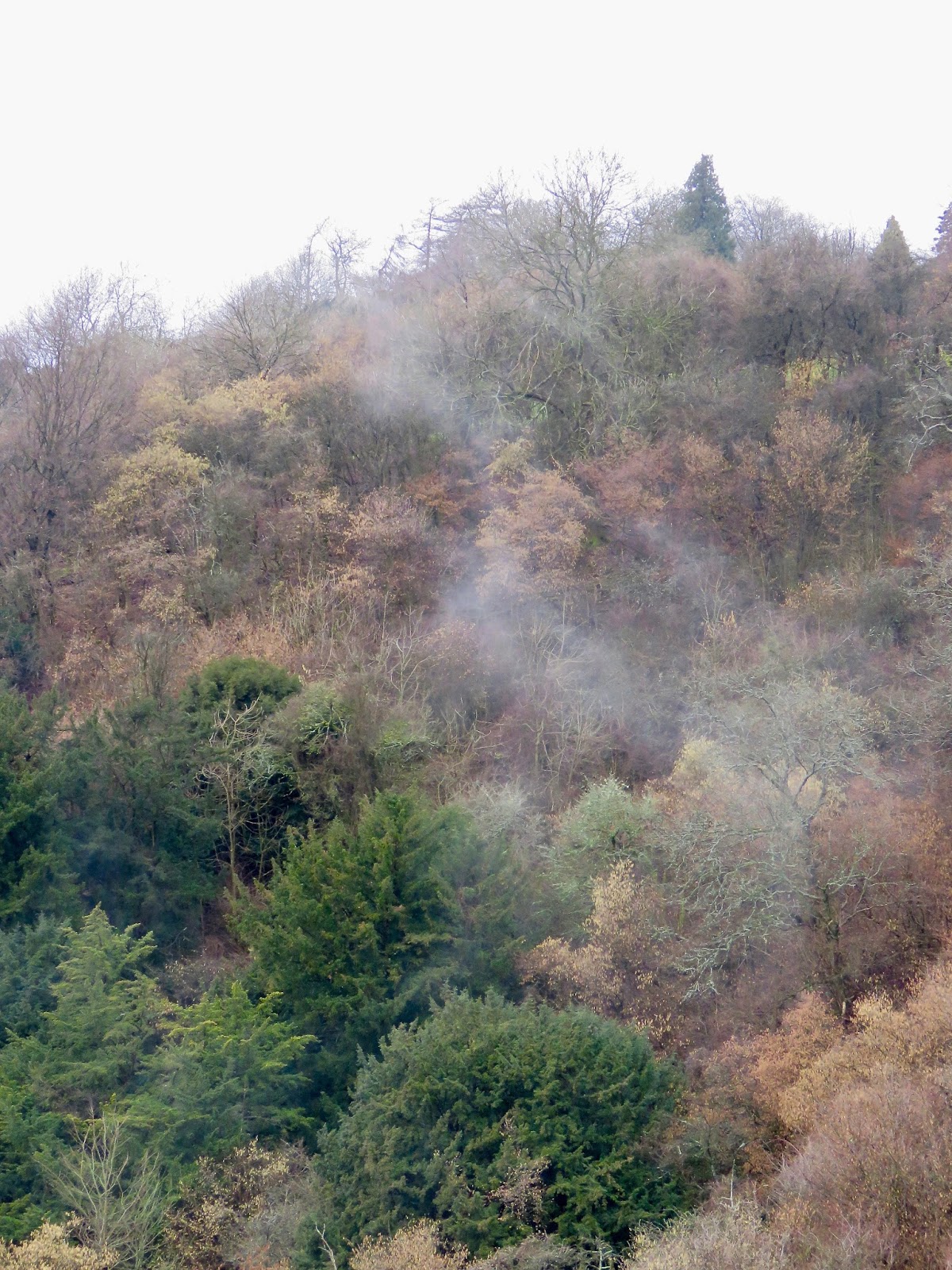
Walking westwards across the muddy, slippery slopes of Colley Hill I spied smoke rising above the distant bank of Yew trees - precisely where I was going in my quest to look for further Hawfinches. I briefly considered not carrying on, assuming that a spot of vegetation clearance was underway, but decided to continue on my journey. A knob of hillside pushes away from the main slope, allowing wonderful views towards the Mole Gap (below). Brockham Quarry is the middle ground, Leith Hill in the distance There was no sign of any smoke now, so I settled down and scanned the ridge of Yew trees for signs of my target - drawing a blank (as I had done at Gatton Park and Reigate Hill). From time to time the puffs of smoke returned and it was then I realised that this was in fact the Yew trees releasing pollen! I cannot recall seeing it being done so profusely (top image). That was reward enough for the morning, although it was small compensation for twice going 'arse-over-tit' o...

Trooping of the funnel

Image
I took myself off to Juniper Top and Bottom this morning, still nursing a sore throat and head cold, although it does finally seem to be on the wane (I'm not expecting any sympathy by the way). My walk was circular, taking in plenty of dark footpaths that were swaddled in yew, ivy, moss and fern. There were plenty of birds, mainly marauding flocks of tits (which did include 11 Marsh, spread out along the route) and thrushes (110+ Redwing were the most numerous). One particular Yew was huge, the photograph below does not do justice to its size, although to help I have added three green dots which mark the six foot point from the ground. Yes, it was big! There was little in the way of fungi, although one smart fruiting body caught my attention, which if I'm not mistaken is a Trooping Funnel (below). I attach a caveat to all my fungi identification - it's a bloody minefield...

Natural design

Image
Sometimes, rather than spending our time trying to put a name to everything that we see, let nature show itself to us, a reminder that there is design, form, pattern and an awful lot going on that just doesn't need labelling, collating and identifying. Ironically, even though I offer up today's images from Box Hill with such thoughts, I have identified them...sort of defeats the message behind this post, doesn't it? Ancient Yew roots, with accompanying caverns that are home to Badgers and Hobbits! Art Deco in composition. Carline Thistles, pale golden silk pouches on Charles Rennie Mackintosh styled candelabra

Being Gilbert White

Image
Today I visited Selborne in Hampshire. This is woodland at the top of the hangar, made famous by a naturalist clergyman, who, among other things, was the first person to use field skills to identify our commoner phylloscopus warblers. Here he watched and listened to Chiffchaffs, Willow Warblers and Wood Warblers.  This is the front of his house in the village. Today it was closed. Therefore I cannot tell you much about it. Try Google...  The parish church of St. Mary is where he had four spells as curate. He was buried here in 1793. This is a detail from a modern stained glass window in the church that depicts his life through natural history images and as a celebration of his world famous book 'The Natural History and Antiquities of Selborne'. In the churchyard is one of the 50 designated 'Great Trees of Britain' - or, more accurately, what is left of it after the 1990 storm - the famous Selborne Yew.