Posts

Round two

Image
We come to the end of February, two months into the 2019 Surrey v Northumberland patch challenge. Although hard work, the month has seen some rewarding birding, with the following species new for the year: Black-throated Diver (Holmethorpe), Jack Snipe (Holmethorpe), Treecreeper, Hawfinch (Headley Heath, Juniper Top, Juniper Bottom), Peregrine, Lesser Redpoll, Goshawk (undisclosed), Common Crossbill (Ranmore Common), Firecrest (Ranmore Common). The Black-throated Diver (above) was the biggest surprise, only my second record for the Uber-patch. From a personal point of view it was fantastic to once again see Hawfinches in the same areas over which they swarmed last winter. So, the scores-on-the-doors are: Uber patch Jan-Feb total:  101 species ( 47.41%  of personal historic total) Mini über patch Jan-Feb total:  72 species ( 55.38%  of personal historic total) I'm sure that my virtual friend Stewart will respond with a fine selection of his own from the ...

Soporific calm

Image
When I visited Ranmore Common at the start of the month there was four inches of snow laying on the ground and barely a bird stirred in the woodland. Today could not have contrasted more. This abnormal spell of weather continues, bestowing upon the morning unbroken sunshine and dream-like warmth. A soporific calm coated the woodland, barely a twig, bud or catkin quivered and all around, joining in with the celebration of tranquility, was birdsong. In amongst the songs of the expected tits and Nuthatches were some welcome additions - Crossbills, Firecrests and Siskins. The western valley slope at Bagden Wood was most productive, with one very noisy Crossbill singing almost non-stop for a good 10 minutes, whilst the Holly undergrowth back towards the top road was best for Firecrest. An early afternoon patrol at the bottom of Denbigh's Hillside did not produce as many butterflies as I had hoped, but in a normal February a count of 9 Brimstone, 2 Peacock and a Red Admiral (above, ...

This isn't normal

Image
It is worth reminding ourselves that today's date is February 26th. The temperature in west Wales (Porthmadog) has been recorded at 20.8C (that's 69.4F in old money) - a new UK February record high. Closer to home it has been 20.7C in Teddington. In such warm temperatures and under clear blue skies and unbroken sunshine I have been wearing just a t-shirt and shorts. Comfortably. Because the number of Brimstone butterflies flying through and hanging about in our Banstead garden had been high, I thought I'd take a slow walk around the neighbouring streets - a vaguely circular walk of 90 minutes with no repetition of the route. I just strolled and counted butterflies. The results, for today's date, are staggering. FIVE species (I've seen two on the same date in February before, but never more). 38 individuals! They were: Brimstone (32), Comma (2), Small Tortoiseshell (2, one on winter flowering heather, above), Red Admiral (1) and Peacock (1). Needless t...

Of fallen yews and spotlit owls

Image
This Yew has been teetering on the edge of collapse for some time now, the soil beneath its roots having been eroded by the River Mole. Sometime over the past few weeks it went beyond the tipping point, and now it lies across the water, ripped and bloodied. I always think there is something sad, but noble, when an old tree bows out. For those of you that don't follow the 'birding scene', an ultra-rare Tengmalm's Owl has been found on Shetland. This has unleashed the normal rum cast of twitchers to bunk off work take a hasty holiday and (largely) head north. The owl has been roosting in the conifers of a private garden. The owl has also, at times, been playing hide-and-seek. But there has been some kerfuffle. What has got the goat of many commentators on Twitter is that, in desperation, some people have been venturing inside the small plantation and have even been attempting (at times successfully) to spotlight the owl when it got dark. This doesn't surprise...

Fool's Spring

Image
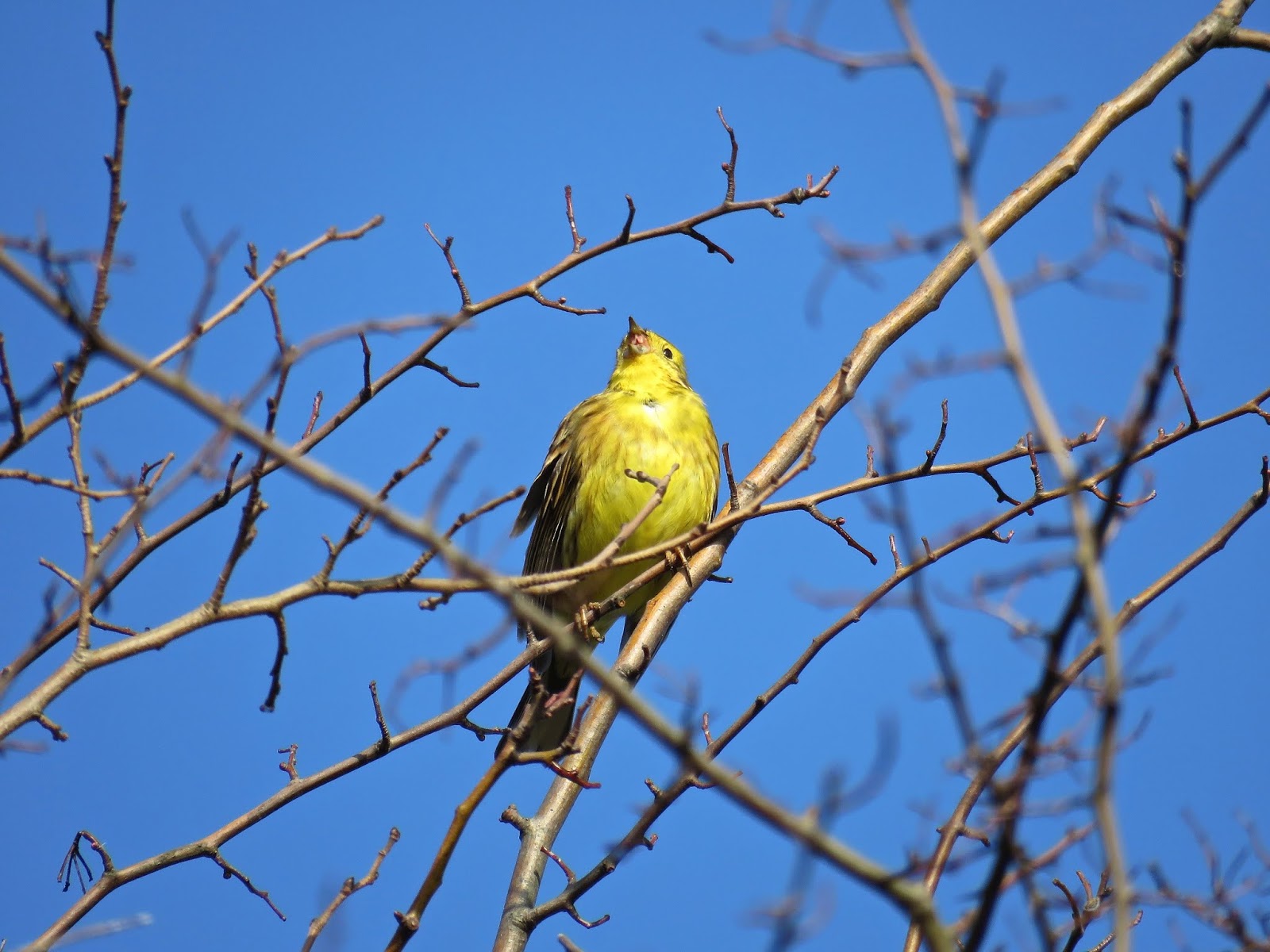
I've seen quite a few references to our current mild - nay, warm - and sunny weather being nothing more than an anomaly and that we will soon be back in the real world (cloud, chill, sleet, ice). Maybe that is so. But in the meantime let's just enjoy the 'false spring' while it is with us. Lap up the insects and enjoy the bird song. The Yellowhammer at Canons Farm (above) was certainly getting in the mood. This time last year the 'Beast from the East' was about to sweep across us - has a year really passed since then?

Joy bringer

Image
We are all guilty of it. Each Spring - or in the case of 2019, this February - we go bananas over the appearance of our first Brimstone butterfly. There is a shared nationwide convulsion formed of tweets, posts and photographs, all singing the praises or showing off the butter yellow of Gonepteryx rhamni . It clearly has a deep-seated meaning, not dissimilar to the arrival of the Northern Wheatear, that pin-up bird of the summer migrants. Both species are colourful and charismatic. Both will snuggle up close to us humans, seemingly at peace with our close attention. The importance of their appearance in the 21st century has most probably been watered down somewhat. To people who were eaking out their food stores and living in harsher conditions, these harbingers of warmer days were almost literally lifesavers. That it doesn't mean so much to most of us, in the mollycoddled modern day, is unsurprising, although for some it is still an event that elicits joy. Joy that another wint...

In faint praise of the Nickel Supra telescope

My first telescope was a Nickel Supra. It was draw-pull, had a zoom magnification between 15-60x and came in a tube-shaped leather carrying case. In 1977, when I handed over my £100 to the sales assistant at Vic Oddens (London Bridge) and was handed the optic, I couldn't have been prouder. It was shit. That might be a bit unfair, as all scopes back then suffer in comparison to what we are spoilt with today. When I purchased the Nickel Supra it seemed to be a choice between that and a Hertel and Reuss. Both were of a similar standard and same price bracket, but the Nickel Supra just shaded it for me as it looked sleeker and sounded modern. Scope ownership amongst the majority of birders boiled down to either possessing a Nickel/Hertel or an older, more ancient brass draw-pull, as likely to have been a relic from the 1939-45 war. All of these scopes necessitated having to pull out the tubes (normally a collapsable set of three) and rest the unwieldy contraption on a wall, fence...