Posts

Missing - km3

There are plenty of species missing from my latest lockdown list that, quite frankly, should have been recorded within the 3km circle by now. Cormorant, Red-legged Partridge, Great Black-backed Gull, Chiffchaff, Blackcap, Brambling and Siskin immediately spring to mind - all should be recorded in the coming month. March should also see the first incoming 'summer' migrants along with a wider cast of passage migrants. If last year is anything to go by, the odd night-time surprise - calling wildfowl and waders - will be possible and readily accepted. These will otherwise be hard to record across this largely dry recording area. I am also hoping that the 100th species to be recorded from the garden will appear - it's been stuck on 99 since last April. My prediction would be Mediterranean Gull, although Little Egret, Common Snipe or a night-calling Dunlin would not be hugely surprising. The way birding goes it will probably fall to a left field species that was not on my radar, ...

Dartford dry - km3 audit

Image
I am now 38 days into this current birding lockdown project. As we are almost at the month’s end, it seems like a good time to look at what it has provided - and, for an area that is half suburbia, half open land, I’d say that it has provided quite a lot. My home is on the south-western fringe of Banstead, happily surrounded by downland, horse-paddocks, farm and wood, but with plenty of residential area, particularly to the north. It is also dry, save for a couple of town/village ponds and one short section of a modest river. 74 species have been recorded, with the highlights (loose definition) being Red Kite, Peregrine, Golden Plover, Lapwing, Woodcock, Mediterranean Gull, Barn Owl, Little Owl, Kingfisher, Woodlark, Stonechat, Dartford Warbler (above), Firecrest, Marsh Tit, Raven, Hawfinch, Yellowhammer and Reed Bunting. On reading that list back, that isn't bad for an area just outside of a London Borough, with no appreciable water - a dry hinterland, if you will. The Dartford Wa...

Beating the bounds

Image
The past week has been mostly a case of beating the bounds of the '3km from home' circle. It has had its moments, with a Woodlark that circled the western-most fields at Canons Farm for a couple of minutes (on Monday) and an oh-so brief first-winter Mediterranean Gull on the football pitches at Priest Hill (today). In between these bursts of action it has been largely quiet, with Linnets (above) and Skylarks still present in fair numbers in the general area, plus signs of the early-Spring Stonechat passage getting underway, with five at Priest Hill this morning (where I spent some time unsuccessfully searching for a Dartford Warbler).

Late-winter colour

Image
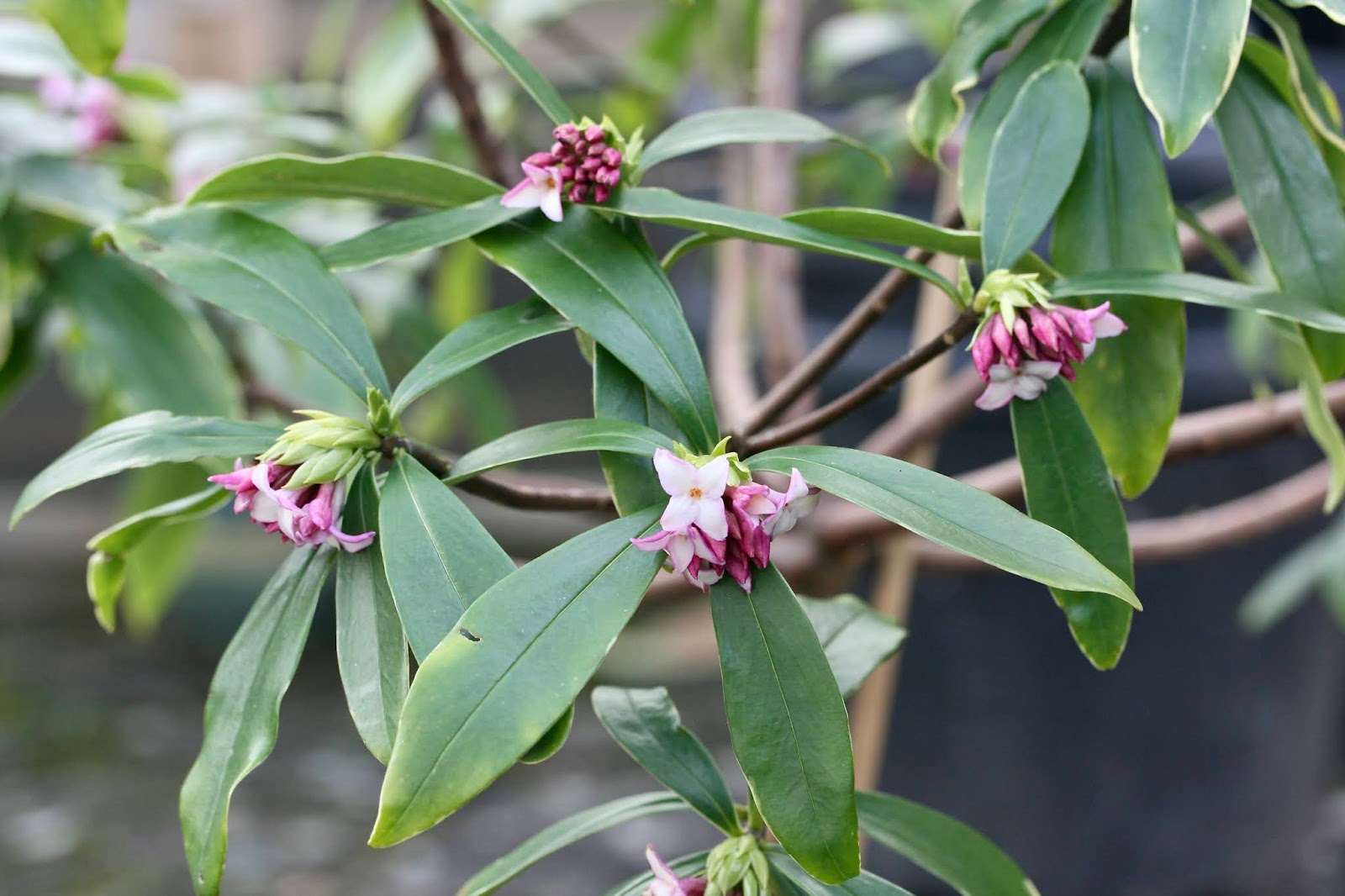
One of those lazy days spent in the garden, tidying up and getting ready for the coming season. Even though it was mild, and the odd sunny spell was enjoyed, no butterflies were seen. A few bees were on the wing (Buff-tailed and Honey) and the MV produced a March Moth. There is some colour in the garden, and over the past few days have taken a few pictures to capture it. Here's a selection. Daphne odora, same family as Spurge-laurel and Mezereon Iris 'Blue Note' Free-form jazz from the iris world. Nice... Iris 'Katharine's Gold'  Sarcococca confusa - or Christmas Box. Gives the winter air a punchy whiff The 'Daddy' of our Stinking Hellebores arrived here unaided. It grows wild nearby. Viburnum bodnantense - waxy blooms

One laid back Harrier

Image
Mid-morning, Katrina suggested that, to break-up our lockdown fever, we go and visit one of our favourite garden centres which is nestled at the bottom of the north downs at Buckland. I'm not adverse to mooching around such establishments, so armed with face masks and hand-gel we undertook the short journey and were soon looking at our prospective plant purchases out in the open air. Now, this garden centre is placed in quite a good position to observe birds that might be making their way along the scarp slope. I have seen Hawfinch from here, plus observed decent Common Buzzard and hirundine passage in the past (whilst, of course, nodding sagely as my wife points out the plants to me). This morning was no different, and I had one eye on the sky as we were examining a quite delightful flowering witch-hazel. I couldn't help but notice a low raptor just in front of us. I had no optics, but this bird was so low and the light so good that I didn't need them - a dark, immature fe...

Mr Holmethorpe's significant birthday

Image
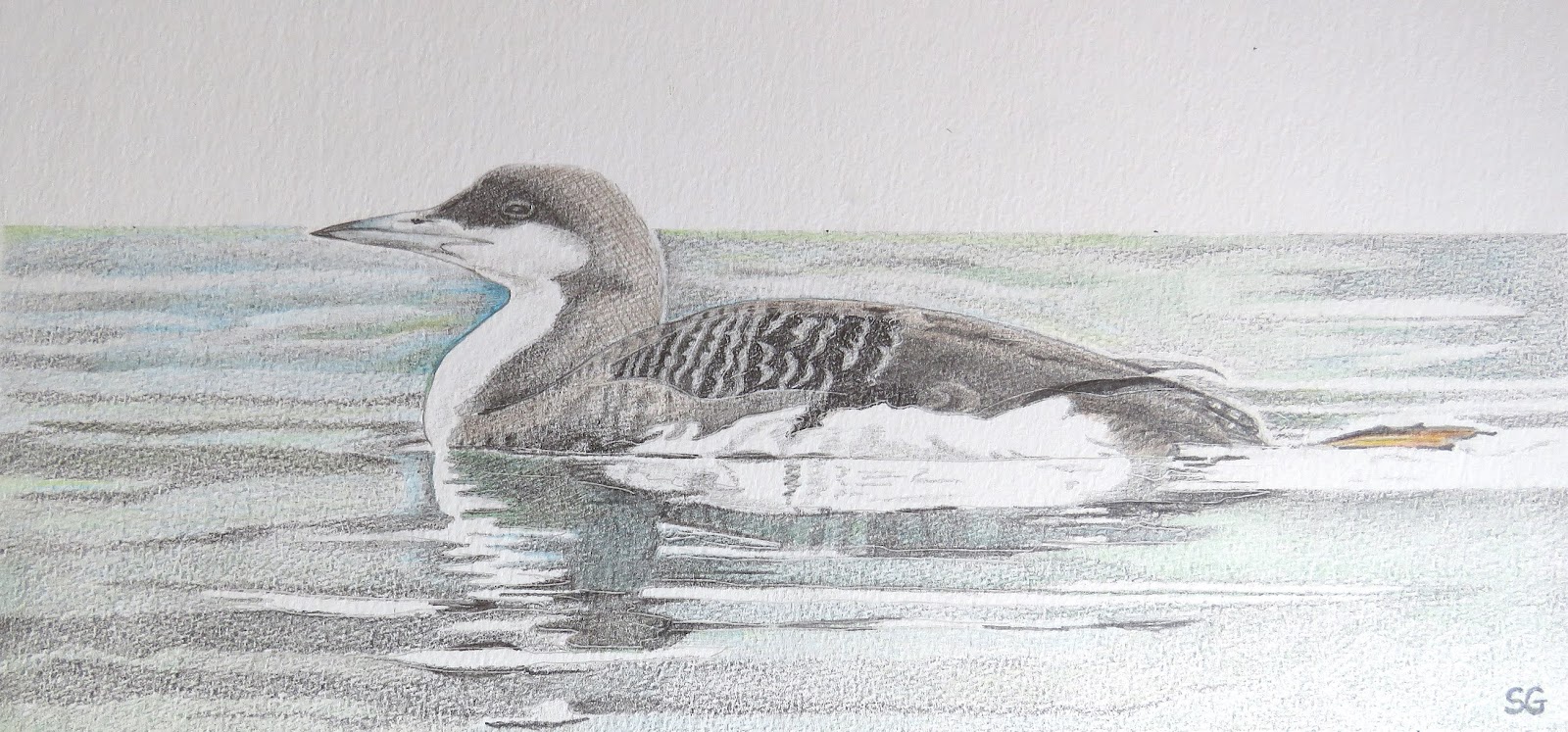
Our great friend Gordon Hay reaches a significant age tomorrow, so to mark that occasion the pencils came out and he was, this evening, presented with the artwork above. It is of the Holmethorpe Black-throated Diver that, back in February 2019, provided him with his 200th species of bird at those very same sand pits. Happy Birthday Gordon!

Thrush thaw - km3 (Days 21-24)

Image
It is still cold outside, but the wind has shifted to the south-west and we are promised milder temperatures as from this evening. My Lapwing count has refused to budge over the past couple of days, and even though passage over Surrey has eased up, they are still being seen - I'll just have to chalk this down to bad luck, not being in the right place at the right time and the like. Locally there have been some sluggish thrushes moping about, too tame for their own good. Let's just hope that not too many have succumbed and the thaw will come to their rescue. I had my Covid jab on Saturday, at a major hub that has been set up at the Epsom Downs Racecourse. I walked (only 40 minutes on foot from home) but confused all of the volunteers because I didn't arrive by car. There was no pedestrian access so had to duck under tape and push aside crash barriers to enter and exit. Not all that low-carbon friendly! Arm aches, feel a bit flu-like, but those are small side-effects to have ...