Posts

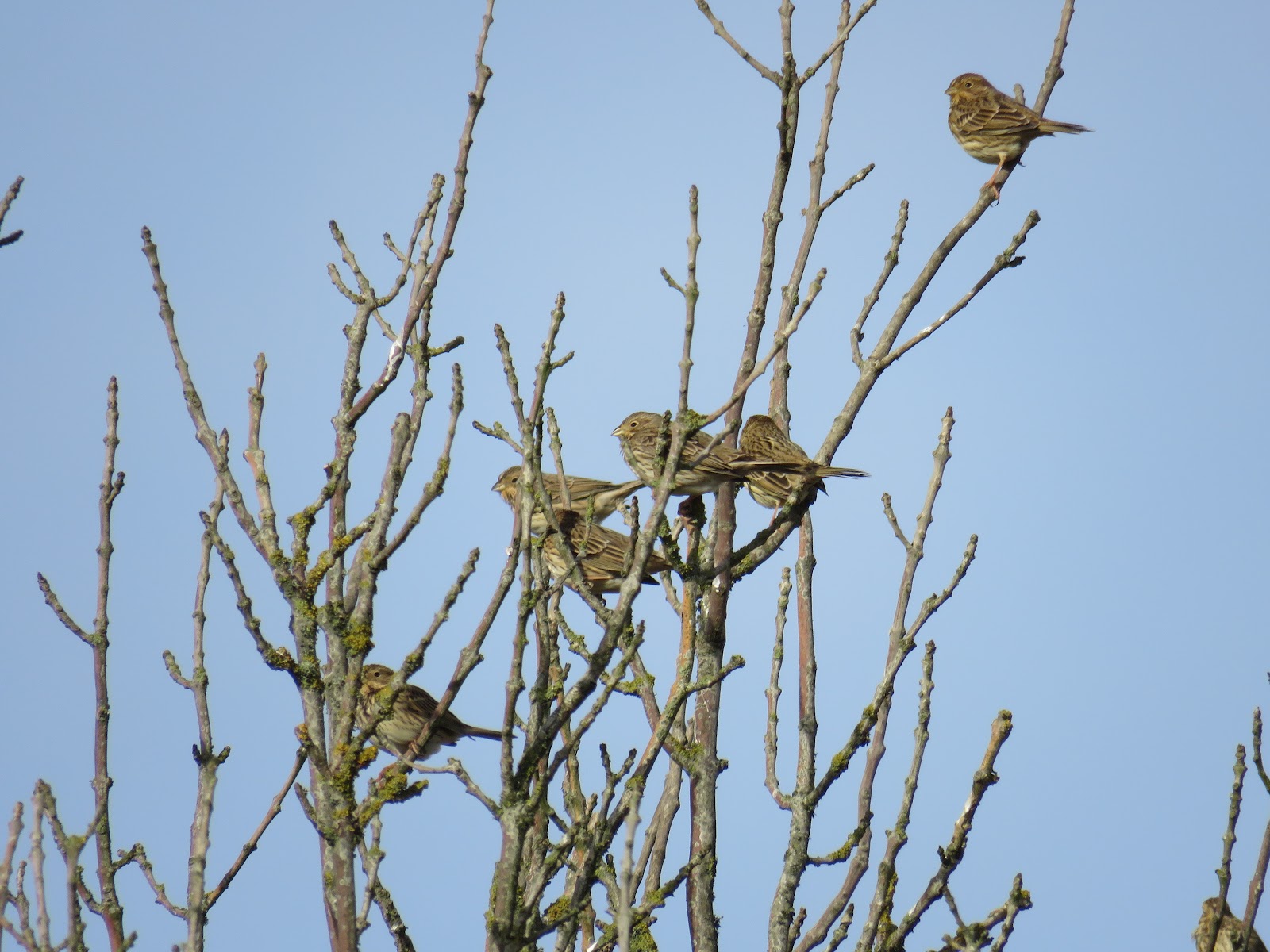
Corn Buntings on the South Downs
Image
The West Sussex South Downs seem a wilder place than 'my' Surrey North Downs - more open than the wooded north, with steep slopes either side of the narrow ridge which suggests higher ground, and thus the views are spectacular, whichever way you look. It is also full of birds. I'd intended to park at the the top of Kithurst Hill, but a road closure sent me on my way to Amberley. After parking the car and making my way up the hill, a Marsh Harrier appeared above my head, heading off towards the Wild Brooks - a good start to the day. The footpath took me up to Amberley Mount, where I followed the South Downs Way eastwards. The open grassy fields here were full of Common Gulls, in their hundreds, feeding on the turf along with Starlings. Any scan southwards would find more gulls, mostly drifting east, often dropping down or wheeling above the hidden valleys that are cut into the undulating farmland, the land resembling the swell of a vast grassy ocean. The path also undulated,...
Balm for the soul

Image
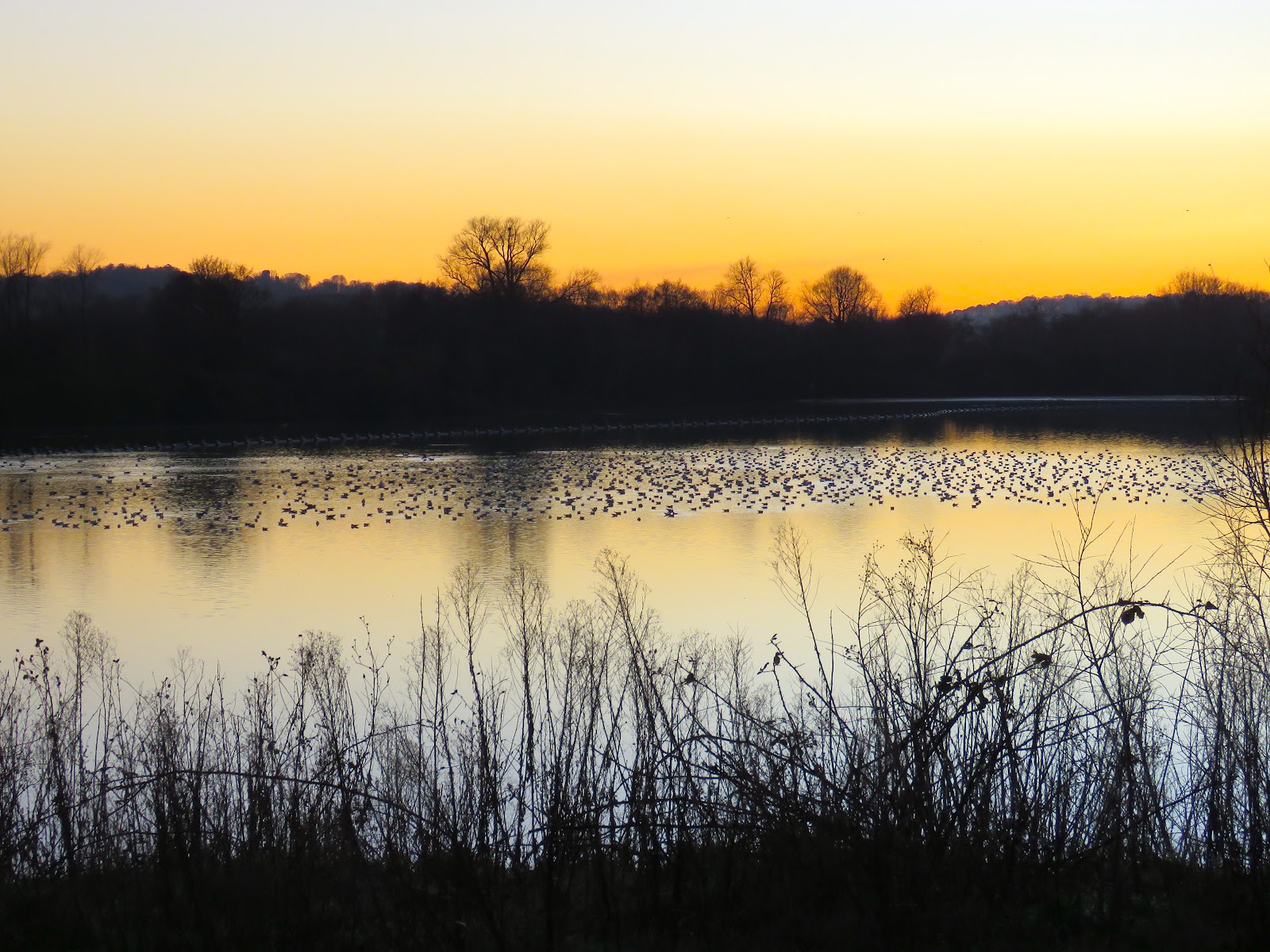
That period of the day between sunset and darkness is a bewitching one, particularly when the air is still and cold. A tobacco-stained sky and a faint whiff of vegetation in the nostrils almost painted the day in the colours of Spring, no doubt enhanced by the contrast between this brightest of days and the overriding gloom of most of the past few months. Gordon and I were scoping the roosting gulls at Holmethorpe, try as we might we could not locate any of the first-winter Caspian Gulls that have paid this site a visit recently. We made do with the 101-flavours of Herring Gull (no two the same in the 500 present) and over 1,000 Black-headed Gulls that were settling on the inky waters to spend the night. A cacophony of roosting Jackdaws and Ring-necked Parakeets was our accompanying soundtrack, but even these raucous birds started to quieten down as we trudged back to our cars in the darkness, the grass already frosting up in anticipation of another cold night. As we approached Mercer...

Brambling spectacular

Image
Last week, the Surrey Bird Club sightings section on the website announced that 100+ Bramblings had been seen along Clifton's Lane, just off the A25, between Reigate Heath and the North Downs scarp slope - it is an area that I know well and bird a few times each year. There was no need for me to weigh up the pros and cons of paying a visit - it is a place I love to wander and a species that I particularly enjoy watching. Friday afternoon saw me saunter up the aforementioned lane, looking out for a 'field with crops' that the birds had been frequenting. The first that fitted that description, beyond the railway bridge, was a right old mixture of brassica, peas and arable 'weeds' (below). There were no birds within the field, but the trees that lined the western side were full of them, hundreds of finches perched on the bare tops. I was able to get a decent viewpoint and could count 400+, many of them Brambling! I could not fail to be aware that more birds were in the...

Reigate Ring-necked Duck

Image
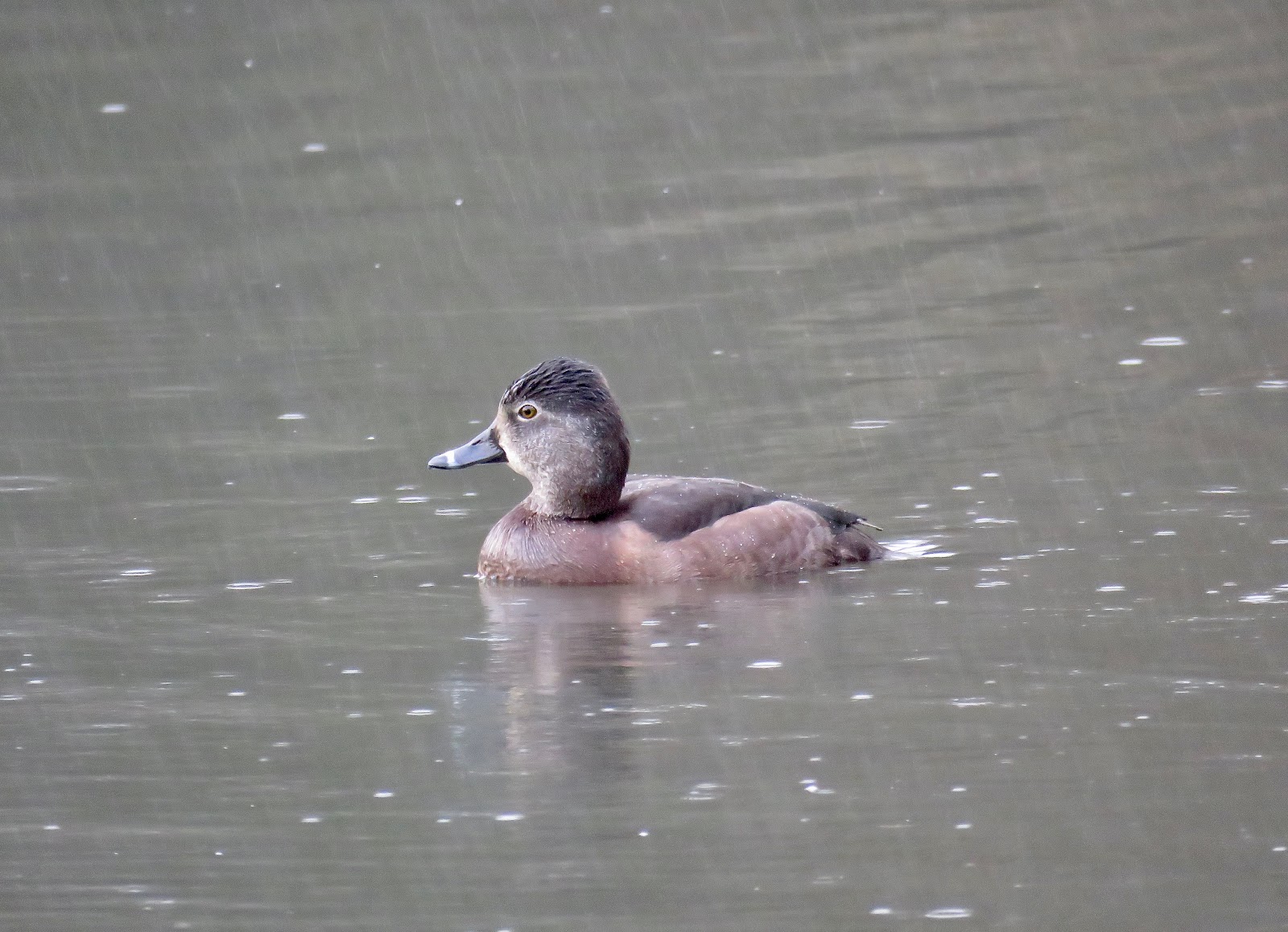
On a modestly sized park pond in Reigate, Surrey (Priory Park), this female Ring-necked Duck has turned up to spend the winter for the second successive year. The pond does punch above its weight (more a small lake really) by enticing Shoveler, Teal, Gadwall and Wigeon to also spend some quality time there. My good friend Gordon Hay first found this bird back in December 2020, and located it again in December 2021. It can often be found at the far end of the water, often with a handful of Tufted Ducks, and allows close approach. Last year it switched to Holmethorpe Sand Pits before the season was out - it will be interesting to see whether it does so again.

On your marks...

Image
2021 - pretty crap, wasn't it... So welcome then to 2022, which doesn't have to try too hard to be a better year than the last - I just hope that I haven't tempted fate or jinxed it by writing that! Plans. Every New Year has plans. I vary from creating a monstrous list of aims and ideas which, slowly during the first few months of the year, crash and burn. I am now a more circumspect 'planner'. I like to have something to hang my natural history observations on (a bit like the relationship a pair of trousers has with a clothes hanger), so do try and get a bit of process behind my sightings. At the very least this will include writing up my notes; making my observations available to the databases via BirdTrack and Trektellen; be a conscientious team-player by tweeting and WhatsApping my sightings; and keeping this very blog alive. Last year I posted fewer times than ever before, my mojo having gone missing. Hopefully it has been refound. 2022 seems to be the year tha...

Looking after the land

Image
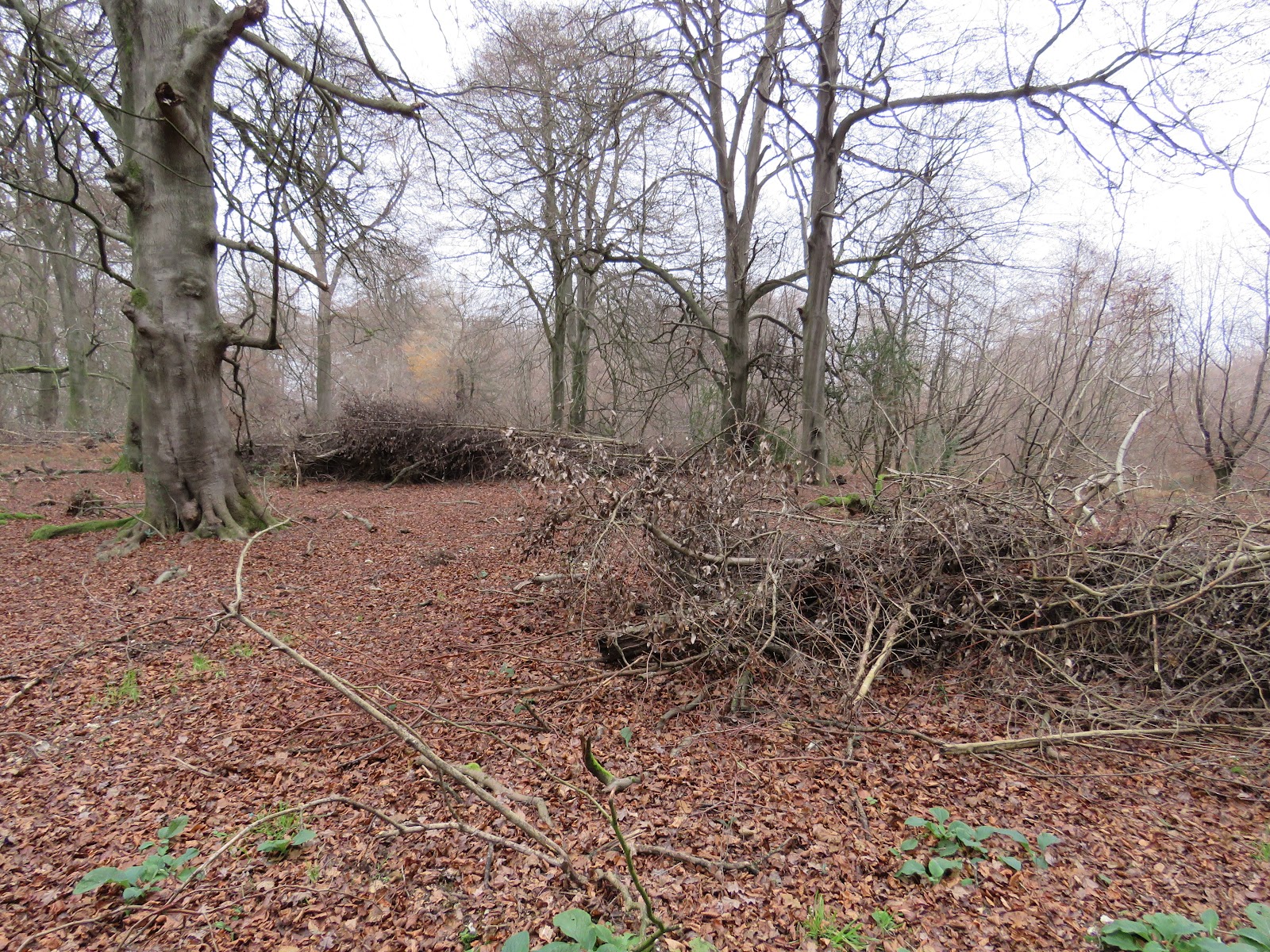
Yesterday found me wandering the many footpaths that cross the large expanse of Ranmore Common - in reality more woodland than common. The birds were, as expected in a winter woodland, hard to come by, but when I did come across them they were in number, highlights being 115 Brambling, a lone Hawfinch and a healthy count of 12 Marsh Tits.  The National Trust, who own the land, have been hard at work in recent months. A number of rides have been widened and reconfigured, changing the dead-straight passageways into meandering clearings. This opens up the habitat, creates micro-climates and creates additional woodland edge. In other areas there has been an opening up of some of the woodland, with aggressive understory removed. It was good to see that this 'dead' wood has been left on site, piled up as in the photograph above. These were proving to be attractive to birds, with plenty of tits, nuthatches and finches within them, seeking out food. I also came across a large part of t...

Nice and slow

Image
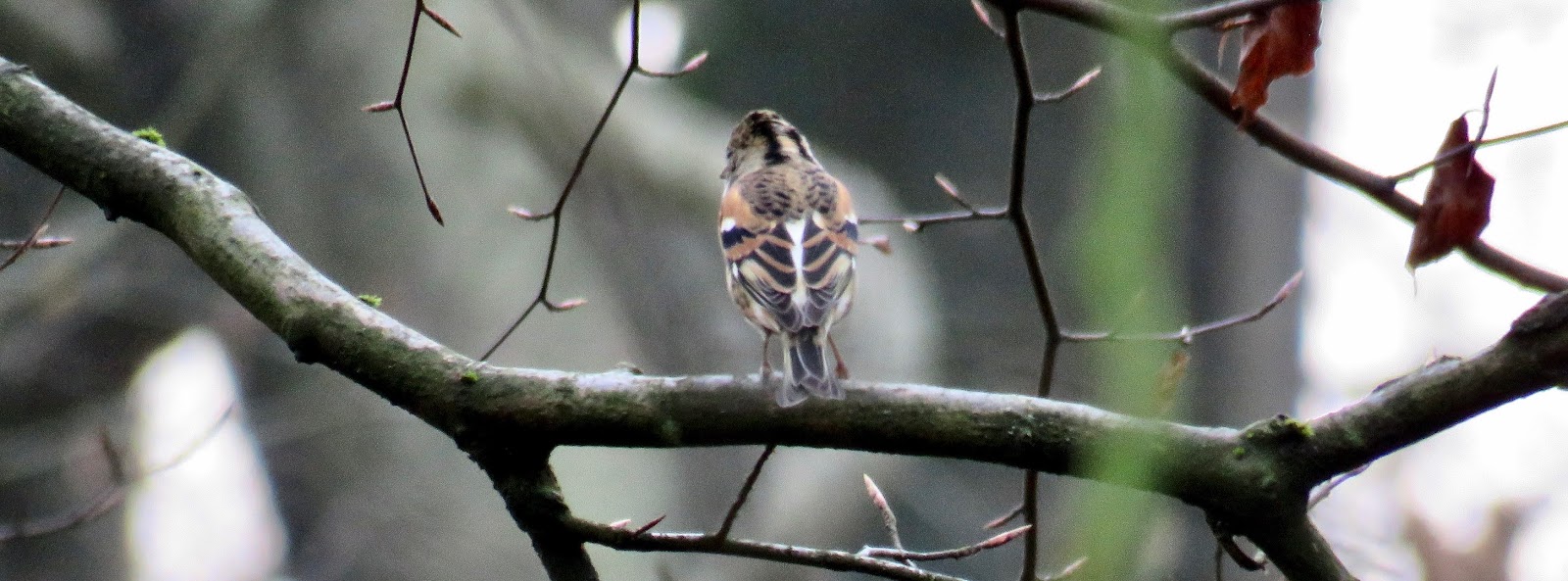
  This morning I was out of the house before dawn, and was surprised to see a number of moths flying in the car headlights as I drove along the wooded lanes at Headley - maybe I shouldn’t have been, as the temperature had turned remarkably mild. My arrival at the ribaldry-named Dick Fock’s Common coincided with daylight attempting to break through a low, stubborn cloud. A good couple of hours were spent walking the footpaths, venturing out into Effingham Forest, spending as much time watching my footing on the slippery muddy paths as I did any birds. It was quiet, with three Hawfinches being the highlight. Onto Ranmore Common, where I criss-crossed the area, up and down the wooded slopes, for a good three hours in total. As to be expected in winter woodland, the birding came in helpings of ‘feast’ and ‘famine’, with seven Hawfinches (a flock of five and two singles, one pictured below) and at least 55 Brambling (above). A number of tit flocks were working their way through the dead...