Posts

"Kwowww"

On Tuesday evening, at 20.05hrs, I was taking out the rubbish, when I heard a call from south-west of the house. I froze, knowing what it was at once, but scarcely believing it. I had listened to this call on Xeno-Canto many times, getting ready for such a moment but not really considering it something that I would hear over the back garden. After 15 seconds the call came again from the blackness, now directly over head. Yes, there was no mistaking it! Another 20 seconds it called a third time - now further away to the north-east... "Kwowww" A lazy drawl, part bark, part yelp. A Bittern. Nocturnal flight-call. I went back inside and played the call on Xeno Canto just to make sure that I had remembered everything correctly. I had. Bloody hell, a Bittern over suburban Banstead! And only a week after an Arctic Skua had blessed me just a mile or so away. Sometimes the birding Gods do smile on you. To some birders these two species are just small fry, mere starters to the main cou...
Skua saves the inland autumn

Image
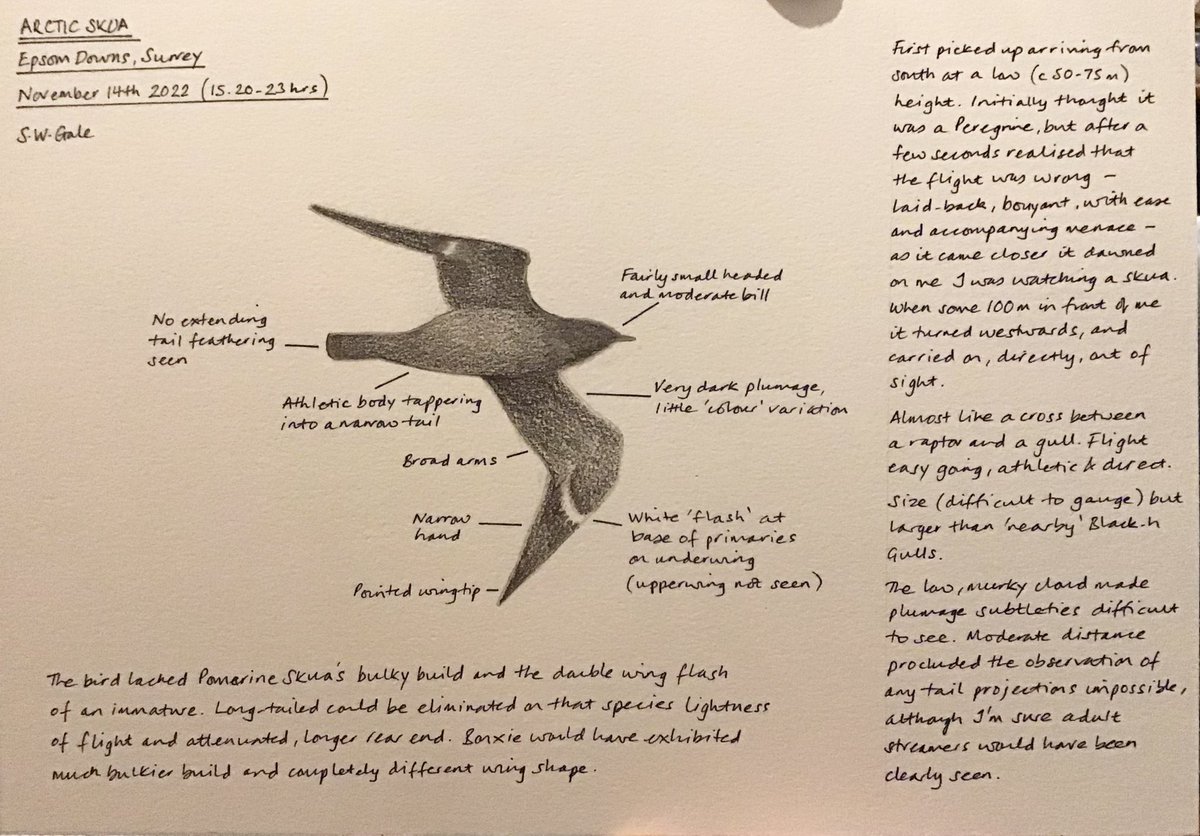
Mid-November saw me finally accept that this mid-to-late autumn had not been a classic. True, I had not ventured far from home, adhering to an almost perverse sense of 'keeping local', but previous years had seen decent visible migration sessions overhead and I saw no reason for that to not be repeated - but, by and large, it didn't. I had just the two days of thrush movement, much smaller than hoped for, and virtually no finches. A number of guaranteed roost sites had also failed to materialise. Ho-hum! But just to prove that it isn't over until 'the  fat  slightly larger than normal lady sings', when scanning the skies from an elevated part of Epsom Downs, this happened... I was hyped up enough about the sighting afterwards to get stuck into some old-school field notes. I'm no fine artist, certainly not when it comes to natural history, but we can all attempt to convey a bit of the magic that birding brings, regardless of whether or not we are classified a...

Stones and Darts

Image
The last 10 days has seen me become obsessed in scouring the local patches for large, open, weedy fields and scanning them for Stonechats - the reason? - we are experiencing ridiculously high numbers of these charismatic chats at the moment. Prior to this, my highest local day total for a single site was 10. And as will be shortly revealed, that day total has been smashed, several times over. The first inkling that something unusual was happening occurred on 30th September when I was skywatching from the base of the scarp slope just east of Box Hill. I was aware of three, maybe four Stonechats in front of me, but was more interested in the small number of birds passing overhead. Now and again I would take a break from looking up and scan the fence lines close by. And that was when I was confronted by a loose flock of 17 Stonechats, 10 of which I managed to capture in the image above (one of them is hidden on the bottom wire). Now this was unusual! I returned three days later to find th...

A few recent back garden invertebrates

Image
First up is the smart looking tortrix moth Agapeta zoegana . It is relatively common, the larvae feeding on knapweed, and is met with annually in the garden MV. However, it comes in two forms. The one usually encountered is a real looker, a concoction of banana-yellow and milk chocolate. The other, known as ferrugana replaces the yellow with a frothy cappuccino brown (above, right). I hadn't knowingly seen this form until last week, both handily coming to the MV on the morning of August 9th. 'The Smaller Moths of Surrey', published in 2012, suggests that ferrugana "occurs occasionally in the county at a low density." My checking of the MV during this hot weather has not really produced the hoped for 'good' migrant or wanderer, but this disappointment was suspended on the morning of August 5th when this bizarre moth was trapped - a gynandromorph Gypsy Moth, half female, half male. The male half in the above images is exhibited on the left hand side of the...

Cattle Egrets and Marsh Mallows

Image
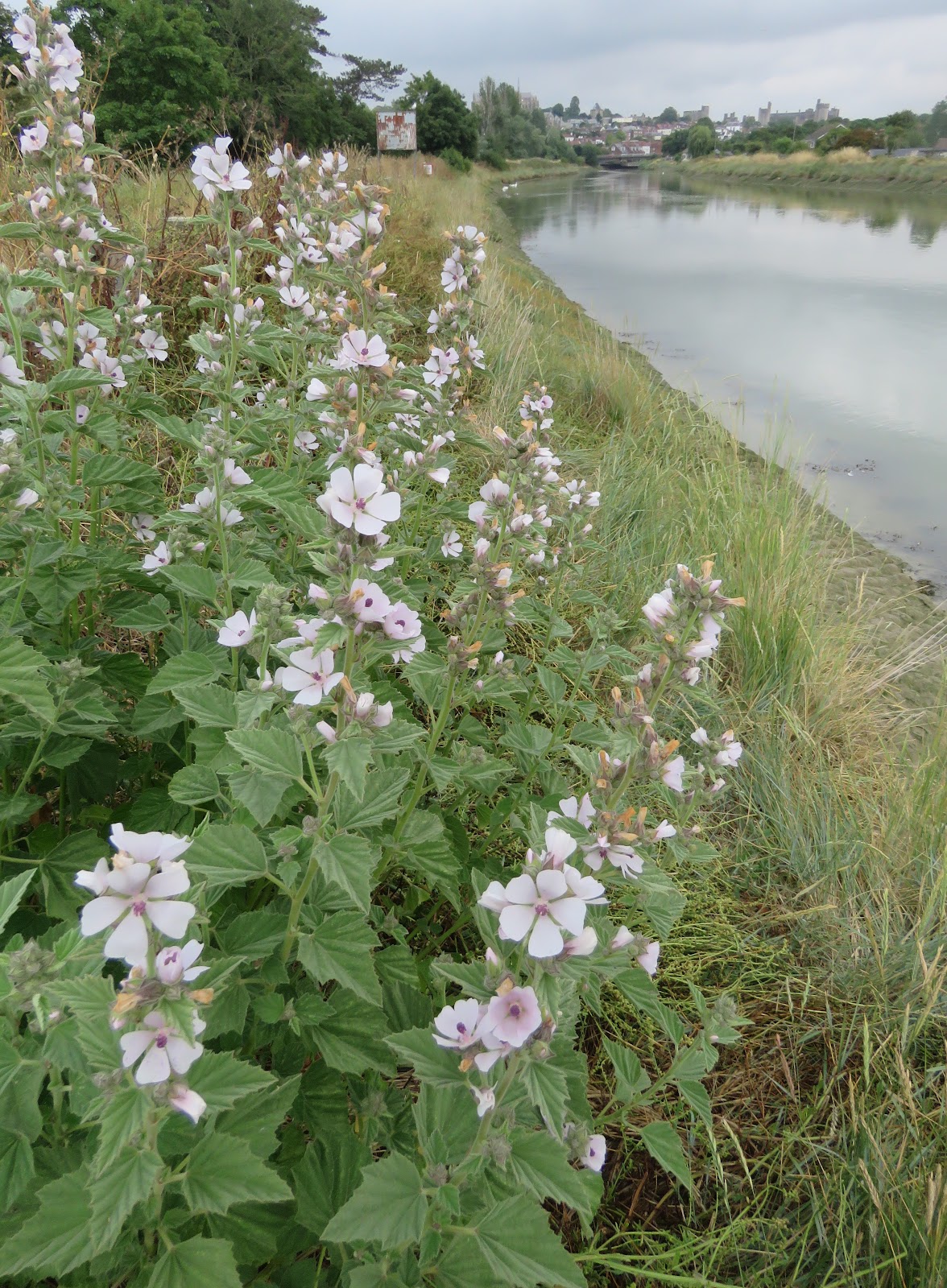
In February 1981 a carload of birders made the journey from Surrey to Anglesey to twitch a rare species of southern heron. We arrived at Aber to watch a Cattle Egret, making its way through a herd of livestock in a roadside field. Many of our fellow observers that day joined us in ticking the said species, a good lifer, one not to be underestimated - after all, they didn't come along all that often... Fast forward 41 years, and I am standing on a footpath that runs alongside the River Arun in West Sussex. From where I am I can see across the Arundel Wildfowl Trust reserve, and, scanning the far tree-line, it is possible to make out a number of white shapes perched within them. I counted 20, maybe 22 - every single one a Cattle Egret. 22! What a number - but I am expecting more. This is a known roost, and the numbers reported joining it each evening are higher still. My reckoning was that if I arrived early enough in the morning I could count them leave and so gain an accurate, simi...

When the birding and football worlds collide!

Image
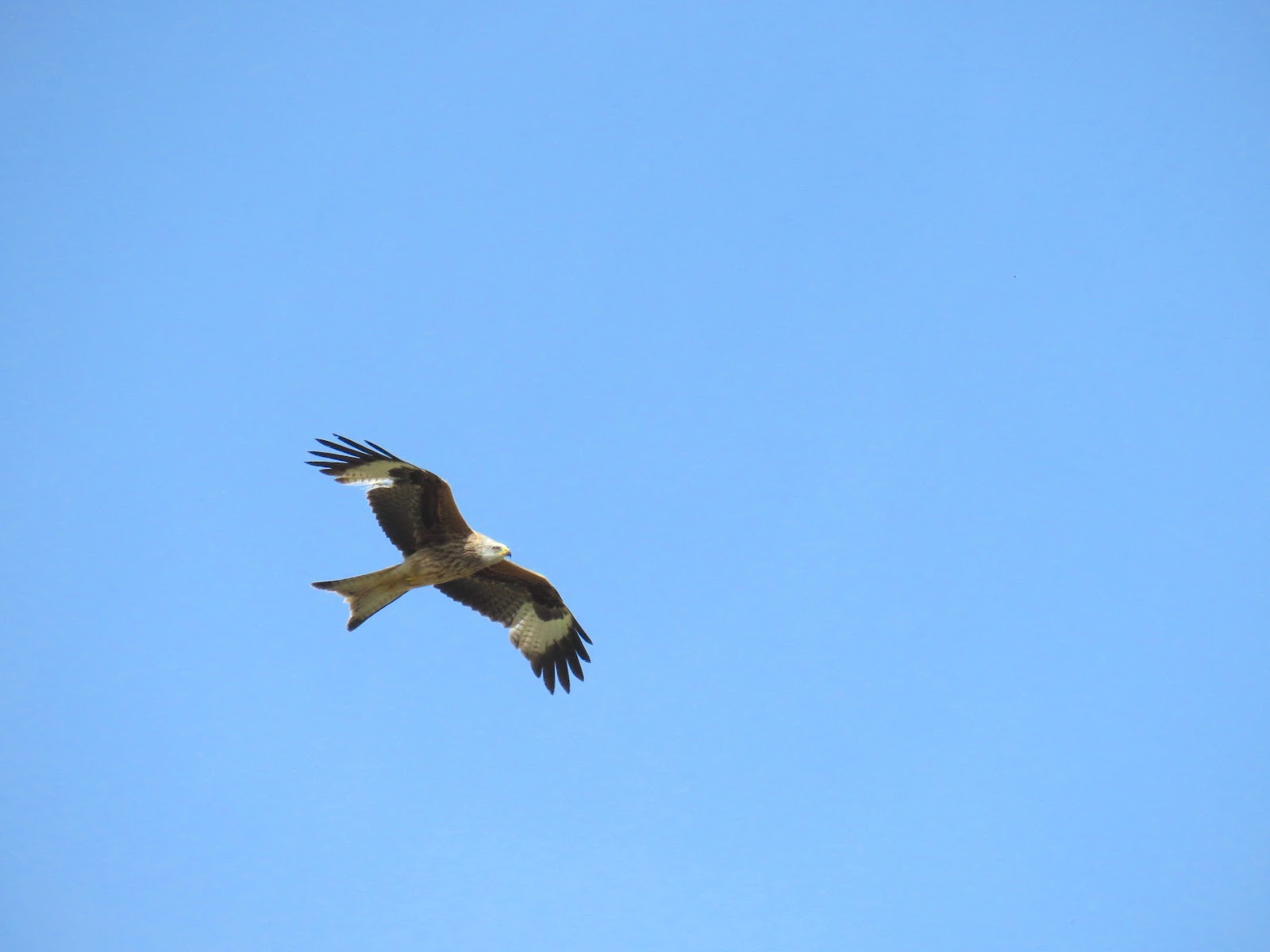
Red Kite - nowadays easily seen from football pitches across the nation Back in April I was watching the Sutton United v Crawley game in the company of Jake Everitt (Brighton and Hove Albion season ticket holder and a top Sussex birder) when we started to list birds that we had observed whilst watching a match - we swapped Little Egrets, Red Kites and Peregrines - and there and then we devised a challenge for the 2022-23 season. These are the rules: The winner be the person who has observed (or heard) the highest number of birds species during the 2022-23 season, from football ground premises whilst attending a match. Birds seen prior and post kick-off will count, but hanging around outside of the ground does not! Confined to games that involve at least one club from Steps 1-6 in England and Wales (Scottish equivalent permitted.) Friendlies, league, cup and play-offs allowed. No optics, just eyes and ears. There is no prize, just the ownership of bragging rights for the following seaso...

Butterfly balm

Image
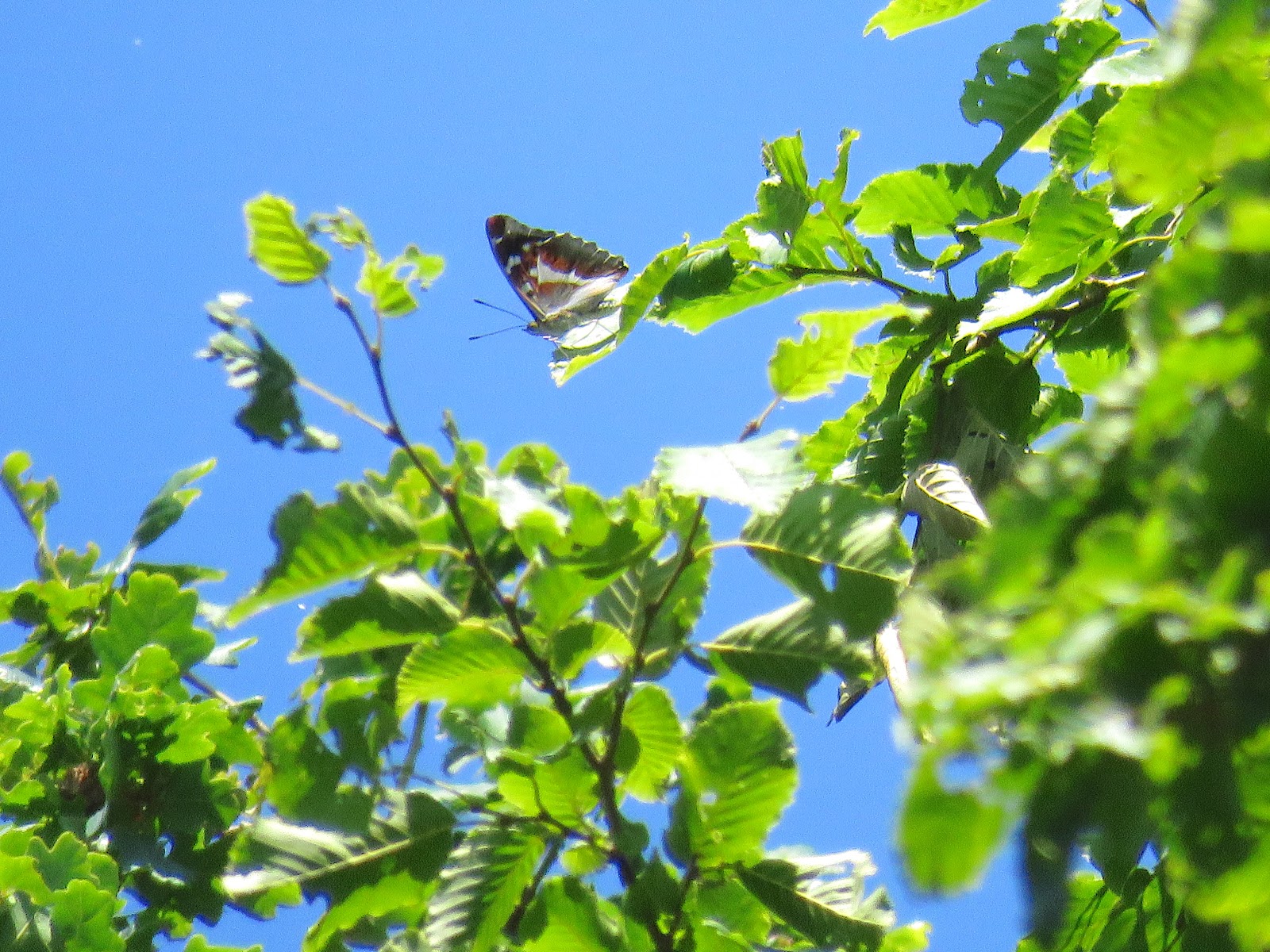
Yesterday, on a gloriously sunny and hot afternoon, Gordon Hay and myself spent several hours wandering the rides and footpaths that criss-cross Bookham Common, an area of outstanding Surrey butterfly real-estate. Our aims were to see if there were any Purple Emperors on the wing and to luxuriate in amongst one of our favourite species, the White Admiral. On arrival I met one of the National Trust rangers who told me that the Emperor had first been seen on June 17th - it looked as though, with a fair wind, our luck might be in. We didn't have to wait long before we knew that our visit was going to be blessed. The well-known 'master' trees, on the higher ground at Hill Farm, were playing host to three Purple Emperors, with much sparring, circular flights and easily observed perching indulged in (above, from 12.30 - 14.30hrs).  We were also fortunate in coming across a further individual - at 16.23hrs, some way from the favoured area - that was grounded. This butterfly was fi...