Posts

Laid back - a study in russet

Image
It is a rare event when I go out into the field and not treat every living thing that I come across as something to identify (or at least try to), to write it down in a notebook and commit it to the giant database that I maintain at home. Today was different... I have been aware for some time that my DSLR and various lenses have lay dormant, unused, and unloved. With all of the spectacular autumn colour on offer I was moved (yes, very Byronesque, I know) to get out and take some photographs. I used to dabble with illustration, and have been looking for a subject that will grab me enough to rekindle this lost art. Pattern and form have always been areas that I have gravitated towards, rather than realism. The natural world is full of both. So, this afternoon I wandered into Banstead Woods, sans binoculars set the camera function to manual, and snapped away. I was quite pleased with the results. Muted colour on an overcast afternoon which has the basis for a number of illustrative pro...
Scilly Stories (2)

October 1979. The Scillonian docked at St. Mary's and my first task was...to find somewhere to stay. At this time the previous day I had no idea that I would be on the fabled isles. I was in a studio at art college, charcoal in hand, nude model across the room (don't get too excited, think Ann Widdicombe), but a birding mate of mine was starting a two-week birding break and I just couldn't resist it. I got a lift down with him overnight from London, but accommodation would be a problem for me. He was staying in a flat that was already oversubscribed with birders to the point that there were people sleeping in the kitchen (I bet that now the flats are empty in late October). The prevoius autumn I had 'dossed' in the waiting room at the quay, but rumour had it the island authorities had cracked down on this type of behaviour, and the waiting room door was locked at night. I quickly found a B&B, comfortable and not to expensive. The landlady was a pleasant soul, he...

Latin names

I used to know most of the latin names of the birds of the Western Palearctic. I've forgotten a few of them now, but can still surprise myself with plucking them out of the air. A colleague at work would often test me, even though he isn't a birder, because it amused him. Some latin names are so apt, and I don't mean by their literal translation. Scolopax rusticola says Woodcock to me more than the word Woodcock does. Lymnocryptes minimus describes a cryptically-plumaged small skulking thing much better than Jack Snipe does. Pallas's Warbler does create an image by association, but not as much as Phylloscopus proregulus , which sounds far more stately and regal, as befits such a jewel. I had a birding friend who just couldn't get to grips with latin and used to make his own up, but he didn't make them up terribly well. So, in his birding world, Reed Bunting was, in all seriousness, Reedus Buntingus. I still think of that species by that name in honour of his w...

2618

Image
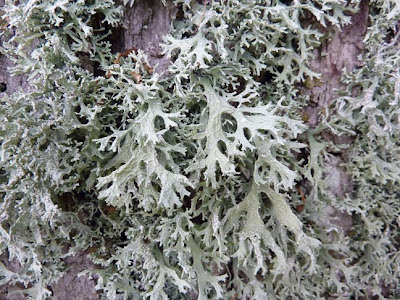
I spent a few minutes (oh alright, a bit more than that), looking back at photographs that I had taken earlier in the autumn of lichen. My basic field guides and a knowledge that what I was claiming was dirt common has led me to confidently identify a further four species. Together with an additional moss and another fungi brings my UK all-taxa list up to 2,618. I present to you a photograph of Evernia prunastri , if only to convince unbelievers that lichen can be stunning. It also gives you something to do when the birds are quiet.

Albert Ross? Who's he?

I've just re-read yesterday's post and see that I have spelt Albatross as Albertross. Dude or what? Losing my grip? The evaporation of any birding knowledge that I once held? Yes, yes and yes. So, no mention today of Bramberlings, Palarses Warblers or even Grate Gray Shrikes... as any fule kno . Note to self: There are Lapland Buntings everywhere - go out and bloody well find one. Note to any Red-flanked Bluetails reading this: Surrey is quite a nice place to visit.

Scilly stories (1)

It's October, and once-upon-a-time that used to mean that I would be embarking on a trip to the fabled Isles of Scilly. As a callow youth I had heard tales about the birding wonders that they offered. The previous autumn of 1975 had set new ornithological highs with Yellow-bellied Sapsucker and Black-and-white Warbler, together with a stunning back-up that even today would get the UK400 club weak at the knees. I didn't go in 76 or 77, but 1978 saw me unexpectedly sitting on the Scillonian one Saturday morning as part of a long-distance twitch. A Semi-palmated Plover had been found on St Agnes, a bird new for Britain and new for me in many ways as I had never heard of one before. The journey across was uneventful. As we docked, I felt as if I were undergoing a rite of passage. I was here... To cut a long story short, we saw the Plover (oh so boring), waltzed around the island in double quick time (RB Fly, RB Shrike), back onto St Mary's (LB Dowitcher), dossed in the harbour ...

Exotic flora

Image
The landfill area at Beddington SF has waxed and waned over the past few years, with deep holes filled with refuse, covered in soil and finally landscaped. One interesting by-product of this process is a flora that has been transported to the site and which has plenty of interest, mainly due to the exotic nature of the species composition. This Sunday one small part of an earth mound was bursting with colour. Close examination revealed a Sunflower (pictured), Nasturtium, Purple Toadlax and Michaelmas Daisy. I could have returned home with a more than passable bouquet of flowers for my youngest daughter Jessica. I am looking forward to combing the farm next year as I'm sure that there will be a host of alien plants to record. On the bird front a light but steady passage of finches, larks and pipits kept us busy, including a sprinkling of Brambling. The Ruff from last weekend was still about, along with 9 Green Sandpipers.