Posts

Looking after the land
Image
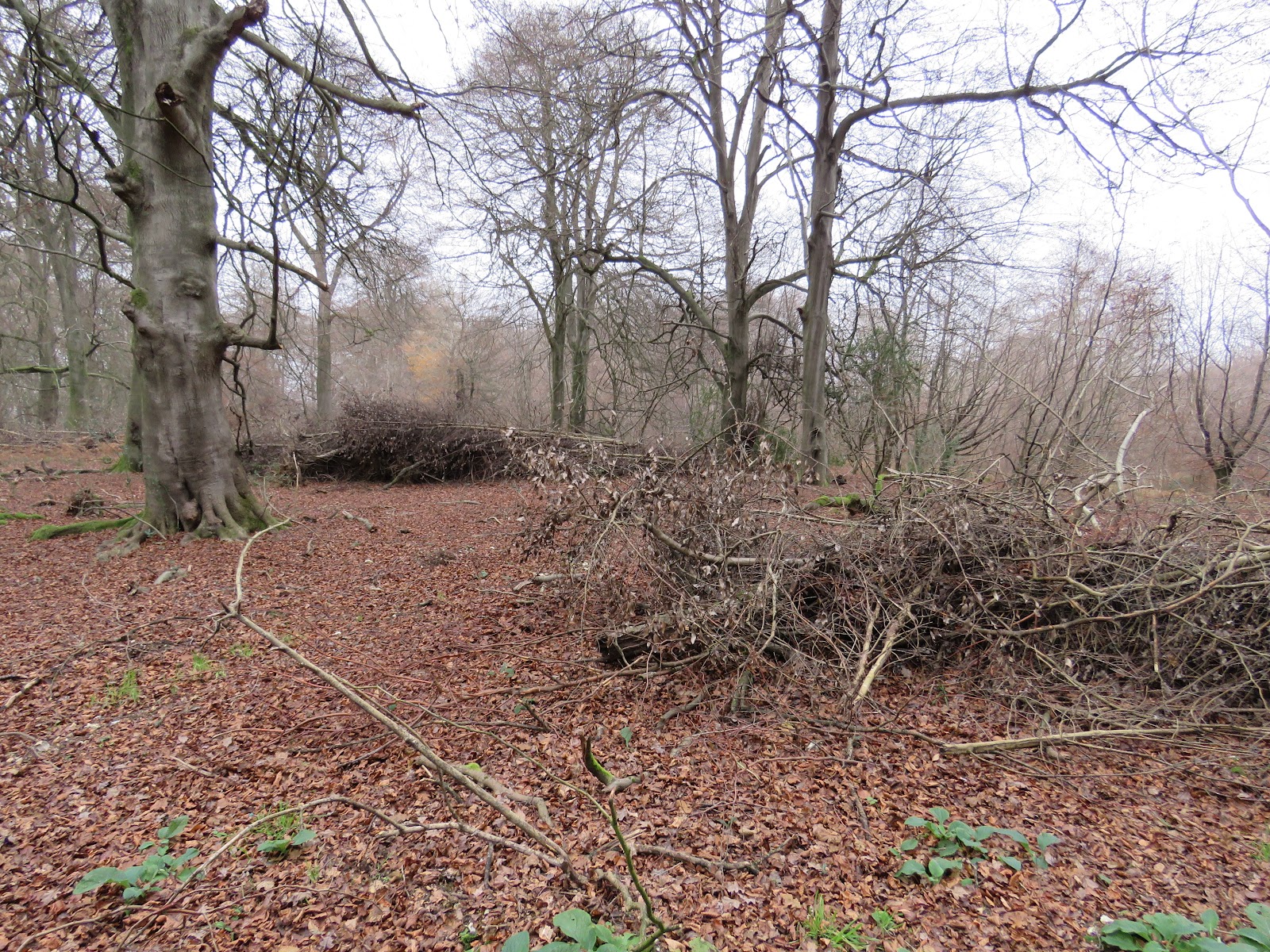
Yesterday found me wandering the many footpaths that cross the large expanse of Ranmore Common - in reality more woodland than common. The birds were, as expected in a winter woodland, hard to come by, but when I did come across them they were in number, highlights being 115 Brambling, a lone Hawfinch and a healthy count of 12 Marsh Tits.  The National Trust, who own the land, have been hard at work in recent months. A number of rides have been widened and reconfigured, changing the dead-straight passageways into meandering clearings. This opens up the habitat, creates micro-climates and creates additional woodland edge. In other areas there has been an opening up of some of the woodland, with aggressive understory removed. It was good to see that this 'dead' wood has been left on site, piled up as in the photograph above. These were proving to be attractive to birds, with plenty of tits, nuthatches and finches within them, seeking out food. I also came across a large part of t...
Nice and slow

Image
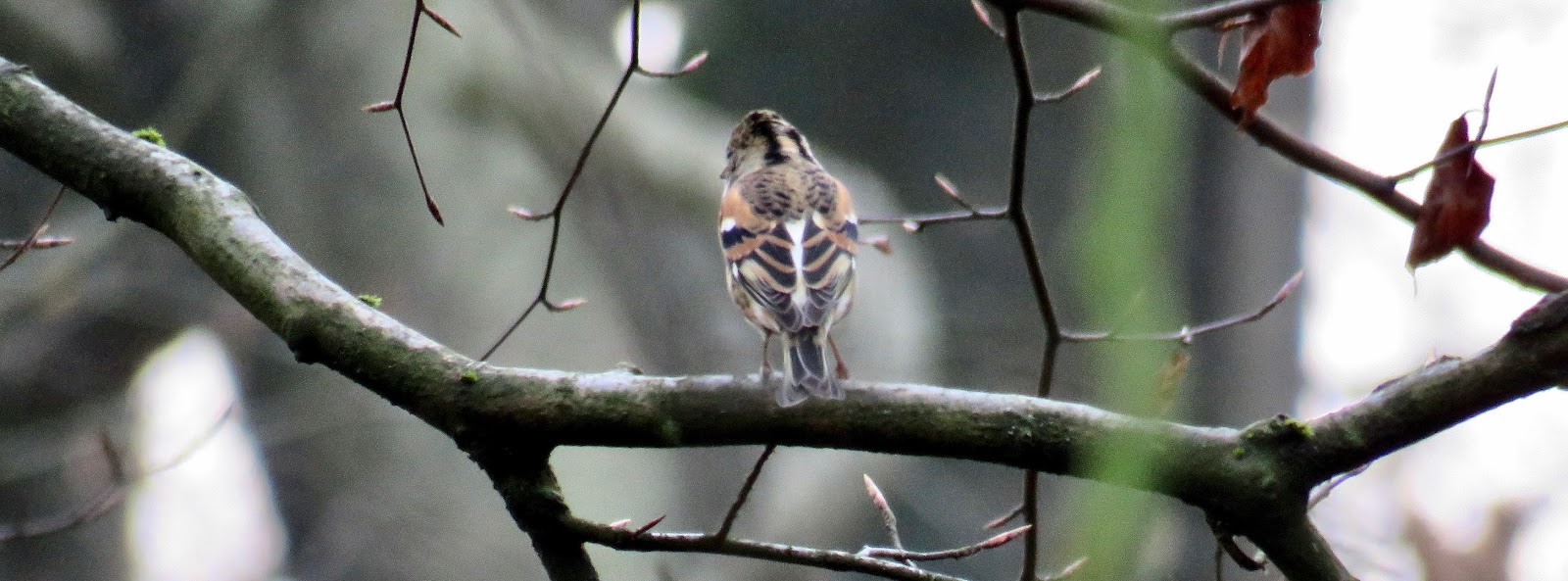
  This morning I was out of the house before dawn, and was surprised to see a number of moths flying in the car headlights as I drove along the wooded lanes at Headley - maybe I shouldn’t have been, as the temperature had turned remarkably mild. My arrival at the ribaldry-named Dick Fock’s Common coincided with daylight attempting to break through a low, stubborn cloud. A good couple of hours were spent walking the footpaths, venturing out into Effingham Forest, spending as much time watching my footing on the slippery muddy paths as I did any birds. It was quiet, with three Hawfinches being the highlight. Onto Ranmore Common, where I criss-crossed the area, up and down the wooded slopes, for a good three hours in total. As to be expected in winter woodland, the birding came in helpings of ‘feast’ and ‘famine’, with seven Hawfinches (a flock of five and two singles, one pictured below) and at least 55 Brambling (above). A number of tit flocks were working their way through the dead...

Spiritual

Image
That giant of contemporary nature writing, Richard Mabey, has reportedly said - “I really don’t understand what the word ‘spiritual’ means. I am deeply a materialist; I don’t want to have a metaphorical relationship with something beyond its reality.” That surprised me, because, as an avid reader of Mr. Mabey’s words, I have always thought of him as ‘spiritual’. Is my understanding of what ‘spiritual’ means incorrect, or is it that I am just out of synch with the great wordsmith? Spiritual . According to one of the many available dictionaries, it can be defined as: ‘relating to or affecting the human spirit or soul as opposed to material or physical things.’ I readily identify with the idea of spirituality, which, coming from an unquestioning atheist, possibly suggests that I would be very much at home with the druids and pagans. I do see, and feel, the wonder in our natural world (and, of course, the unfathomable cosmos beyond it), but can also be moved by places that show the scars ...

Less is more

Image
Several times over the past few years I've looked at my attempts to identify and record all orders of the natural world and have shaken my head at my futile exercise. It is just all too much. Yes, I am lucky enough to have time on my hands to try such a thing, but in reality all that I end up doing is water down any proficiency that I have in my 'favourite' orders. Take birds for example... Up until the late 1980s I would read almost everything that was published regarding bird identification, and without wanting to come across as big-headed, was more than proficient in the field. I then started to take more interest in moths and plants, orders that boast thousands of species. My mind wandered away from birds and was immersed in these new worlds. There was much to learn, and my time was spent trying to be able to identify such things as the different pugs and crucifers that were now being revealed to me. The birds took a back seat, and because of that I slowly became rusty....

The Great Northern Diver question

Image
As I have already mentioned in the last post, on the morning of November 11th, while recording a strong movement of Chaffinches over Porth (just outside Newquay) in Cornwall, I observed five Great Northern Divers, seemingly flying on a similar line along with the finches. I think it is worth elaborating on these birds and try and understand what they were up to. I was looking almost due north, along a cliff-line that runs down from Trevose Head until it meets Porth (on a NNE-SSW axis), where the coast suddenly kinks away and heads WSW. Not quite a 90 degree turn, but abrupt all the same. The first bird appeared at approximately 09.00hrs, and was picked up coming in off of the sea, at a fair height. Obviously a heavy Diver, scope views were able to confirm it as a Great Northern. I was somewhat surprised when the bird carried on with its S or even SE bearing, shunning the coast and heading inland, gaining height as it did so. I was quite excited by this. My pulse quickened even further ...

Cornwall in November

Image
Two weeks on the north Cornish coast in November? To me, that suggested plenty of wind, chilly temperatures, rain, wet clothing and plenty of reading indoors to escape the weather. Our ‘postponed’ family holiday could not have been any different - apart from the odd flurry of drizzle it was dry; the temperature was never anything other than remarkably mild (I even found myself dressed in a t-shirt whilst sitting on an exposed headland one balmy morning); and the wind did not get up above force 4, many days remaining in the 1-2 region. Although not a birding holiday, the bins, scope and tripod came along, and every day saw me wander off to do a bit - on a few occasions more than just a bit. 80 species were recorded in our 12 days, not bad for the time of year and all seen within walking distance from our base. I went everywhere on foot, exploring the coastal headlands, valleys, set-aside fields and winding lanes that characterise the Porth area, a small town east of Newquay. We were sta...

The 'always learning' curve

Image
We are almost at the end of the autumn visible-migration season, and, so far, it has been pretty decent. Following on from a massive Redwing day, and a more than passable Fieldfare-fest, I have spent the past two mornings at Colley Hill, on the North Downs just above the town of Reigate. Here are the two watches in detail, taken from my postings on Trektellen: Friday's session was four-and-a-half hours of birding that had its rewards, although the bird stream didn't really get going. Of the thrushes, it was three flocks of Blackbird (50, 27 and 25) that were the most interesting, as I cannot recall watching this species visibly migrate through the county before, certainly not beyond the odd one or two. The four Hawfinches were in a flock and briefly alighted. Watching many of the birds as they moved westward was instructive. Most arrived from the east, flying parallel with the scarp slope, maybe 100-200m out (to the south). Plenty just carried on through towards the Mole Gap, b...