Posts

Showing posts with the label Juniper Bottom

Wooden butterflies and some Hawfinches
Image
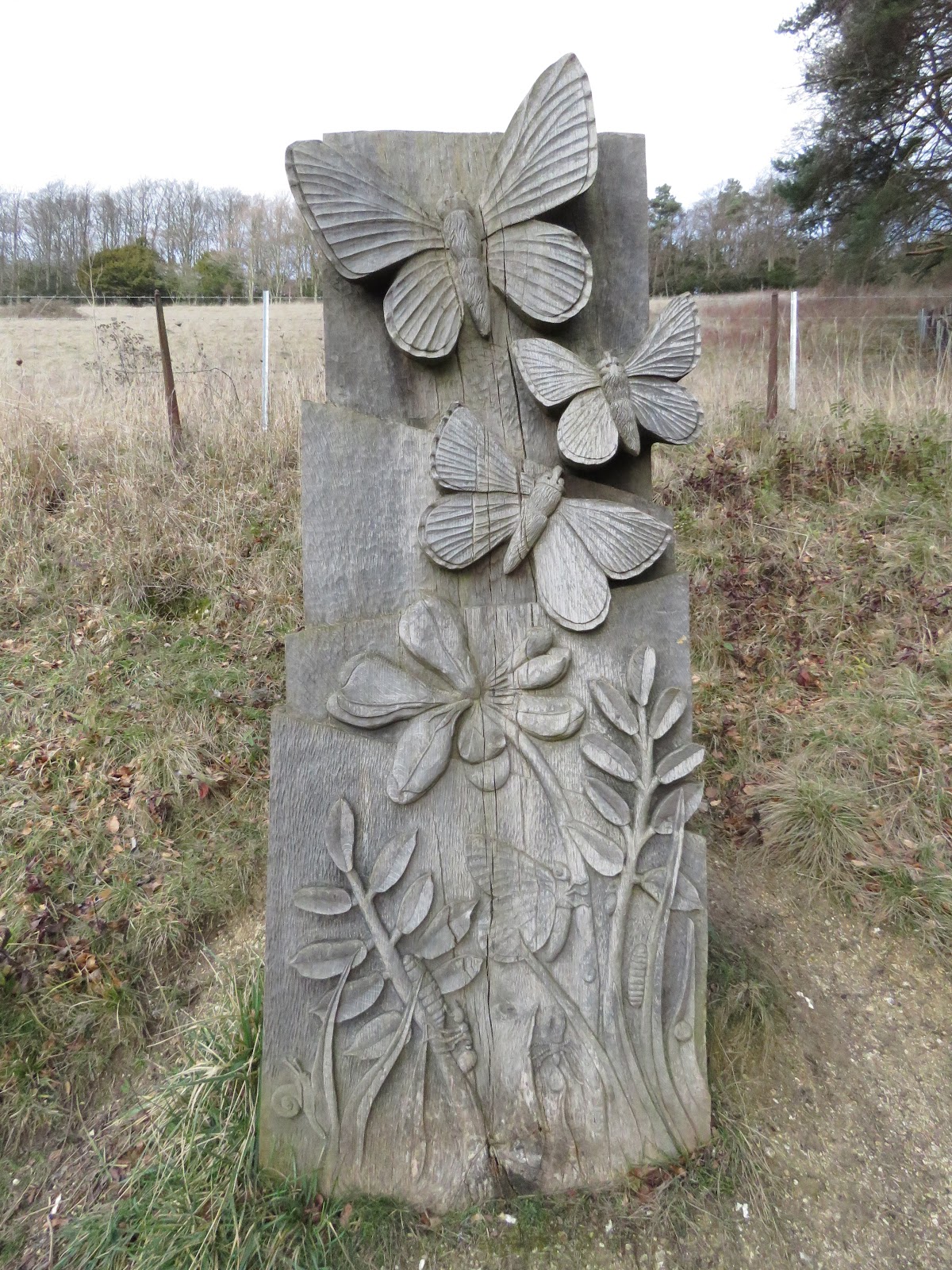
On the edge of Ranmore Common, at the very bottom of Denbigh's Hillside, you will find this charming wooden carving. It depicts the life cycle of the rare Adonis Blue butterfly, a species that can be readily found on the chalky slopes above. It was created by local artist Iain Hamilton Crafer, from a two tonne piece of felled oak. Below is a detail from the sculpture of an ant tending a caterpillar. On chalk downland it is usually the Red Ant that 'looks after' the caterpillar, offering it protection from predators in return for a fix of honeydew that is secreted by the larvae. If you would like to see the butterfly for real - and not just a giant wooden facsimile - go along on a warm day in May when the first brood should be on the wing. The food plant of the caterpillar is Horseshoe Vetch, so you will often see the adult butterflies flying around this flower which is easily found across the open grassland. It was a good day to be out. Despite a bit of a breez...

Comfort

Image
This path does not qualify as a 'holloway' - it would need to possess higher and steeped banks to do so - but the impression of a tunnelled-out thoroughfare, worn by years of animals being herded and carts being driven along the narrow confines, is present. It speaks of age and tradition. This is the sort of thing that I find comfort and inspiration in. (Image taken yesterday at Juniper Bottom, near Mickleham.)

A late surge of thrushes

Image
A dawn arrival at Juniper Bottom saw a keen frost and good visibility. I trudged up the open slope towards Juniper Top but found my passage halted several times by flocks of Redwing that were passing overhead in an easterly direction. Half way up I stopped to witness (and count) what was obviously a heavy thrush movement. And here I largely stood for the next four and a half hours. All the birds were arriving from the west and following the line of the valley (running from Norbury Park to Headley) and leaving east to north-east. They were generally in good sized flocks (20-200). A few Fieldfares were with them, with some flocks being mixed. The only other species seemingly involved were Chaffinch (55) and Brambling (10). After 09.30hrs the movement lessened but was still obvious. Visibility started to worsen, with a misty horizon and pockets of light fog. And then, as if an agreement had been reached by the thrushes, the flocks, instead of moving on and out of the area, started ...

Boys from the brown stuff

Image
Today it was a pleasure to welcome Beddington Sewage Farm stalwarts Peter Alfrey and Kevin Guest onto the chalk for a botanical foray. A start at Epsom Downs provided Cypress Spurge and Round-headed Rampion, with butterflies also highlighting with a second-generation Small Blue and plenty of Chalkhill Blues. We then continued onto Mickleham and a scour of Juniper Bottom. The orchids were largely over, although there were a few Broad-leaved Helleborines in bud. Corn Mint (below) was a pleasant find, along with plenty of Silver-washed and Dark Green Fritillaries, plus one Purple Emperor which flew down the middle of the path and straight through us. The slopes of Box Hill at the zig-zag were a great disappointment, with the parched ground not a great place for much flower or insect activity. We cut our losses and headed to the River Mole at Young Street, where a combination of cool shade and watery aspect cooled us down. Botanical highlights included Small Teasel (below), Arro...

Flock foraying

Image
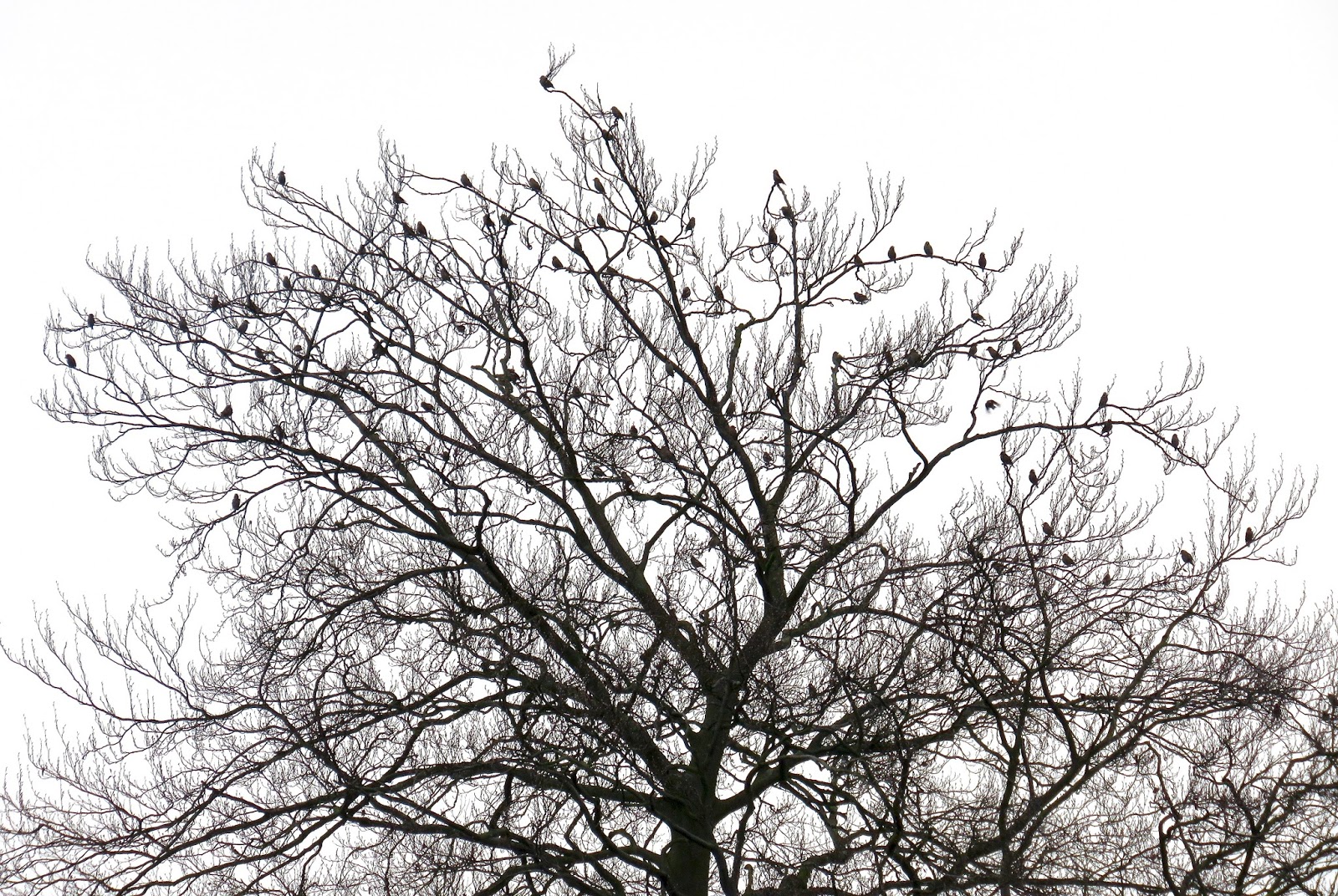
It had been a week since I last visited Bramblehall Wood to count the Hawfinches, although visits had been made to outlying areas in the past few days that suggested good numbers would still be present. On arrival at 06.15hrs three Hawfinches flew over Whitehill car park and by the time I reached my viewpoint overlooking the wood quite a few were already perched up in the bare tree tops, favouring the northern end (taster video above - the BBC Natural History Film Unit has nothing to worry about). At least 270 were counted, and when these birds moved along the tree-line in a northerly direction I carried on southwards. More birds soon arrived, coming from the south and also off the top of Ashurst Rough, mainly heading to where the earlier birds had been - as in recent visits a steady passage helped me to obtain an accurate count. When I reached an additional total of 280, a mass of 300 birds came back along the woodland edge, swirling in front of me before bursting through the treet...

The return of Juniper Bottom

Image
The forecast of a very wet dawn had postponed my planned visit to Bramblehall Wood, but the rain had abated by 08.00hrs so the decision was made to check on Juniper Bottom. This was mainly due to my having seen at least 115 birds there two days ago and the suspicion that the enormous flock from Bramblehall Wood, (once it has headed up the slope and onto Ashurst Rough and Juniper Top) was then spreading out into Juniper Bottom (and beyond). And so it proved. By 08.45hrs I had taken up my position allowing clear views of the banks of Yew, and the bare deciduous tree-tops, on the eastern flank. Hawfinches were already on show. For the next hour flocks were largely spilling over into the valley from the high ground to the south-east (Juniper Top). They were making their way either northwards along the eastern ridge, or flying across the valley and up onto the western ridge (Box Hill and Lodge Hill). In between frequent showers I was able to witness a number of sizeable flocks on the mo...

600

Image
Where to begin? Yesterday evening might be a good place. I was delighted to see that two Sussex stalwarts - Chris Janman and Dick Senior - had recorded 400+ Hawfinches at Kingley Vale that very morning, one of the few areas in the country that can out-Yew Mickleham and Box Hill. I was already planning on visiting Bramblehall Wood the following morning (today) and their success got me wondering as to whether or not flocks were starting to join forces, or that I would find the Surrey woodland to be a lot quieter as the birds had all moved to Sussex! I was in the Whitehill Carpark by 06.15hrs and within ten minutes found myself staring across the field and into the tree tops of Bramblehall Wood. I was frankly surprised to see, at this early hour, at least 200 Hawfinches already on show (part of the flock pictured above). They were quite motionless and, I think it safe to assume, had just emerged from a very close roosting site. Over the following hour more birds arrived (mainly fro...

Numbers

Image
Another day, another dose of Hawfinches, but what a dose! With birds being faithful to Bramblehall Wood I returned this morning and immediately found up to 30 perched on top of bare trees, which quickly built up (with some birds flying across to Juniper Top). From my position on the 'Juniper Top - Ashurst Rough' lower footpath I became aware that I could hear Hawfinches calling above me. They were noisy and easy to track as they moved along the tree tops. It was a large flock, but numbers were difficult to assess due to having to look through a tangle of twigs and branches. However, the flock built and got an awful lot noisier - it soon became apparent that a minimum of 110 birds were involved. After ten minutes or so they moved up the slope towards Ashurst Rough. Some of these birds may have doubled back, as a scan across the field towards Bramblehall Wood revealed a handful of perched birds on show. Slowly but surely, over a half-hour period, birds appeared out of nearb...

More Hawfinch

Image
With Hawfinches turning up all over the shop (there must be several thousand across the southern half of England) a three-hour back garden vigil was in order this morning. A steady trickle of Redwing, Song Thrush, Chaffinch and Starling was obvious - together with a lone Brambling - but nothing exhibiting a brutish bill and wing bars deigned to put in an appearance. A change of scene was called for. A return to Juniper Bottom was made, mainly due to its Hawfinch pedigree and also because I could skywatch across the Mickleham valley all the way down to the Mole Gap (as viewed above). After only 15 minutes a flock of six flew across me and then veered NW. A further hour's worth of eye and ear strain could only add 100+ Redwing. The past couple of night's may have been mild, but the MV haul has been poor. Last night did at least produce a couple of Silver Y (above). The season seems to be running out of steam.

Trooping of the funnel

Image
I took myself off to Juniper Top and Bottom this morning, still nursing a sore throat and head cold, although it does finally seem to be on the wane (I'm not expecting any sympathy by the way). My walk was circular, taking in plenty of dark footpaths that were swaddled in yew, ivy, moss and fern. There were plenty of birds, mainly marauding flocks of tits (which did include 11 Marsh, spread out along the route) and thrushes (110+ Redwing were the most numerous). One particular Yew was huge, the photograph below does not do justice to its size, although to help I have added three green dots which mark the six foot point from the ground. Yes, it was big! There was little in the way of fungi, although one smart fruiting body caught my attention, which if I'm not mistaken is a Trooping Funnel (below). I attach a caveat to all my fungi identification - it's a bloody minefield...

Return to Hawfinch valley

Image
It was here, in March 2013, that I stumbled across a large gathering of Hawfinches. At its peak the flock numbered between 110-130 birds. Birders travelled from far and wide to see them. Since then, apart from an isolated sighting, none have returned. This morning I can confirm that they still haven't... but, as always, it's a lovely place to while away some time. Across the valley, in several disturbed areas on the upper slopes of Mickleham Downs, the rare Wild Candytuft grows, at its only Surrey location. This morning I found quite a few plants in flower. In fact, even in the depths of a cold winter it is normal to find a few in bloom. Last years Bird's-nest Orchids were standing proud, if desiccated, on the slopes of Mickleham Downs under beech woodland. Up to 200 were easily found, all within 100m along the edge of a footpath. Previous forays into the wood away from the few paths on offer tends to throw this species up. There must be four figure counts on th...

Brief encounters

Image
Instead of giving you a verbose account of each of the four unlucky moments that didn't quite make the Top 10, I'm cutting a wordy corner and am dishing up this particular course on a paper plate with plastic knives and forks - rest assured, the Top 10 will be served on best china with accompanying posh cutlery! Maiden Pink October 22 1982 Dungeness Thrush Rush I've only just written about this so, if you missed it or want your memory jogged, click here . July 1 2007 Breckland Plants A whistle-stop tour of some of the finest sites on the Norfolk/Suffolk border, all of them that held some very special plants indeed, in the company of three knowledgable and agreeable companions - Peter Follett, Stephen Clarke and Barry Phillips. We virtually cleaned up, with my highlights being Proliferous Pink, Maiden Pink and Spiked Speedwell. To cap it all, a Marbled Clover (moth) joined in with the fun! July 4 2012 Dungeness Oppen pits revisited Thirty years after my last ...

Just butterflies

Image
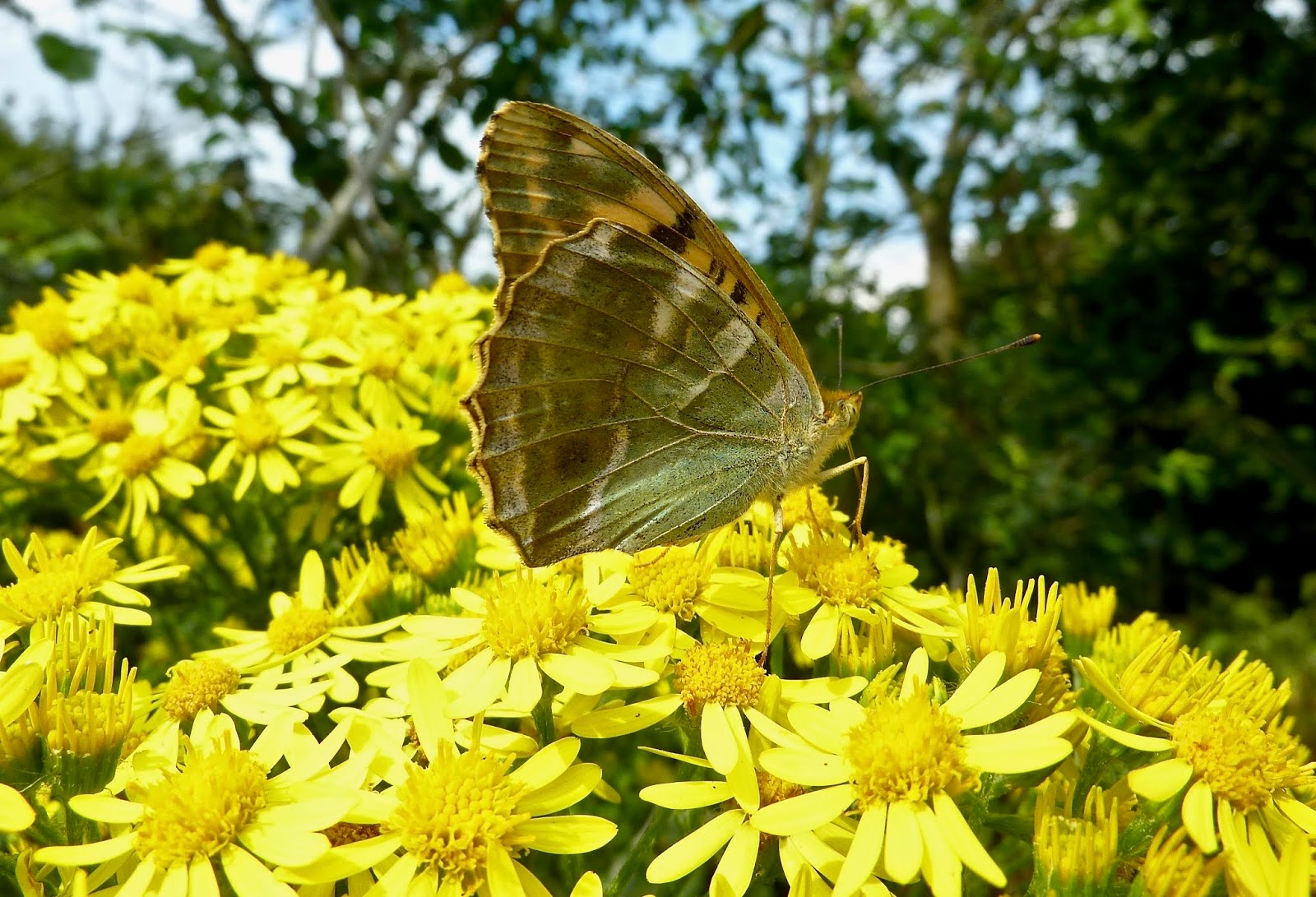
I spent this morning and early afternoon in the Juniper Bottom/Top/Box Hill area, otherwise known as 'Hawfinch Valley'. None of the monster-billed finches were seen or heard, but the butterflies were out in force. At least 60+ Silver-washed Fritillary (above), 8 Dark-green Fritillary and a single White Admiral were the highlights. The zig-zag downland was, however, disappointing, with little on the wing and my hunt for an early Straw Belle proved to be a failure. However, in such glorious surroundings and in matching weather it would be churlish to complain.

Elfin Saddle

Image
A glorious late autumn morning saw me wandering the woods and footpaths that form most of Juniper Bottom and Top in Surrey. Once again, no Hawfinches, although they might be lurking nearby in smaller numbers than last winter - it's easy to forget that they were only knowingly present during March, so who knows when they actually took up residence? Apart from at least 7 Marsh Tits it was all quiet on the ornithological front. Where would I have rather been today - here or standing with 100 other blokes in someone's garden in Wales? No contest, and not just because I have already seen Orphean Warbler in Britain. I do like beech woodland, at any time of year. It has a majesterial feel, like walking through a natural cathedral, the light of a special quality. My highlight was this Elfin Saddle - not uncommon, but I have not seen one before. Yet another fungi with a great name.

Hawfinch no show

Image
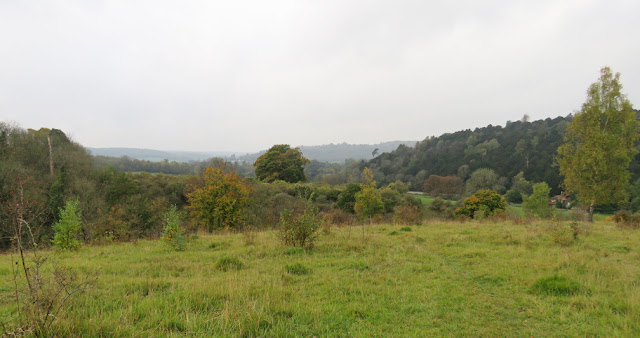
Juniper Bottom, looking up the valley. Larches in foreground were good for Hawfinch in March Juniper Bottom, looking back towards car park. The bank of yews supplied the March Hawfinches with food. Last Sunday, after paying a visit to the Starfish Fungi, I took myself to Juniper Bottom, mainly to check for Hawfinches. Wintering roosts can start to build by now, but I am more than aware that the flock that was present here in March might well have been a one-off, or not start to form until later in the winter. Time will tell. No birds were seen, or heard.

Green Hound's-tongue

Image
With the south-east having been awash with good birds - Roller, Red-rumped Swallows, Terek Sandpiper - I did the sensible thing and went looking for plants - I'm nothing if not utterly predictable in my perverse choice of where to go and what to do. My location of choice was Juniper Bottom (where the Hawfinch flock was earlier in the year). The flowering season is, without doubt, behind where it should be. The Bugle (pictured above) was showing well, with plenty of spikes offering themselves for insects to feed upon. The trouble is, the insects are largely missing. Only a few bees were seen, and butterfly numbers, too, were depressed. I did see two Dingy Skippers and a single Grizzled Skipper, but it was hard work. Moth-wise up to a dozen Speckled Yellow were on the wing. Along the road by the car park there is a major botanical rarity - Green Hound's-tongue. A few plants were starting to flower, the picture above showing the muted dusky-pink colour of the petals. It ...

100+ birds and 100+ birders

Image
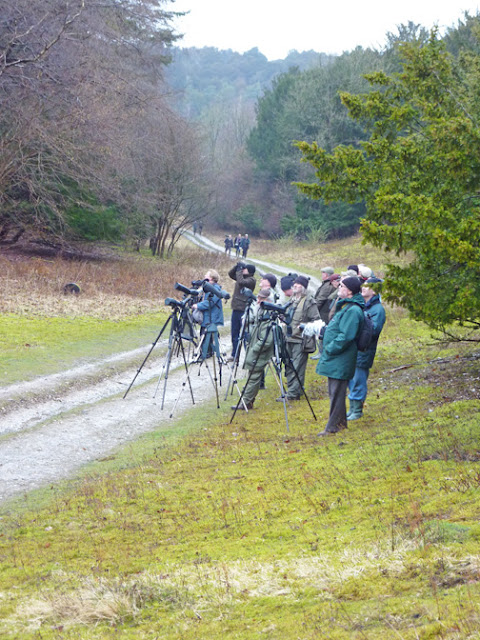
Dawn found me at Juniper Bottom near Mickleham, waiting for the arrival of the wintering Hawfinch flock that I first found eight days ago. The light was poor and the precipitation an annoying drizzle that didn't quite want to turn into proper rain (although by mid-morning it had). The first Hawfinches arrived at 06.40hrs, and for the next half hour up to 30 birds appeared, the largest flocks being 12 and six. At 07.45hrs and a little further up the valley the Hawfinch 'mother ship' finally appeared, in the guise of 80 birds spread out across a Beech tree and flanking Yews. They kept in view for maybe 10-15 minutes before doing what Hawfinches do best - just disappearing! At least 110 were present this morning. By 10.30hrs, apart from the odd call and fly-by, they had seemingly gone. Almost as numerous were the birders. The most in view at once was 40. I reckoned on 100+ in total. For all you keen students of birding demographics there were six women and just three men ...

A bit more about Hawfinches

I've been looking at the OS map over the past couple of days, trying to work out where the Mickleham Hawfinches might go when they are not there - which is, if truth be told,  most of the day. The facts are these: the birds have been seen between 07.30 - 11.00 (ish), not always on show but a bit of time spent will repay those who wait. After that, nothing (and between myself and others there have been birders present until early evening). That would suggest that they do not roost at Juniper Bottom. However, if 50-60 birds were present by 07.30 last Monday morning, then the roost cannot be that far away either. But is that too much of an assumption to make? It's light not long after six at the moment, so a quick preen and a shake of the wings would see them away with over an hour to spare to get to Juniper Bottom. I have found Hawfinches on three previous occasions in the area. Firstly at the western end of Headley Heath in October 2005. Eight birds were very active an hour af...

Pots and kettles

Image
This is a very healthy Spurge-laurel at Juniper Bottom (between Box Hill and Mickleham Downs). Most early springs will see me posting an image of one (or several) of these plants ... and there I am cracking on about people posting images of Wheatears! Pots and kettles indeed... My wandering up the Juniper Bottom valley was rather good, with a fly-over flock of at least 12 calling Hawfinches, up to seven Marsh Tits, a few Siskins and, icing on the cake, a Raven flying over Juniper Top itself - a NDB uber patch tick no less. I think this is how I ought to approach my birding in the coming months - don't actually go out with the intention of doing so, but carry my binoculars just in case.