Posts

Showing posts with the label Spotted Flycatcher

I cannot really complain

Image
For the past two early-autumns I have visited a small section of the Sussex South Downs to get a birding fix. In a vague rectangle, between Burpham in the west, Steyning in the east, Chanctonbury in the north and Cissbury in the south, there is a delightful mix of chalk grassland, pasture, crop, copse and hedgerow, all with a good track record for birds in number and species of some repute. In my previous visits I have come to expect some big passerine flocks and migrant choked vegetation, but today was a bit of a disappointment. Passerine numbers were much depressed, especially warblers, and it was, at times, hard going. I did end up seeing a Marsh Harrier, a Hobby, four Yellow Wagtails, 13 Wheatears, five Whinchats, a Spotted Flycatcher, a Common Redstart, a Sedge Warbler and 50 Corn Buntings, so I cannot really complain. I will try and get back before September passes the baton to October, as this land is excellent for chats.
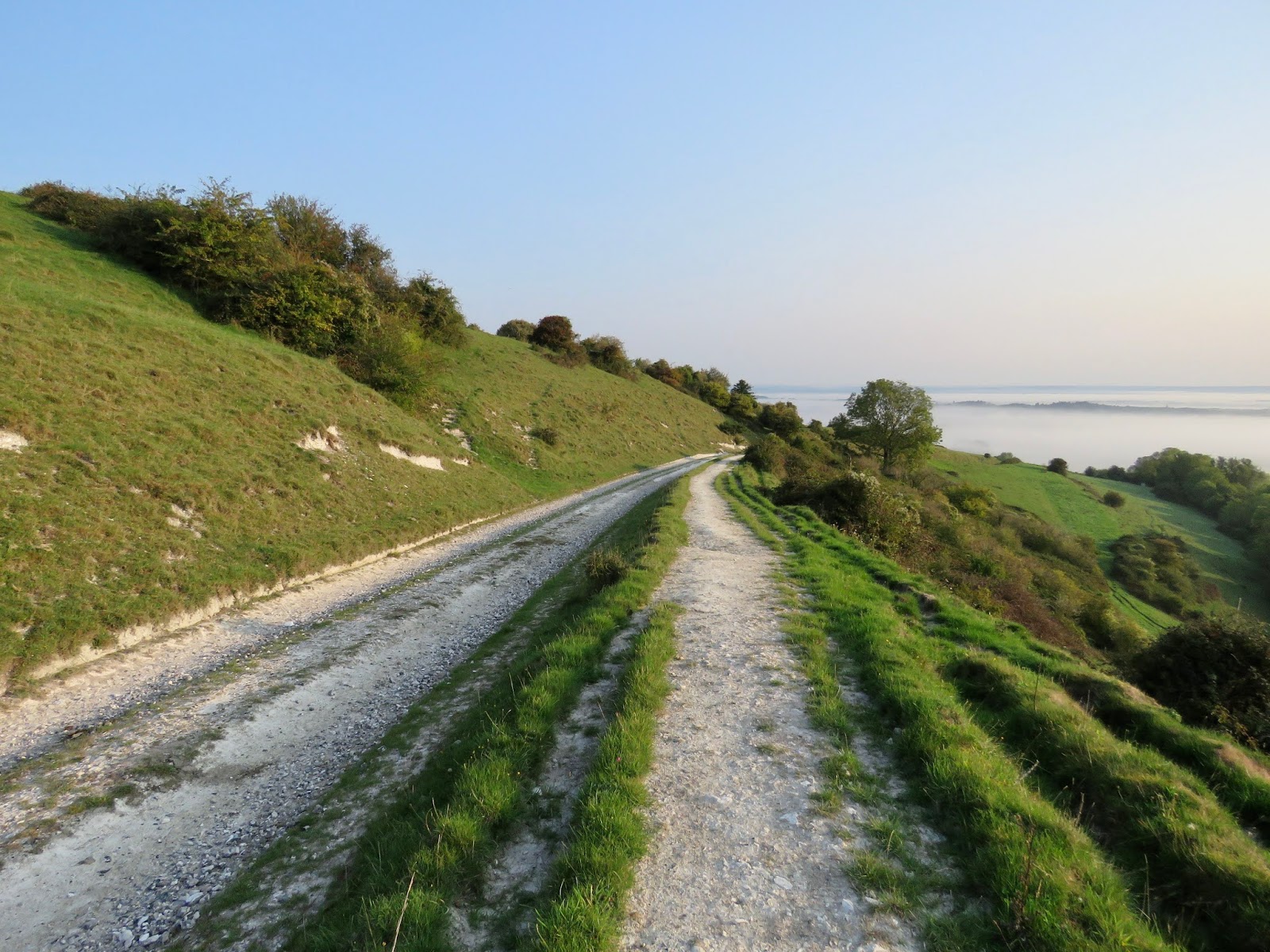
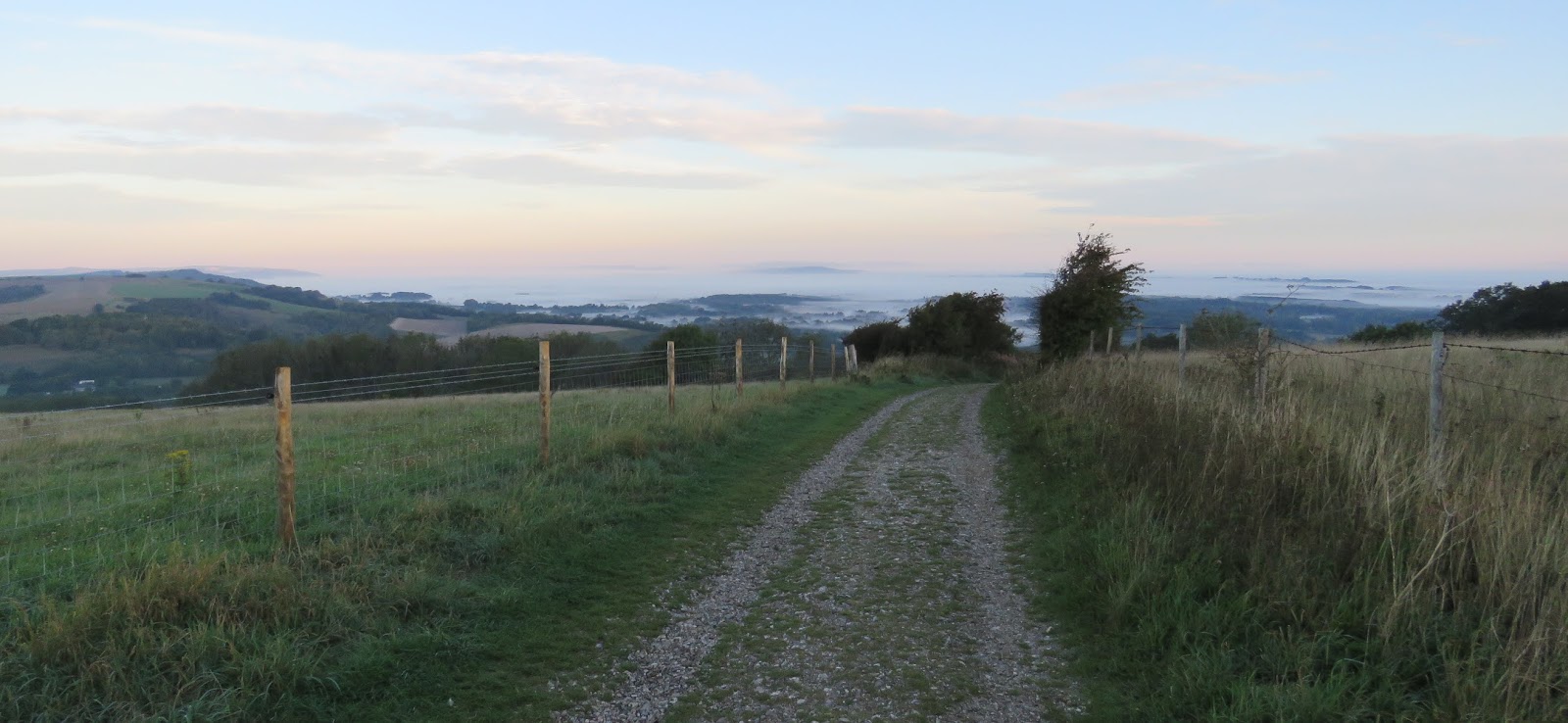
South Downs and beyond

Image
The eastern flank of Sullington Hill - full of warblers Compared to the North Downs, the South Downs generally has steep slopes on both flanks (with a narrow summit) and largely lack woodland at their tops. This creates a dramatic, open and wild landscape. This morning I walked from Washington to Amberley (West Sussex) and back. This section runs roughly parallel with the English Channel, that can be clearly seen some six-and-a-half miles to the south. First light was surprisingly muggy. Chiffchaffs were already calling and were joined by Skylarks, Yellowhammers and the rhythmic chugging of Red-legged Partridges. A largely uneventful walk to Sullington Hill was livened up by the scrub on the eastern flank being full of birds, mostly Blackcaps and Chiffchaffs. The latter was going to be a feature of the day, birds observed moving eastwards at vegetation height along the South Downs Way, using the thin strip of hedgerow as a fly-line. At least 60 were recorded. At Chantry Post it...

A Sussex interlude

Image
I arrived at the Washington 'South Downs Way' car park at 06.30hrs, immediately heading up the hill towards Chanctonbury Ring. This section of the Sussex hills are well served with footpaths which criss-cross the open farmland. This is big sky country, blessed of set-aside fields, hedgerows, copses and, most importantly, birds. Chiffchaffs and Blackcaps were already calling and an early Common Redstart and Spotted Flycatcher boded well for the day ahead. Chanctonbury Ring the site of a prehistoric hill-fort (the grove of trees is an 18th-century folly). Both times that I've birded here there has been little on offer within the 'ring', all the action taking place along the fence-line and northern slope between the dew-pond and 400m east of the grove, (this eastern end characterised by a graveyard of ash die-back victims). The morning visit was bright enough, with Whinchat, Wheatear and plenty of commoner warblers, but my return visit (at about 15.30hrs) was ...

Sussex downland

Image
I do like my chalk downland, and today, for a change, swapped my North Downs for the South Downs and spent a long day wandering across some of West Sussex's finest. I parked at the base of Chanctonbury Ring at 06.30hrs and spent a largely unfruitful hour-and-a-half in the area - maybe it was still too early, but a Whinchat and a handful of commoner warblers was not all that inspiring. I decided to return later in the day. My plan had always been to walk across to Cissbury Ring (above) via the network of bridlepaths, and no sooner had I started to do so than the birds started to appear, with Willow Warbler (3), Garden Warbler and Common Redstart (below) added to the day list. As well as being intensively farmed, the land between the two hilltops is also used to raise Pheasants, the tell-tale grain bins a common feature. This has resulted in there being plenty of game cover strips, lovely weedy areas that our wild birds also find to their liking. One particular area, that bor...

During (and after) the rain

A steady rainfall from 08.00 - 14.00hrs saw plenty of tea and coffee drinking before us birders scattered to all four corners of Dungeness to see what the precipitation had brought us. I chose a very dry corner courtesy of the RSPB hides. The open water on both Burrowes and ARC were covered with hawking Sand Martins, some 2,000 of them. However, as arresting a sight this undoubtably was, the lack of grounded waders was disappointing. After the rain came sun, and, back at the observatory came the flycatchers with it. Figures that 30 years ago would have barely raised an eyebrow are now notable - 10+ Pied and 4 Spotted. I spent several hours watching them, along with the ever expanding chat flock in the desert, that comprised 13 Stonechat, 5 Whinchat and a Wheatear.

Autumn birds 2017 - blink and you'll miss them!

Image
Northern Wheatear, Priest Hill, August What can I say about my birding autumn other than it was very hard work. The Priest Hill experiment carried on with almost daily visits between late July and the end of September, but then fizzled out owing to my enthusiasm being drained by the paucity of migrants - two fly over Little Egrets, two Tree Pipits, and single Wheatear and Whinchat were poor return for such effort. No Yellow Wagtails, few warblers, it really was a struggle. Mid-September saw me return to Canons Farm and be instantly rewarded with good numbers of chats, plus both Pied and Spotted Flycatchers. And then there was an unforgettable day in which 10,000 mixed hirundines streamed through - maybe the old place was trying to tell me something... Spotted Flycatcher, Canons Farm, September Whinchat, Canons Farm, September I even partook in a most uncharacteristic ornithological act, that of twitching a bird at Beddington! There were mock faintings from the birders pre...

The magical fallen tree

Image
Another brief foray to Canons Farm, mainly to visit a fallen tree in Owl Meadow that was acting as an ornithological magnet - my first scan with the binoculars revealed single Common Redstart, Whinchat (below) and Spotted Flycatcher (above) - good going for a dry inland site. There was a smattering of migrants nearby, including 3 Wheatear, 2 Willow Warbler and a Lesser Whitethroat. After several days of feeling under the weather I seem to have turned a corner - maybe, with my powers restored, that lurking rarity is about to be unearthed...

Panning for patch gold

Image
A dreary, blustery morning was spent trudging over the downs and heaths just south of Banstead. That sentence contains more than its fair share of negative and despondent words, but that is how I felt. A lot of effort for little reward. There were many hedgerows, copses and fields apparently devoid of birds, with even the distant call of a Chiffchaff bringing forth bursts of excitement that were disproportionate to the event itself. But us inland (water-body free) patch birders are hardened to this sort of stuff, so I plodded on. After all, it is the season of surprises... When I got to Mogador things did pick up a bit. This area of farmland, paddock and rough grassland has become a bit of a favourite of mine. It is good for passage chats, and during the winter there is normally a sizeable Redwing and Fieldfare flock. One day this place will turn up something very good indeed. But not today, although single Whinchat and Spotted Flycatcher (left) are not to be sniffed at. Locally,...

Vulture time

I spent the whole afternoon on a circular walk, from Port de Pollenca, through the fields almost to Pollenca 'old town', then walking along the base of the wooded hills until joining the (noisy) road that runs along the base of the Tramuntana mountains back to my starting point - a good few miles. The farmland was quiet, although when practically every other bird is a Serin or a Woodchat Shrike you don't really mind. 20+ Cattle Egrets (largest group of nine) had to make do with following goats in lieu of any cattle. As I got close to the mountains I started to scan the tops in earnest, and, just before the turn off to Cala San Vincente was rewarded with a superb, and enormous, Black Vulture. I was watching this bird, on and off, for half-an-hour. Further along was an adult Booted Eagle and a couple of Eleanora's Falcons. Wonder where all the UK's Spotted Flycatchers have gone? They're here. Almost every fence, post, roof and branch holds one or two, althou...

Spot Flys before the storm

Image
If you live just north or west of Dungeness then you have my commiserations, as I watched several inches of rain fall on you this afternoon (above) from the comparative safety of the peninsula. That's not to say that we didn't get wet, because we did. The photograph above shows off the red-coloured Sheep's Sorrel a treat. I spent a fair amount of time scanning eastwards from the 'Harry Cawkell Memorial Bench', something that relaxes me greatly. A steady trickle of hirundines moved through this morning, along with a Hobby, and there was a modest arrival of Spotted Flycatchers (10+). With plenty of rarities turning up around the country, we haven't given up hope of getting our reward down here. This is a tester for anyone brave enough (or foolish enough) to have a go. What is it? The winner will receive a year's free subscription to North Downs and beyond . Second place will get two year's free... the old ones are he best ones.. In other new...