Posts

Showing posts with the label Spurge-laurel

Headley in the winter sun
Image
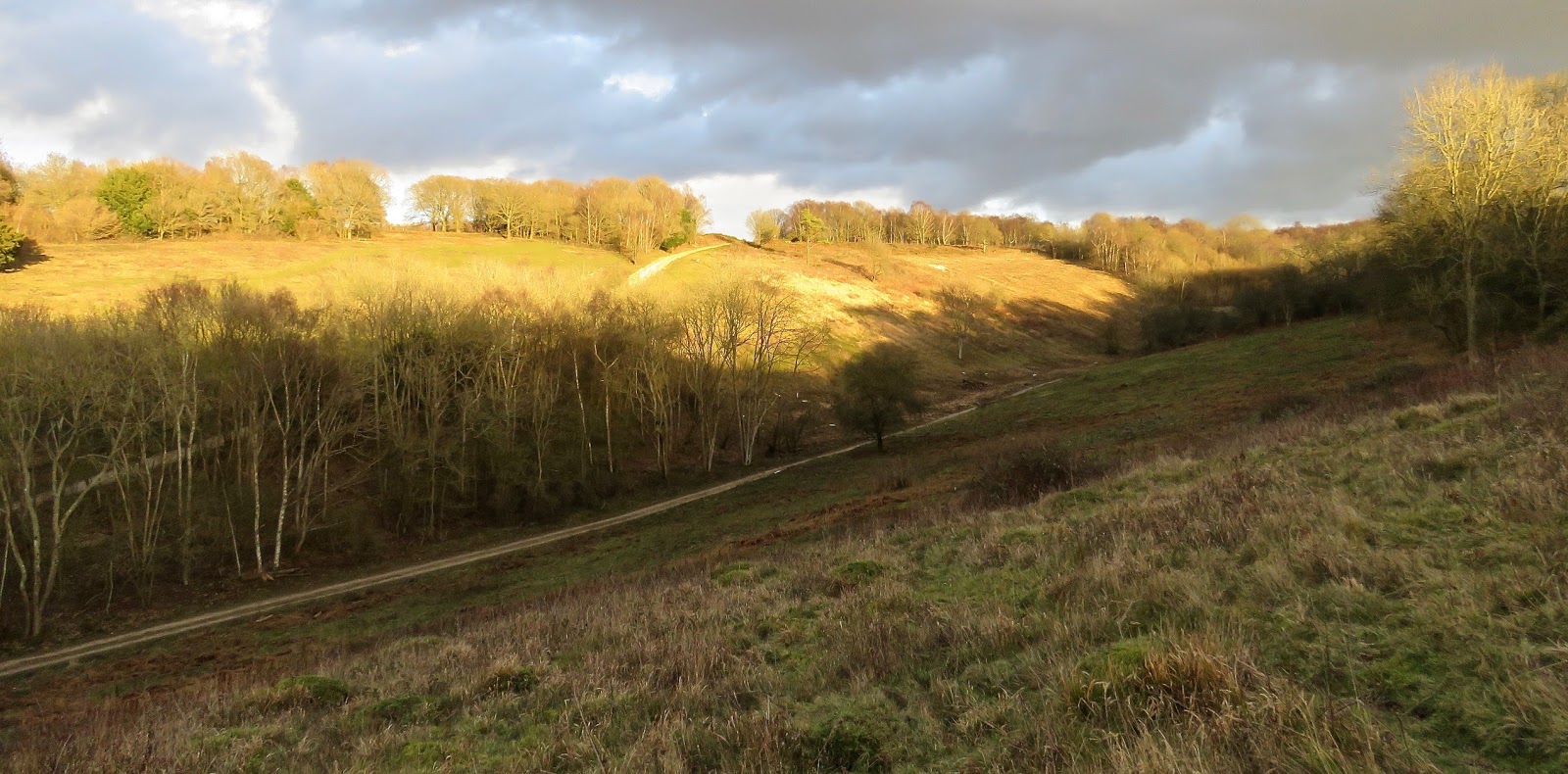
Yesterday saw one of those afternoons when the sky just wouldn't settle down. One moment it was dark, then there were sharp showers, soon followed by the sun peeking through a thin veil of cloud, finally a full sun that was so bright that it lit up the winter panorama in a burning amber light. The photograph above (taken at Headley Heath) sums it up pretty well. And yes, I did see a H**finch, but just the one. They seem to have largely moved on from here. What hadn't moved on, mainly because they possesses neither wings nor legs, are the clumps of Spurge-laurel (above and below), to be found on the westerly border of the site. Headley is a strange place, with acid heathland rubbing shoulders with chalk downland. It leads to a right old mix of flowering plants which makes any botanical walk there interesting to say the least.

Daphne in the mist

Image
I spent four hours this morning on Reigate and Colley Hills, seemingly cut off from civilisation courtesy of a low drizzly mist that enveloped the hills in a milky light that not only softened all that I saw but muffled any sound. There wasn't an awful lot to see or hear to be honest, although a couple of Treecreepers decided that this was the time to engage in a bit of singing. - not a lot else joined in. it wasn't until I started to scan the fields just off the ridge (towards Mogador) that there was a bit of activity, with a loose flock of 500 Redwing leapfrogging their way across the earth as they fed. I was heartened to see that, in several places, the fields here had flooded, although any hoped for displaced wader was aiming far too high - apart from a lethargic flock of gulls nothing else had been tempted down. A quick nip into the closest bit of Walton Heath woodland provided the hoped for Marsh Tit (2015 patch list now on 61 species). Daphne laureola - that's Spu...

Box Hill, Box and Johnny Rotten

Image
This is Box (Buxus sempervirens), a shrub found as a native in this country exceedingly rarely. Given its status it is not surprising that two of the areas where it does grow are named after the plant - Boxley in Kent and Box Hill in Surrey. The latter is where I took these pictures this afternoon. The image above captures a mature shrub's rather messy and open appearance - it is the mass of foilage between the two obvious tree trunks. To the left you can see the flower buds. I found very little in open flower. At Box Hill it is a very common species. At this time of year, together with the other evergreen species of Yew, Holly and Ivy, this part of the North Downs stays very green indeed. If you want to see truly wild box then this is the place to wallow in it! Box Hill has a cultural part to play in the life of Londoners. It towers (OK, to us southerners it appears to tower) above the town of Dorking, some twenty miles south of the heart of the capital. It has been known as a b...