Posts

Showing posts with the label botany

Multi-tasking

This autumn has, so far, been underwhelming on the birding front. Sky-watching has failed to produce any notable movements, with thrush and finch numbers very low. My combing of the local fields and hedgerows has uncovered a lack - even a silence - of avian presence. It is, it must be said, depressing. What exacerbates this dearth of birdlife is that social media reveals that, elsewhere in the country, there are birders filling their boots with large numbers, variety and rarity. At times like this I am reminded that 'comparison is the thief of joy', so it is best to try not evaluate your own, albeit small successes, against what is going on elsewhere - there lies disillusionment, disappointment and madness. It is also a truism that such successes elsewhere are often localised, and increasingly only happening when weather conditions are ideal, which does not happen all that often. So, my local birding experience is not going to be anything other than a regular diet of mediocrity...
Botanical rarities (1)

Image
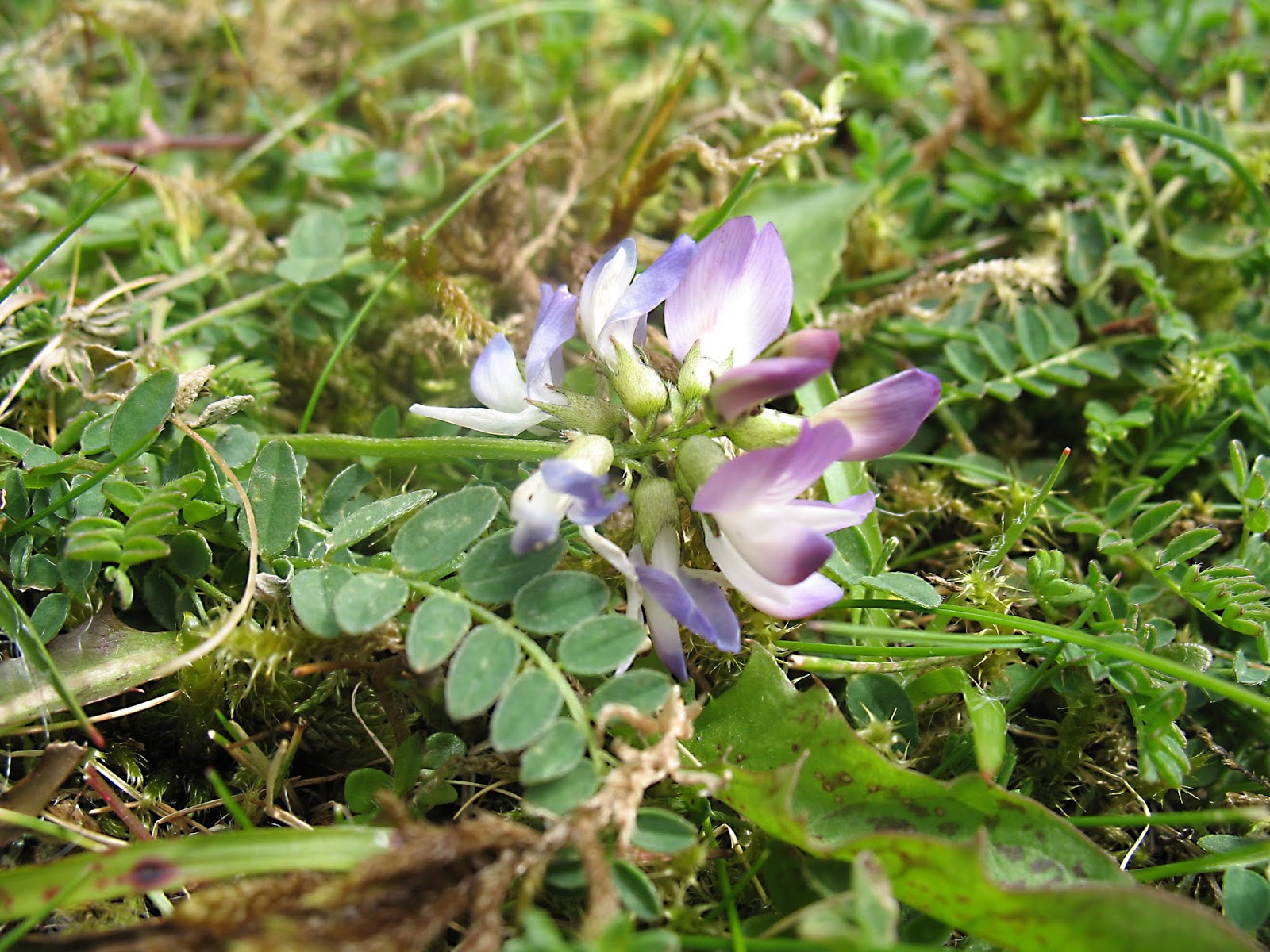
The last 20 hours has seen some of the wettest and windiest weather that I have had the misfortune to experience here in Banstead. There has been windier, and there has been wetter, but not sustained over so many hours. As the weather quietens down, there are signs of its passage everywhere - a downed fence panel, water incursions on the south-westerly corner of the house, overturned pots in the garden - but compared to floods, bush-fires and drought these are mere trifles, I know. So, as an antidote to this misery I have been looking through some old botanical rarity photographs, those that pre-date the second coming of this blog, all pre-2010. I might be able to milk a few posts out of this. I have already posted about my time on Ben Lawers here , so will not feature any images from that wonderful site. All the species featured will be out-and-out rarities. Alpine Milk-vetch ( Astragalus alpinus ), Ben Vrakie, Perth 15 July 2008 Recorded in fewer than 15 different 10x10km...

The end and the beginning

Image
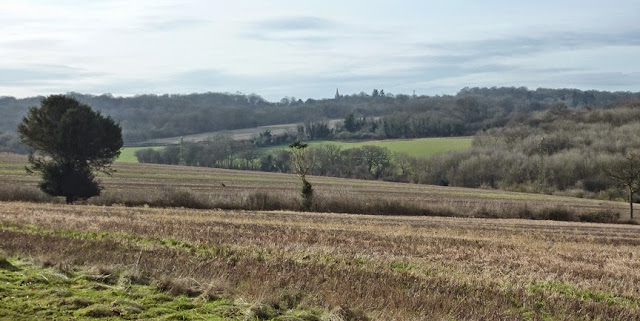
Walton Downs, looking across Langley Vale Farm. What odds for Red Hemp-nettle or a Stone Curlew in 2016? So 2015 is starting to wind down. The hustle and bustle of Christmas might be upon us, but for the birder, mother and botanist (not to forget all those other naturalists looking at all sorts of other wildlife), it is time to get all those records sorted out, sent off and start planning for the new campaign that is, and will be called, 2016. A few years ago I would have been rummaging through my notebooks, retrieving those observations that seemed worthy enough to send to the recorder (of Surrey, London, Kent and, sometimes, Sussex). Nowadays it is much simpler process, at least for the bird records, via the BTO’s Birdtrack service. Some birders cannot get enough of it, and send in tens of thousands of records each year from across the UK. My own efforts are on a smaller, more parochial level. The only non-local record that I needed to do anything about was the Bonaparte’s G...

Sensing my dissatisfaction?

I have to admit that, after a late winter and early spring spent stomping the local patches, I was a little deflated. My efforts had resulted in scant reward and I fled to my adopted shingle kingdom on the SE Kent coast which saw me alright with a couple of beautiful White-winged Black Terns and a self-found adult Bonaparte's Gull (not to forget 25 Hobbys in the air together plus the normal breeding specialties). But it is as if the local patch knew of my dissatisfaction and decided to make it better this summer... The weather has been very hit and miss here in Surrey - a long warm spell (indeed one very hot spell) punctuated by dull periods but not much rain. This has resulted in a good butterfly summer plus a spectacular flowering. I can honestly say that there have been natural history moments spent, not three miles from my home, which will long live in that 'greatest hits' memory bank stored in my head: The mass emergence of Marbled Whites and Meadow Browns that shi...

A Greek potpourri

Image
Back in July I spent ten days with the family at Halkidiki in North-east Greece. I left the binoculars at home and tried my best to do nothing, bar read (Red or Dead by David Peace and The Goldfinch by Donna Tart), eat (far too much) and drink (a constant trickle of alcohol so not to feel as if it was 'too much'). I don't really do 'beach' or 'sunbathe' - unlike the women in my life - so my stays on the sun-lounger were briefer than the 'normal' holidaymaker would make. I did escape on a few afternoons to have a look at the local flora. Much of it was familiar, but with a twist. Thistles, clovers, vetches and heaths were at once identifiable, but not to a species level that I know from western Europe. It was like stepping into a botanical parallel universe. I still haven't managed to identify them, but on this cold, but bracing morning, thought I'd post a selection of images to share with you the delights that this scrubby, dry and thorny cou...

BFBG goes botanical

Image
Under blue skies and in high temperatures, a motley collection of Beddington birders gathered for a botanical wander across our fair sewage farm. Johnny Allan, Peter Alfrey, Frank Prater and Keith Miller joined me in looking down, rather than up, for a few hours. We were briefly joined by Grant, Tank and the Prof. Recent rain has given the vegetation a much needed boost, and there are parts of the farm that are virtually impenetrable, with chest-high nettles, mallow and hogweed making progress slow and tricky. However, our route around the south lake, along the stream, through the mounds to 100 acre, (via Pongo Park) rewarded us with a good mornings plant list. Highlights were Marsh Dock (a population discovered last year on a bed on 100 acre), Dittander (by the northern enclosed lagoon), Narrow-leaved Water Plantain (south lake), Fool's Watercress, Horseradish and Water Figwort. The boys spent a great deal of time quizzing me on identification features of melilots, ...

Henbane

Image
This is Henbane. It is a member of the nightshade family and is very poisonous. It contains hyoscyamine and hyoscine, poisons that Doctor Crippin used to good effect when bumping off his wife back in the early 20th century. Unfortunately for him, a noose ended his own life shortly afterwards. I had not seen this species until last June, when I stumbled upon 20 healthy plants that were growing in a chalky field that had had large quantities of manure dumped upon it. They were of a good size and pleased me greatly. (It really doesn't take much to please me greatly nowadays). The field was along the banks of the River Mole between Mickleham and Leatherhead. Some authors consider this an evil looking plant, but I cannot see the darkness in it. In fact I reckon that Deadley Nightshade has more 'something of the night' about it. Please accept this post in lieu of not having anything else to bore you with.

Stinking Hawk's-beard is NOT extinct

Image
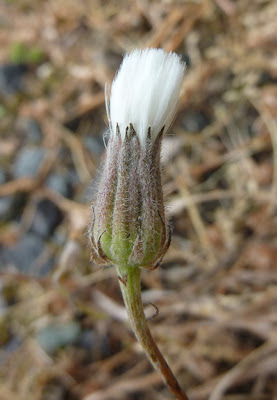
Please excuse me as I post a few items from the archives - those archives that exist between when I packed-up blogging and decided to start up again. Cheap and mindless fodder to fill-in until I get inspiration, annoyed or see something worthwhile... First up is a botanical rarity of the highest order. Stinking Hawk's-beard was declared extinct in the UK back in the 1980's. Dungeness was its last station. Seed from the hallowed shingle had been collected and a programme of reintroduction was started at both Dungeness and Rye Harbour (see British Wildlife magazine for a full account). But in July 2010 an undiscovered wild colony was found, numbering several thousand plants. I cannot tell you where for fear of having my nipples surgically removed, but I can give you a clue... it's on shingle . The photo above is of the pappus which is easier to find than its non-descript yellow flower. If you think that you have found this plant then crush its leaves - they smell of TCP. It j...