Posts

Calm before the ever-so-short heatwave?

Image
The meteorologists are promising us a brief blast of warmth as from tomorrow, all the way from the Azores. It will be welcome, as the past few days, while not chilly, have been cool for late May. Poor moth totals have been experienced and the chance of a migrant bird or moth generally confined to the odd Spotted Flycatcher and Silver Y. Some respite did come in the form of a Portland Riband Wave, courtesy of Martin Casemore’s Plodland trap. But, if you are at a loose-end, due to lack of migrants being around, there is always the option of wandering around the fishing boats, their industrial bric-a-brac and the surprisingly lush flora. It is one of my happy places.

Magical

Image
It was like stepping back forty years. The well vegetated lanes that cross Romney Marsh, close to  Kenardington, were alive with birds. Not just any old birds, but special birds. Six, maybe eight Turtle Doves, singing, displaying, performing beautifully, perching on the branches of dead trees out in the open or half-hidden in the tops of those in leaf. There were also Cuckoos, and Yellowhammers, and a single Nightingale, vying for attention amongst the purring Doves. They were all concentrated along 100m of prime marsh real estate, a reminder that if the habitat is right, the birds will come. And they had. Magical.

Littlestone mothing

Image
It has always been an ambition of mine to have my own coastal garden, not just for the birding but also for the running of a moth trap. It just so happens that I find myself staying at a friends house in Littlestone, Kent, for maybe three weeks - and the MV has made the trip with me! Luckily, the full-time garden back in Surrey has proved its worth moth-wise, so this will be no ‘chalk and cheese’ comparison. What a coastal location brings, especially on the south coast, is an increase in the chance of trapping scarce migrants. The weather isn’t conducive to migration at the moment, but things look promising at the end of the week. Highlights so far? Light Feathered Rustic, Cream-spot Tiger, Tawny Shears, Sharp-angled Peacock and Ethmia bipunctella are all species that I don’t (or rarely) encounter back home, plus Dark Spectacle, Least Black Arches, Chocolate-tip, Currant Pug and three hawk-moths - Eyed (above), Poplar and Small Elephant.

Bearded wonder

Image
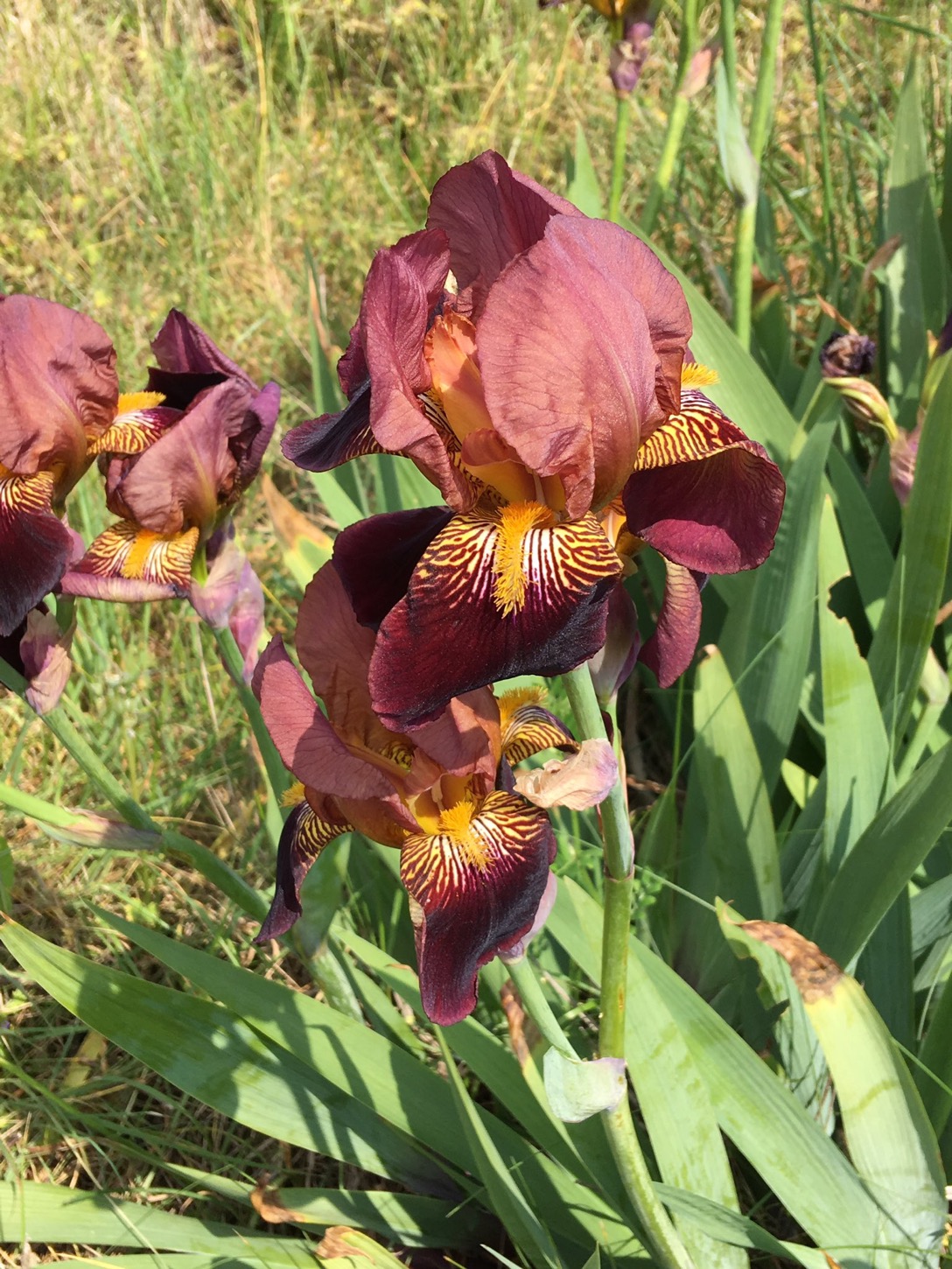
I must admit to having a soft spot for plants that are garden escapes. They could be self-seeders that have jumped over a garden wall, have had their long-dormant seed awoken by disturbance or maybe have been transported to their new home in dumped soil. How this magnificent blousy iris found its way onto the sandy ground alongside Littlestone Golf Course is anyone’s guess, but it is a truly show-stopping sight. It is one of the Bearded Irises (thanks Gill) but as to which cultivar/variety it is has yet to be established.

Thousands of catchfly

Image
The Greens at Littlestone is an area of municipally-managed sandy grassland, loved by joggers, dog-walkers and botanists alike. Close by the multi-coloured pastel shaded beach huts is a small bank which, despite the heavy foot-fall, is home to thousands of Sand Catchfly plants. At least 2-3,000 are in flower at the moment, with many more in bud. It really is some show. Better images to follow.

A clover and a shrike

Image
Dungeness. A smart male Red-backed Shrike stole today’s avian honours. It was found in the moat during the early morning and, apart from going AWOL in the middle of the day, was site faithful well into the evening. But did it win my coveted ‘sighting of the day’ award? No. This did: Crimson Clover (Trifolium incarnatum ssp molinerii), a rarely seen cultivated subspecies of Long-headed Clover. Two plants are now in flower close to the bird observatory, being found by warden Dave Walker. I think it’s quite a looker. The clover that is, although Dave has his fine points. Want to see a piss-poor back-of-camera shot of the shrike? Really? Oh alright then...

Blue sky scanning

Image
Arrived at Dungeness at a leisurely 09.40hrs to be told that the Whiskered Tern had done a runner (or should that be flier?) Luckily I was in laissez-faire mode. The male Serin that had taken up a territory in nearby Littlestone was far more obliging, although it took quite a while to perform well, singing from a secluded perch in a large cypress? tree. Our small gathering of birders attracted friendly attention from the locals, several of whom went home with decent enough views with which to regale to the family. By late afternoon I had settled into the Meehan Road Bird Observatory, invitation only and accredited to the Bird Observatories Council because of its fine collection of single malt whiskies. I have the moth trap set up and the sky is being scanned with Mediterranean Gull the best so far. What with a gang of Red Kites floating around Kent and both Black Kite and Bee-eater not a million miles away, the sky is worth keeping an eye on.