Posts

Showing posts with the label Comma

A quick in and out

Image
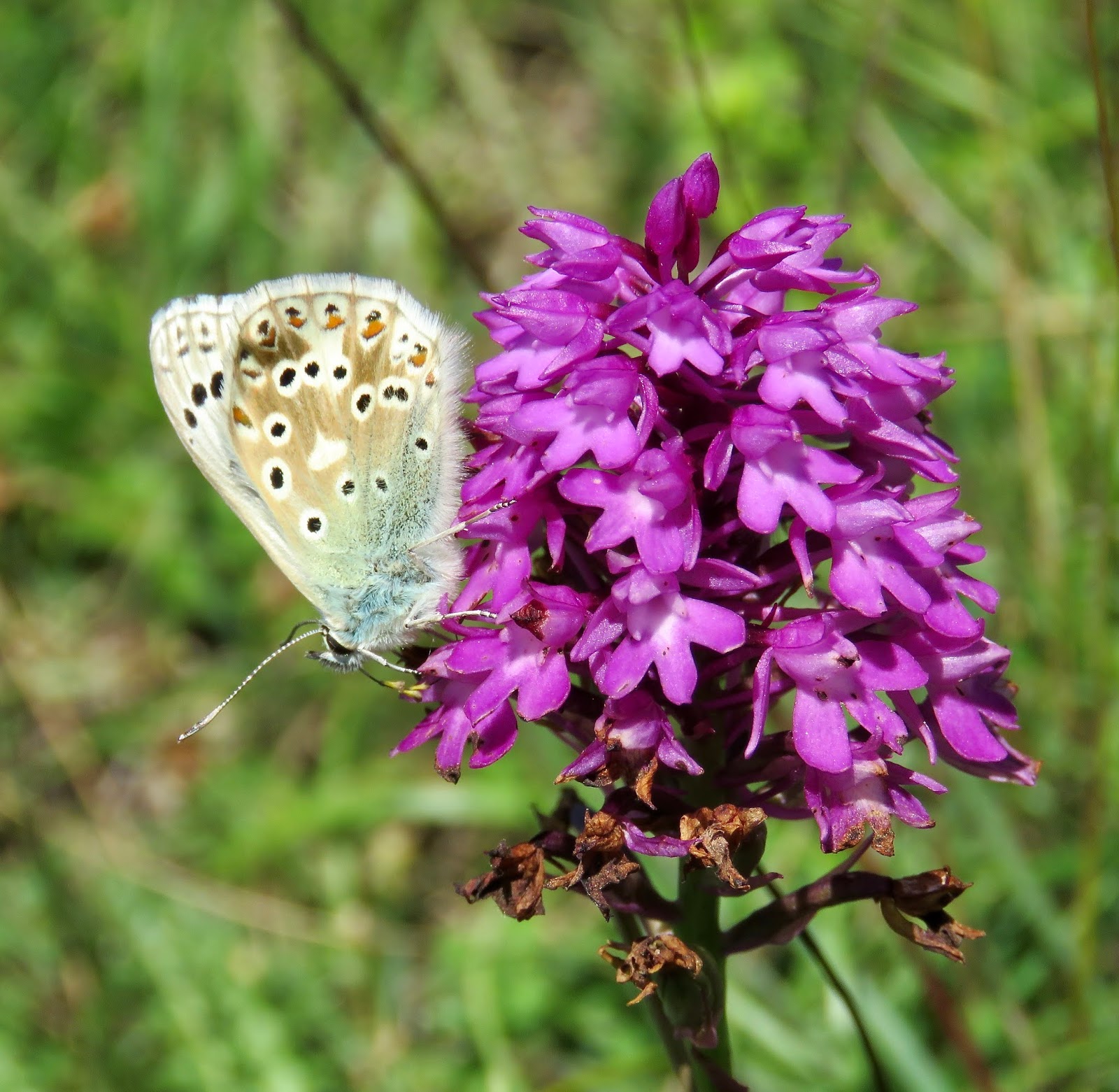
  A brief visit to Denbies Hillside this morning, just as the air was starting to warm up. At least 200+ Chalkhill Blues (top) were already dancing above the downland sward, but butterfly (and other) invertebrate numbers were generally low. Both Silver-washed and Dark Green Fritillary was recorded. Also pictured above are Comma (middle) and Ringlet (bottom). Maybe the sudden shock of hot weather over the weekend will get more invert action, but you do wonder how our butterfly and moths have fared with this wet and cool summer.
Garden butterflies

Image
Another three birders have joined our merry gang in the 'laid-back self-isolation back-garden challenge', bringing our number up to 19 (you can see the other 16 competitors in the previous post). So it's welcome to: Wes A  (Capel, Surrey) Garden list of 94 species Osprey, Short-eared Owl, Firecrest and Hawfinch are some of the highlights. Arjun D  (Wallington, Greater London) Garden list of 74 species Marsh Harrier, Goshawk and Hawfinch are the stand-out records. Dave P  (Shoreham-by-Sea, West Sussex) Garden list of 55 species Woodcock and Brent Goose are two highlights. I think the best way of sharing in what we are seeing is if all competitors can update me (in whatever format they like) as frequently as they want to, and I will post a compilation of all this correspondence on a weekly basis. Don't worry if your scores are not up to date, I will make that clear to any reader of the blog. A lovely sunny, if still chilly, day, although the b...

This isn't normal

Image
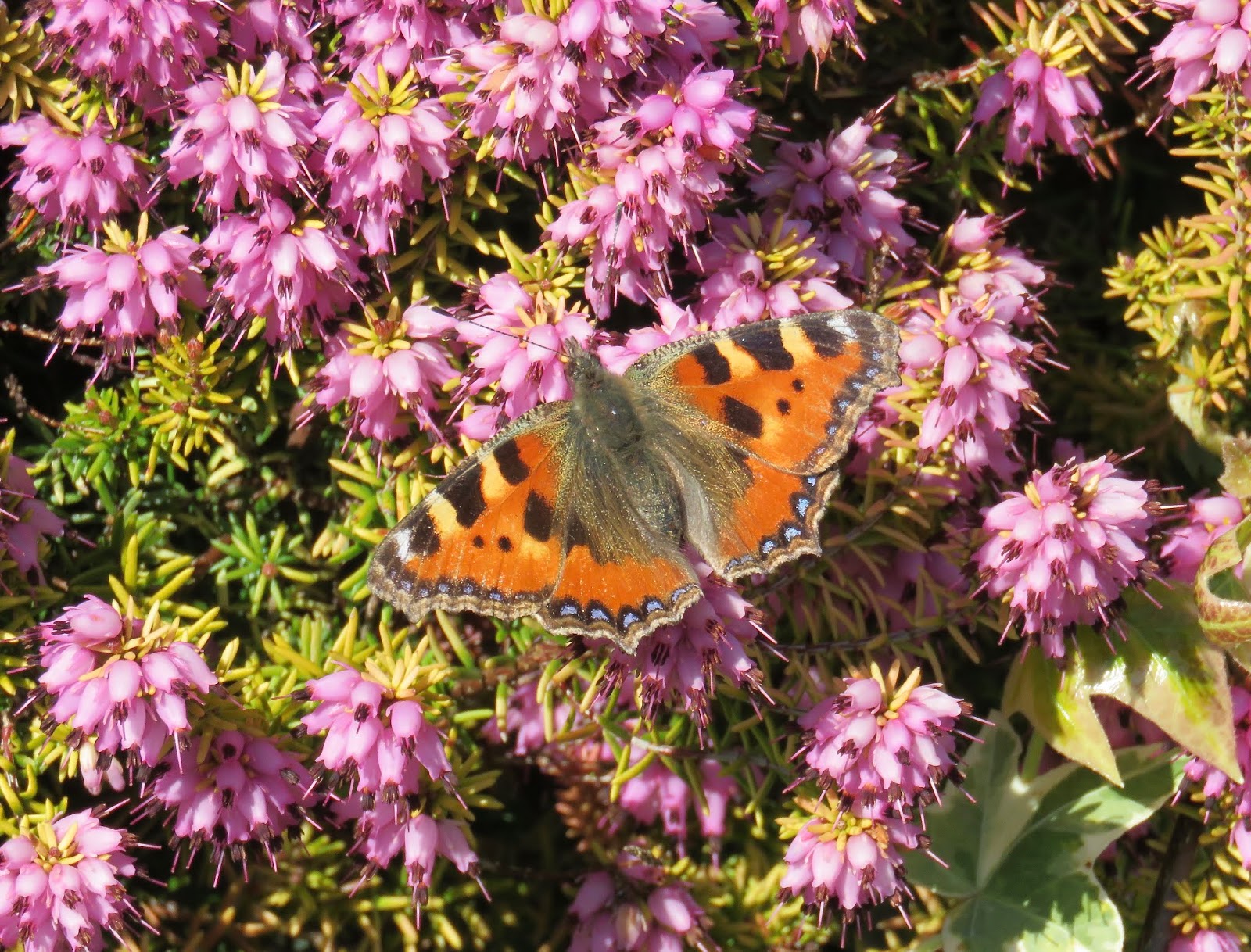
It is worth reminding ourselves that today's date is February 26th. The temperature in west Wales (Porthmadog) has been recorded at 20.8C (that's 69.4F in old money) - a new UK February record high. Closer to home it has been 20.7C in Teddington. In such warm temperatures and under clear blue skies and unbroken sunshine I have been wearing just a t-shirt and shorts. Comfortably. Because the number of Brimstone butterflies flying through and hanging about in our Banstead garden had been high, I thought I'd take a slow walk around the neighbouring streets - a vaguely circular walk of 90 minutes with no repetition of the route. I just strolled and counted butterflies. The results, for today's date, are staggering. FIVE species (I've seen two on the same date in February before, but never more). 38 individuals! They were: Brimstone (32), Comma (2), Small Tortoiseshell (2, one on winter flowering heather, above), Red Admiral (1) and Peacock (1). Needless t...

The sound of destruction

Image
A cooler and cloudier morning than of late. I took a very laid back stroll along the minor road that runs down the middle of Canons Farm. Quite a few sluggish butterflies were on the wing, including this Comma (above). In the still air the quiet was punctuated by a small amount of bird song, including three singing Yellowhammers (below). It was altogether restful and the lack of action barely mattered. This peace was, however, soon sullied. Machinery was started up and the noise emanating from it crept closer. I knew what it would be before I saw it, and when it finally appeared around the corner of a mature hedgerow my fears were confirmed - a tractor armed with a hedgerow cutter. This lump of metal was levelled against the sides of the verdant vegetation and the growth torn off, leaving ragged, broken branches and chomped leaves. There is nothing careful about this procedure, it is a rape of the growth. The flora at the base of the hedge was also cruelly destroyed. What of the b...

Fritillary slopes

Image
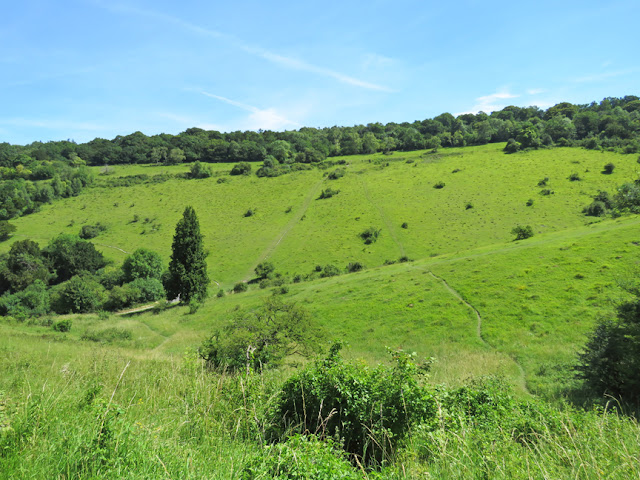
The slopes of the Box Hill zig-zag (above) were alive with butterflies this morning. It was hot, but a slight breeze did make the time spent out in the field not too oppressive. Undoubted highlight were the numbers of Dark Green Fritillaries - at least 140 were recorded, mostly low over the top of the short chalk downland sward. They were in all states of wear and tear, but only a few settled, and those that did were low in the vegetation, making photography a challenge (below). At least 25 Silver-washed Fritillaries were nearby, more likely to be found in the woodland rides and edges. After watching both species for several days, it becomes quite easy to identify them in flight, the Dark Green smaller and sedate, the Silver-washed (below) larger and dashing. There were also good numbers of Comma (bottom), similar of colour to the Fritillaries but that much smaller in flight.

Flora exotica

Image
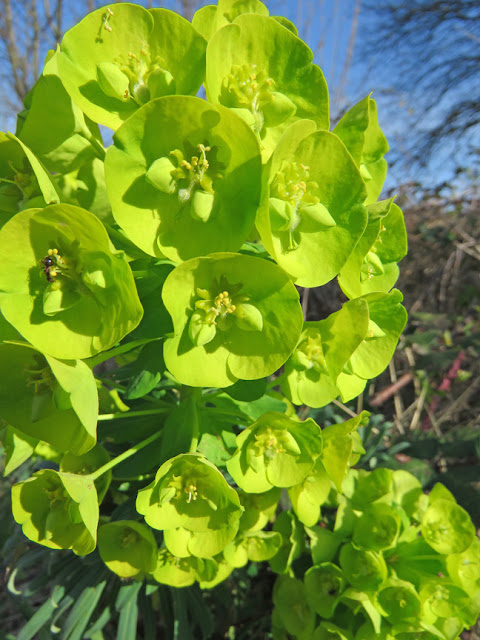
Priest Hill used to be a dumping ground for all sorts of debris, including heaps of soil, garden waste and hardcore. It was unsightly, but after a while the seeds and bulbs that were within sprang forth. There is a Flowering Currant onsite that I believe to be the same one that I 'ticked' over 15 years ago. Today I came across this: I believe that it's Mediterranean Spurge (Euphorbia characias), and, if I might be so bold, of the ssp veneta. There will, no doubt, be somebody out there ready to correct me if I'm wrong. Nearby in Ewell, close to Bourne Hall, the Creeping Comfrey (below) and Abraham-Isaac-Jacob (next two images) are at their best. Even though a nagging easterly wind is present today, the butterflies have come out in numbers, particularly Brimstones. Also recorded were Comma (first image), Small Tortoiseshell (next) and Red Admiral. The birds haven't been neglected - two Red Kites flew through Priest Hill (one north and the othe...