Posts

Showing posts with the label Mickleham Downs

5.5k of nests

Image
Yesterday I met up with Joe Hobden on a cloudy and cool Bank Holiday Monday morning. The main aim of the outing was to check on the large numbers of Bird's-nest Orchids that can be found on the southern slope of Mickleham Downs, between White Hill Car Park and Headley Warren. Joe is on a bit of an orchid odyssey at the moment and I needed little persuasion to join him in his infectious enthusiasm. The slope along the 1km length of our search is steep, with little in the way of clearings amongst the - at times - dense woodland of Yew, Beech, Ash (dying back), various conifers and Box. Yes, the Box here, in its natural environment, takes on the guise of tree rather than ornamental hedge. We estimated that, at a minimum, 5,500+ spikes of Bird's-nest Orchid were located. The majority of them (c5,000) were found on the steepest of the slopes above Cockshott Cottage, in an area that could have taken up no more room than a couple of full-sized football pitches. Unlike previous years w...

May: in clover

Image
May started modestly weather-wise, but then from the second week onwards set the tone for the rest of the summer, with largely warm (even hot) and sunny weather. The birding fix came largely from a mid-month stay at Dungeness. As in the previous few years, this time of year on the peninsula can almost guarantee the rare and the scarce, and 2018 was no different. A flighty Hoopoe at Galloway's (18th), Bee-eater and Kentish Plover (20th) and Honey Buzzard (23rd) were slightly overshadowed by a Terek Sandpiper at Rye Harbour (19th, pictured above). The Kentish Plover incidentally was the first to be recorded at Dungeness since 2005 - this was a species that I expected to se annually 'back in the day'. However, as good as they were, none of these birds was my avian highlight. That accolade is bestowed to an afternoon off-shore movement (on 21st) of terns, with an easterly passage of 1700 'Commic' (the vast majority close in were Common with a few Arctic), 81 Black ...

2,000 Bird's-nests plus Hawfinch withdrawals

Image
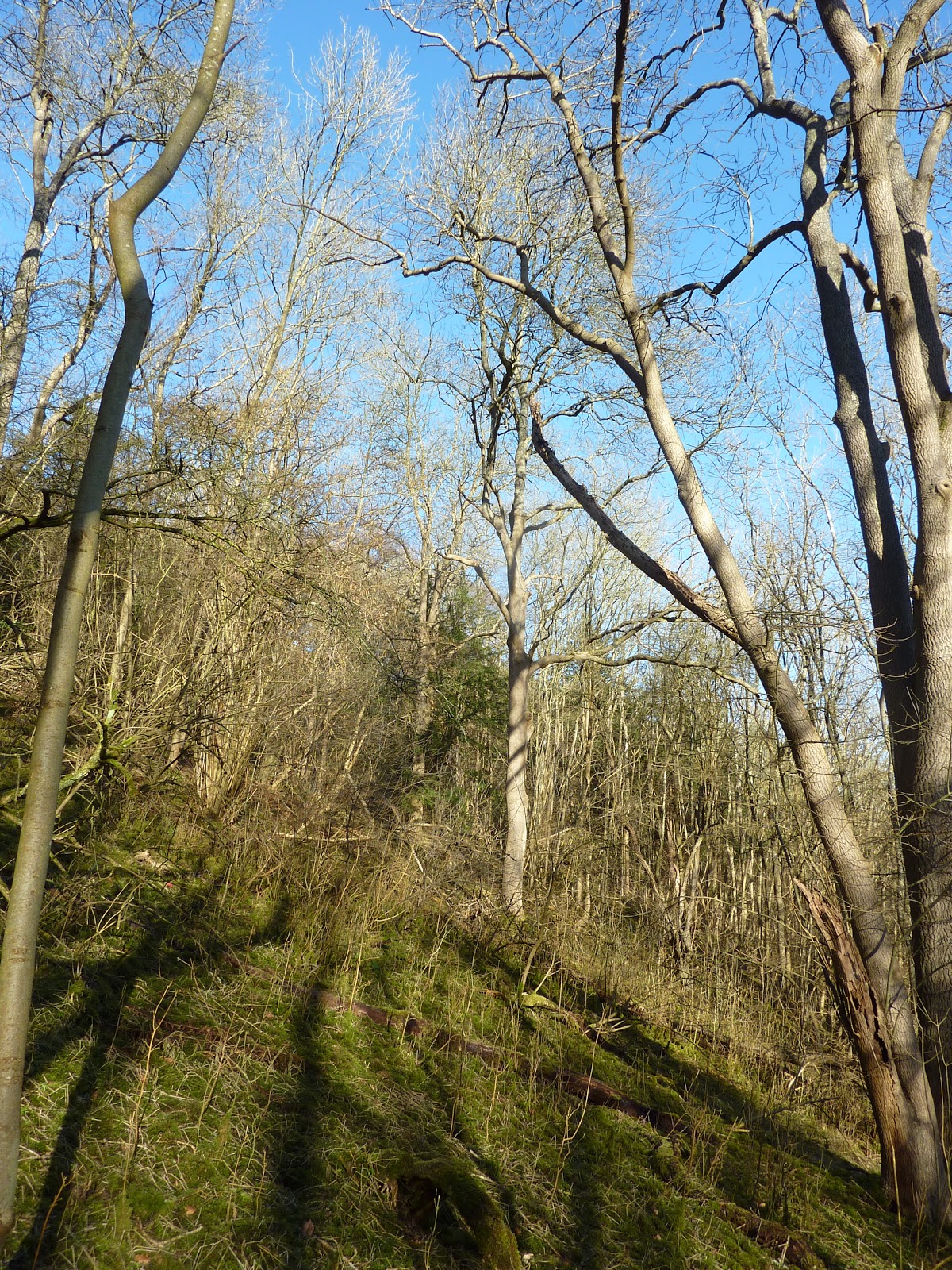
On the steep, southern slopes of Mickleham Downs you will find predominantly beech woodland, mixed with stands of yew, box and, in places, larch. Here be Bird's-nest Orchids. There are known discreet colonies to seek out and, no doubt, many undiscovered groups are also present on the difficult to access sections. For the best experience head to Cockshott Wood - just above the small car park there is a large colony which is loosely scattered over an area the size of a football pitch. I spent some time last Wednesday afternoon trying to come up with a meaningful count and reached the conclusion that there were no fewer than 2,000 spikes present. They are some sight. From here you can look south and see the elevated woodland at Juniper Top, Ashurst Rough and - most importantly - Bramblehall Wood. Only a few weeks ago they were home to the largest flock of Hawfinches to be recorded in Britain. I did feel a pang of regret that they are no longer around having spent many happy hours...

Flock foraying

Image
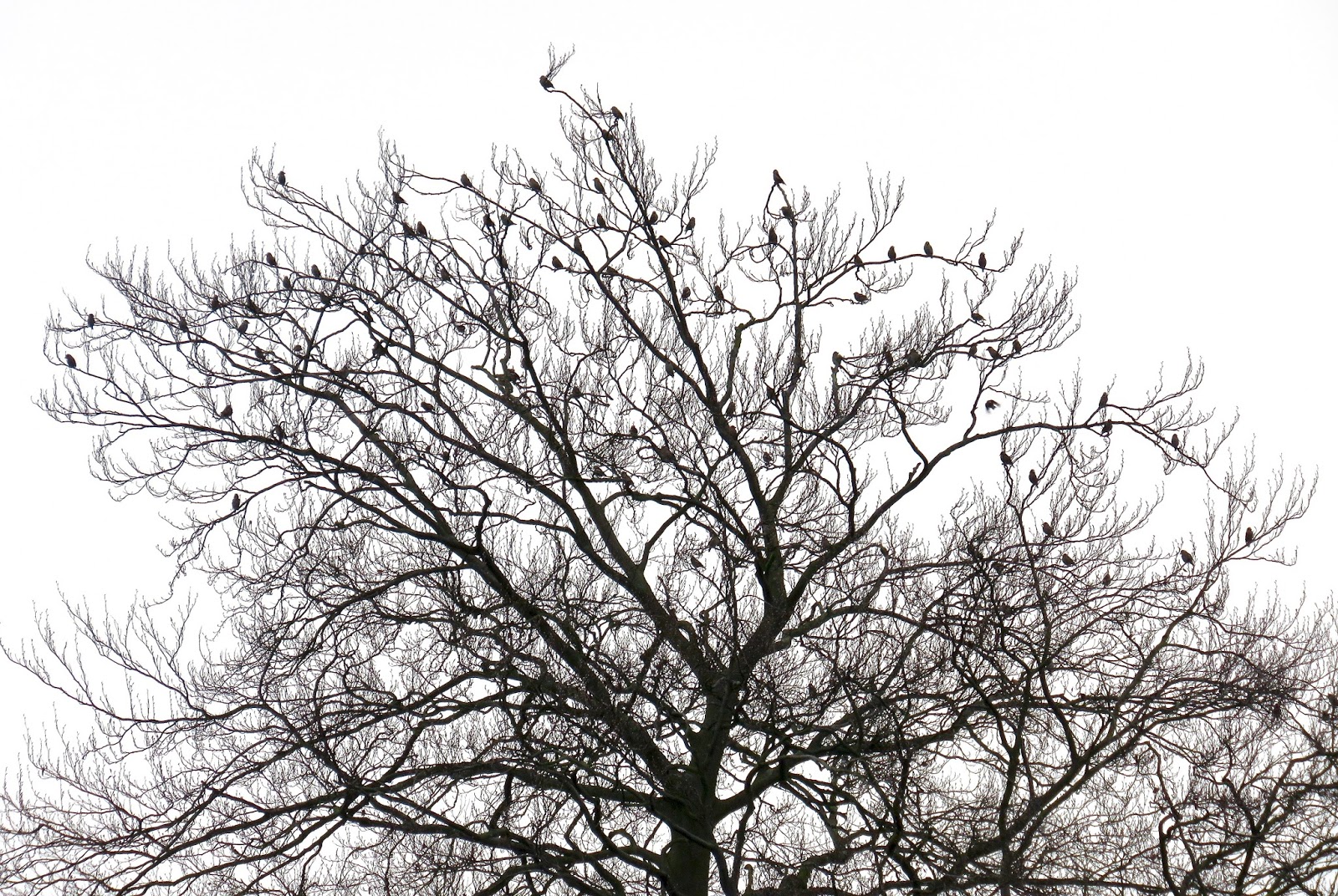
It had been a week since I last visited Bramblehall Wood to count the Hawfinches, although visits had been made to outlying areas in the past few days that suggested good numbers would still be present. On arrival at 06.15hrs three Hawfinches flew over Whitehill car park and by the time I reached my viewpoint overlooking the wood quite a few were already perched up in the bare tree tops, favouring the northern end (taster video above - the BBC Natural History Film Unit has nothing to worry about). At least 270 were counted, and when these birds moved along the tree-line in a northerly direction I carried on southwards. More birds soon arrived, coming from the south and also off the top of Ashurst Rough, mainly heading to where the earlier birds had been - as in recent visits a steady passage helped me to obtain an accurate count. When I reached an additional total of 280, a mass of 300 birds came back along the woodland edge, swirling in front of me before bursting through the treet...

600

Image
Where to begin? Yesterday evening might be a good place. I was delighted to see that two Sussex stalwarts - Chris Janman and Dick Senior - had recorded 400+ Hawfinches at Kingley Vale that very morning, one of the few areas in the country that can out-Yew Mickleham and Box Hill. I was already planning on visiting Bramblehall Wood the following morning (today) and their success got me wondering as to whether or not flocks were starting to join forces, or that I would find the Surrey woodland to be a lot quieter as the birds had all moved to Sussex! I was in the Whitehill Carpark by 06.15hrs and within ten minutes found myself staring across the field and into the tree tops of Bramblehall Wood. I was frankly surprised to see, at this early hour, at least 200 Hawfinches already on show (part of the flock pictured above). They were quite motionless and, I think it safe to assume, had just emerged from a very close roosting site. Over the following hour more birds arrived (mainly fro...

The bird that just keeps giving

Image
Juniper Top eastern slope - home to Hawfinches The morning started well, as only a few minutes after leaving the car I looked up at the steep wooded slopes of White Hill to see a flock of 15 Hawfinches fly through and alight upon Silver Birches. A good omen! I took my usual route, picking up the lower Juniper Top - Ashurst Rough path, keeping a firm eye on the edge of Bramblehall Wood across the narrow field. It was quiet at first, but soon enough I started to hear Hawfinches, most of them on 'my' side of the field. Stealth was not necessary as the birds made their way towards me, and I was soon looking directly up into a dazzling blue sky through a crazy-paving pattern of twigs and branches. The birds were very difficult to see, but vague shapes then morphed into Hawfinches and small groups flew through the lower reaches of the canopy and dived deep into Yews. I was but yards from them, teased by the incessant calling and able to witness the Yew branches being bent and sha...

Orchid Winter

Image
I'm spending an unhealthy amount of time in the Box Hill - Mickleham area at the moment. It is a beautiful part of the world and it does have its fair share of natural history gems, so it is time well spent. This morning found me sliding down a steep slope on the south-eastern side of Mickleham Downs (to the east of White Hill). It was off the beaten track and away from any of the footpaths that I usually take. I was stopped in my slippery tracks by a number of Bird's-nest Orchids, or rather the dead husks, of last year's plants (above). They were scattered about beneath the beech trees, well hidden against the leaf layer. Looking around me I realised that they stretched way ahead of me - and either side of me - as far as my naked eye could see. Hundreds of them! As I carried on, so did the orchids. I had to reassess my count - there were low thousands of them. I've never seen so many. They carried on underneath a small conifer plantation and out the other side back ...

Hunting Hawfinch

Image
Taken from the Juniper Top lower footpath, looking across the field towards Bramblehall Wood. You can get much closer to it than this, particularly at the start and end of the path. Scan both bare tree tops and the crowns of Yew for the Hawfinches. I cannot get enough of them. As soon as I see or hear a Hawfinch, I want to see another. This current invasion has been one of my ornithological highlights, anytime, anywhere. And the fact that this event is not only easy to see but is also on my doorstep has bestowed upon it a personal note. So, what better than go out looking for them and try to hunt down new birds in new locations? Last Sunday I thought that it would be worth checking Bramblehall Wood. The site is private, but you can look at its steep western flank from the footpath that runs along the bottom of Juniper Top and Ashurst Rough. On the OS map this path has a thick purple line running along it. At intervals you are afforded views across a narrow grassy field onto the s...

Butcher's Broom

Image
After the dark deluge of yesterday it was a welcome return to dry and sunny weather. Where better to spend the morning than on Mickleham Downs. In the image above you are looking at the steep south/south-eastern slope, covered largely in beech, box, holly and yew. It is the haunt of Bird's-nest Orchid, Wild Candytuft, Stinking Hellebore, Marsh Tit and - now and again - Hawfinch. Above the trees, and out of your view, is an open flat hill top of short grassland, beloved of chalk downland flowers. Although there is hardly a trace now, this hilltop (known today as 'The Gallops',) has a history of settlement, from the Bronze Age through to farms that were created at the time of the Roman invasion. From roughly where I took the top photograph was a big clump of Butcher's Broom (pictured above). This is a strange plant, as what appear to be the leaves are in fact flattened stems (the true leaves being but papery scales that can be seen in the first picture). The bo...