Posts

Showing posts with the label ringing

Half-way House

Image
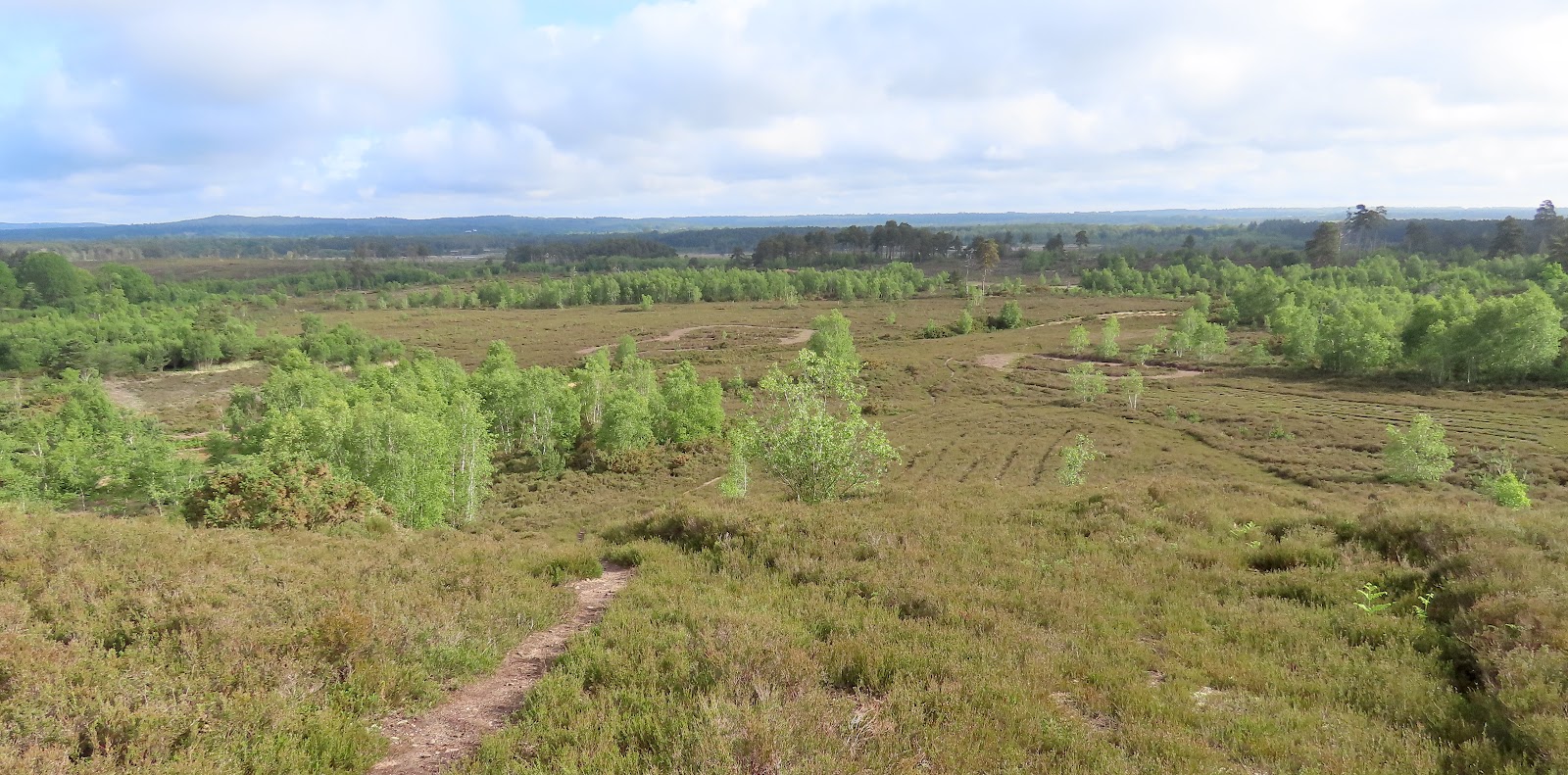
Last year, at the end of May, I took the decision to have a natural-history themed holiday at home, rather than go to the expense and faff of travelling elsewhere. As I've gotten older my wish to remain close to home has strengthened and my curiosity as to what can be found 'from my doorstep' increased. It was a rewarding exercise - I left the car at home and walked miles each day, sometimes exploring footpaths that were unknown to me - and although the birding was quiet (it was early June) some plant and insect discoveries were notable. So, it it was so much fun, why not do it again? And this time, being mid-May, why not just make it about the birds... Surrey birds! There was one change however, and that was that I would use the car at times to head out south-westwards to explore parts of the county that I had no visited for a long, long time. With such thoughts being energising, I expectantly waited for the starting gun to sound, announcing the start of my 10 day Surrey B...
Better late than never!

Image
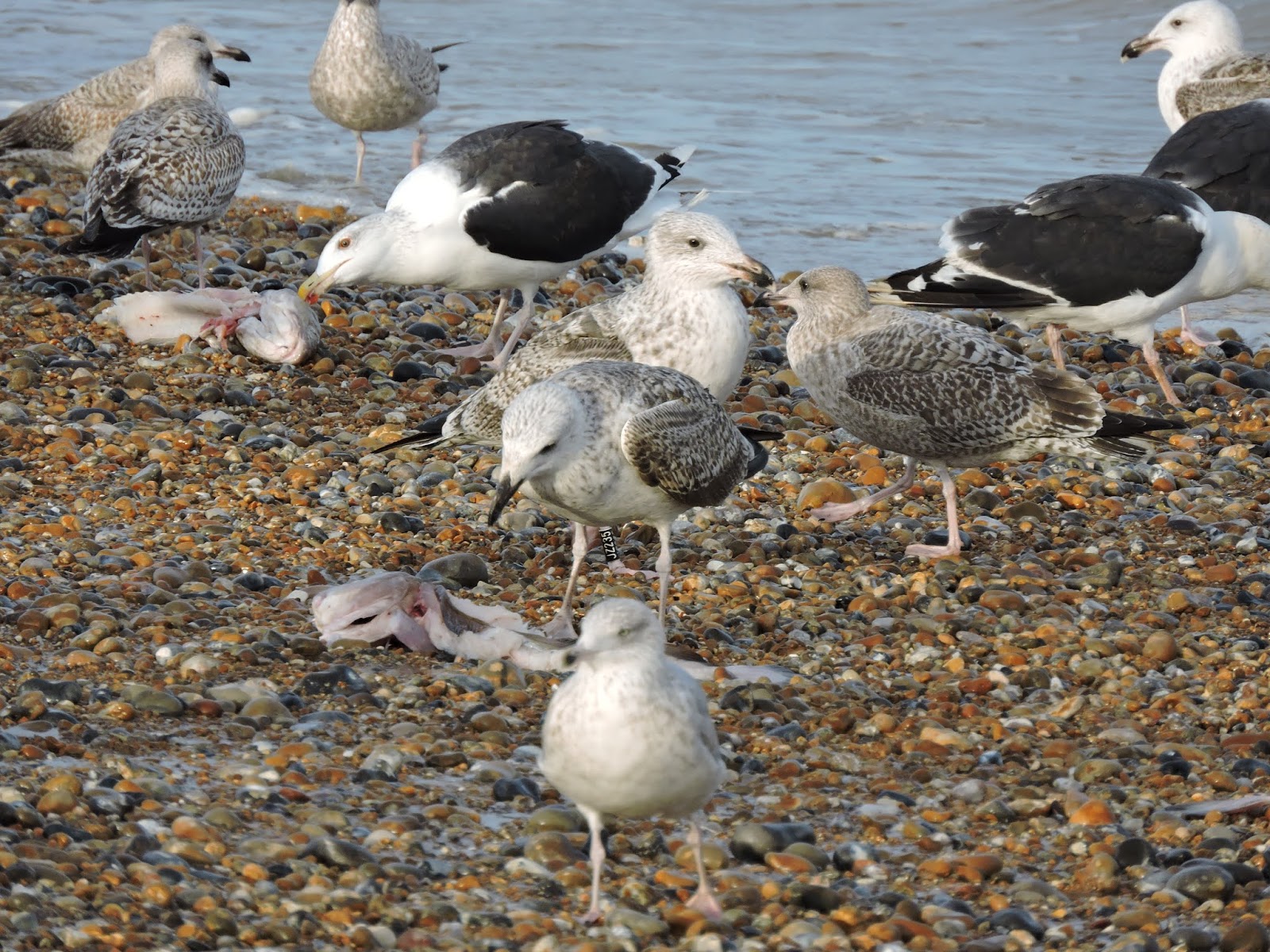
I have tens of thousands of images that I have saved over the past 20 years, some of them dating back to the infancy of affordable digital cameras. I discard most of what I take, keeping just the few that can be thought of as being 'passable'. There are folders within folders on the computer desk top (all backed up, of course, on a removable hard disk) and most of these are of identified species, numbered and dated. Sometimes, especially if I have been away on holiday, or staying at Dungeness Bird Observatory, I will keep everything taken during that trip in its own folder. I have recently been looking through such a folder - this one was titled 'Dungeness, October 2015' - when I came across a series of images taken on the beach while observing Caspian Gulls on the 25th. It was of a group of gulls that had been coming in for fishermen's discards. You can see it above. I've obviously not looked that hard at it before, because as I worked my way through the g...

News on the Polish Med Gull

Image
Last week I mentioned an adult Mediterranean Gull that I saw on Charmouth beach, sporting a red plastic ring (PER3). Through the excellent Colour Ring Birding website, I reported the details and received the following information from the Polish scheme behind the ringing of this particular bird: Ringed on 13/05/2007 as a 3rd calendar year female, nesting at Polder Bukow, Krzyzanowice, Slaskie, POLAND, by Jakub Szymczak So the bird was two years old when ringed, which makes it 12 years old. This colour ring reading can become addictive!

Ringing in Summer

Part 13:  June-July 1976 Since my earliest visits to Beddington I had frequently met up with Ken Parsley and Mike Netherwood, who were the sole surviving members of the farm’s ringing group, which had been formed during the 1950s. Under the auspices of the British Trust for Ornithology (BTO), the group collected data by trapping birds. This was done mainly through their capture in a fine meshed net, strung out between two secured poles. On calm days the net would be hard to see, and birds would fly into it, finding themselves cushioned in a pocket, quietly awaiting extraction by a ringer. Once in the hand, the bird would be identified, sexed and aged; a set of measurements would be taken, such as wing length and weight; and a light metal ring placed on a leg. On this ring would be embossed a unique serial number and an address to send details of the bird in case of recovery. This latter stage helped build up a clear idea of where birds moved to, how fast they could travel and th...

Burning stubble and a dose of reality

Dungeness August 1979 The farmers are burning the stubble in the fields, the failing light magnifying the intensity of the flames against the deep mauve and orange sky. Vast palls of smoke hang in the still air. We are outside the gates of the ARC pit, opposite Boulderwall Farm, bewitched by the farming activity taking place beyond Lydd Airport. Our mission tonight is to erect mist nets on the sand bowl at the back of ARC in the hope of catching waders for ringing. During the day a fine selection of wader species have been observed here, peak numbers coinciding with high tide, when feeding birds are driven off of Lade Sands. After setting the nets in darkness, aided only by torchlight - there is a new moon - we retreat to the sand banks that have been created by the industrial machinery now motionless nearby. The air we breathe still has the warmth and smell of the faded day and on it hangs the call of waders as they return to the sand bowl from where we have recently disturbed ...

Ring, ring!

Dungeness August 1978 Regulars from Sandwich Bay Bird Observatory have arrived with their cannon net. They are going to set it up on ‘our’ beach in the hope of catching terns and Kittiwakes for ringing. My competitive hackles have risen as Sandwich Bay is seen as the opposition - the other bird observatory in Kent. It’s a local derby, this meeting of the birding clans. We, of course, claim to find more rare birds and get better falls than they do. Mind you, they’d say the same about themselves. This little get-together has been organised by the wardens, a quid-pro-quo arrangement – they get to use their net and gain experience of handling terns, we get to use our rings and benefit from any subsequent information derived from recaptures. They seem a decent enough bunch, these wanderers from East Kent. The setting up of the net takes a while and safety precautions take up a lot of the time - a cannon net is, after all, propelled by explosives. I am asked to take up a position westward...

Hello Icterines, Goodbye Elvis

Dungeness August 1977 It’s been predominately cloudy and wet. My two-week stay has coincided with a period of easterly winds and this combination has lead to some of the largest falls of migrants that I have witnessed at Dungeness. I have spent many hours slogging around the nets when they are up, a task shared with at least six others currently residing at DBO who are also ringers. The maximum number of nets available have been erected and the total catch has increased proportionately. Fortunately there are plenty of birds to be shared around. Day after day the sallow bushes have been alive with birds, mostly warblers, predominantly Willows, with Pied Flycatchers and Redstarts to add spice to the proceedings. 7 different Icterine Warblers have been trapped and we all get to ring one, a most unusual state of affairs. We would normally be looking on enviously at the lucky individual who gets given such a rare bird to ring, but even those of us at the bottom of the pecking order are j...

Of nets and rings

Dungeness Spring 1977 When bird observatories were being established around the coasts of Britain the main reason for their founding was to study bird migration. Collection of this information could have been carried out purely by observing which species, and in what numbers, were passing through an area at any given time. This was fine to a point, but to be able to identify exactly where these birds had come from and where they were going necessitated a different method of recording. These questions were to be answered, in the main, by the science of bird ringing. Simply put, bird ringing is carried out by trapping a bird and placing a metal ring on one of its legs. These rings have a unique serial number stamped on them, together with an address of where to send the ring if found. The trapping of the bird needs to be done carefully (to minimise stress) and the ring placed on the leg has to be light (as not to hinder flight and normal behaviour). To be able to participate in th...