Posts

The birth of a bit of birding habitat

Image
The poor photograph above (light against me, it was raining, photographer is pants, etc, etc) may not mean much to you or even hint at the excitement that it caused this particular blogger. I was on Walton and Banstead Heath this morning, primarily looking for fungi. Earlier in the spring I had stumbled across a recently created pond in the area and was keen to go back and have a look. As I approached it I was disappointed to find that it had been emptied of water and that the ground had been scraped by earthmovers and dumped nearby - so much for checking the populating vegetation. However, close by was a new earth bank complete with fencing and signs warning of deep water. Hello... As I got closer the expanse of water that revealed itself got me very excited indeed. About the size of three football pitches, a quick scan revealed a Moorhen and three Little Grebes. Why such joy? This particular part of Surrey has very little open water apart from the odd pond. Away from Holmethor...
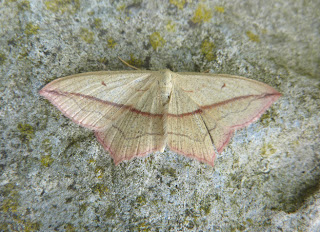
The moth that started it all

Image
The Blood-vein (above) holds a special place in my natural history heart as it was the species that really fired my imagination and turned me from a birder into someone who started to look at other things. My early notebooks do hint that I was aware of non-avian things - the odd reference is made to orchids, butterflies and, yes, even moths - diary entries exist from when I was still living at home as a student, and refer to a Swallow-tailed Moth and a Red Underwing which visited my bedroom through an open window during a hot spell in the summer of 1975. But it was when I stayed at Dungeness Bird Observatory that my interest grew. In the common room was a cupboard that housed the old log books. As I was a regular I was trusted to assist in any data gathering that the then warden, Nick Riddiford, was involved in. I loved this cupboard. It held hours and hours of captivating reading, old sheets of records stretching back to 1952. I handled them and ...

Are you sitting comfortably? Then we'll start ticking...

Stewart Sexton alerted me, via his ever readable blog , to this Birdwatch post regarding the new British Ornithological Union species splits. He can celebrate the addition of two 'armchair' ticks whereas I can only put out the bunting (no pun inteneded) for just the one - Siberian Stonechat. My first was a stunning male that was present on St.Mary's, Isles of Scilly, in October 1979. If memory serves me right, I had just jumped off a boat that had been to St. Agnes (where we had queued to watch a Blyth's Reed Warbler that was, in fact, a Marsh). The second was an immature bird at Spurn, East Yorkshire in October 1985 of which I was a co-finder. We are currently enjoying an era of 'splitterdom', where adding to your British life list while sitting in an armchair is becoming a regular event. Hooded Crow, Water Pipit, Common Redpoll, Yellow-legged Gull, Caspian Gull and the like have all been greedily gobbled up by the birding fraternity - and if you are a big...

I must go up to the downs again...

Image
... with apologies to John Masefield. I was in dire need of a walk along my beloved North Downs at the weekend, so parked up in Mickleham and went on a circular walk that took in Mickleham Downs, Juniper Bottom, Juniper Top, Box Hill, Norbury Farm, the river Mole and Norbury Park. This is 'The Gallops', the flat top of Mickleham Downs. On Sunday it was a fragrant mass of Marjoram, Clustered Bellflower and Harebell. There is Cut-leaved Germander here, although I've yet to stumble across it in this particular part of Surrey. I took plenty of pictures of fungi which I will revisit and try to identify in the coming days (or weeks). The pan-lister was lurking somewhere under the surface. I arrived at Norbury Park with some anticipation, as last year there was a fallow field full of wild flowers, including plenty of Henbane. My visit yesterday revealed that it is now grassland being munched by a herd of milking cows. Who out there knows their knotgrasses? I reckon this...

Reservoir blogs

Reservoirs - or 'Rezziz' as in the birding slang - can leave me cold (and not just on freezing January mornings). Although I've seen some good birds on them, from American waders at Staines to a Surf Scoter on an unpronouncable Welsh one, I always arrive at a reservoir with a sinking heart. Is it their lack of ambience? After all, 'a man made bowl of concrete filled with tap water' is hardly Rogersesque, is it. Especially those without any deviation in contour away from a square or a circle. No emergent vegetation. And thinking about it, no access. Maybe youthful memories of climbing over spiked metal fencing to try and get nearer to distant dots has played its part on my aversion to them. And then there is their positioning. Always close to a motorway. Or an airport. Or industrial estate. Some of them creep me out by being vast banked beasts rising ominously above nearby housing estates, just waiting to burst themselves and take out the meddling humans in a tid...

Bird crapped in my open mouth...

... is a search engine entry that somebody has typed to get onto this blog during the past week. It doesn't beat the 'Steve, where's my dead dog?' entry point of 2009. I wonder if these people found what they craved?

Under the skin

Image
On one level Beddington Sewage Farm is an eyesore that requires hours of birding input to whittle out each hard won avian nugget. On another it is an oasis in an urban sprawl that freely bestows upon the visiting birder ornithological delights. There are plenty of other levels inbetween - days spent up to the knees in mud watching and listening to Water Pipits; hot days of screaming swifts and scratchy Whitethroats; days of looking longingly eastwards towards an up-Thames squall and praying for displaced seabirds; and other days involving the risk of eyestrain looking through telescopes to pick through the thousands and thousands of gulls resting on ice. All of these states of the farm have their own magic that has snared generations of birders since the 1930s. It is a site that has a continuous birding record stretching back 80 years (with some records going back even further). There is even a book  that chronicles the enormous amount of data that has been c...