Posts

Showing posts with the label Cattle Egret

Birding FC

Image
I really haven't got my act together since I returned from Dungeness at the end of May - besides a family holiday to Cornwall at the beginning of July my time in the field has been woeful. A lack of oomph, missing mojo, the relentless heat, you name it and I'll re-christen it as an excuse. Last Friday I decided that enough was enough and I was long overdue some time out 'in the wild'. Surrey Hills? No, no way, parched dry and lacking in birds at the best of times, I needed a bit of an ornithological shot in the arm and my destination was to be a little further afield.  I settled on the Arun Valley in West Sussex. I've searched the river valley either side of Arundel before and have always had a great day out. PLUS... Arundel FC were playing at home to Ringmer AFC in Division One of the Southern Combination at 3pm on Saturday afternoon, so I put one and one together and came up with a big fat two (birding and football!) - what wasn't to like? I arrived at Arundel...

Winners - 1. Little Egret

Image
This is the first in an occasional series looking at bird species that have fared well - and those not so well - across the uberpatch over the last 50-odd years. When I began birding in 1974 there had been under 200 Little Egrets recorded in Great Britain and Ireland and at that time this total had only recently been bumped up by the unprecedented numbers recorded during what was referred to as an invasion in 1970, which appeared to be very much an anomaly. Out of those records the Surrey contribution was a big fat zero. (It is worth mentioning that an excavation at a site in Southwark - part of the VC17 recording area - had discovered remains of this species dating back to 1500-1700 AD. It would have taken some juggling of the concept of time for a 1974 vintage birder to have been able to claim that one on their county list.) Needless to say, the idea that I might see a Little Egret at all, let alone in my home county of Surrey, was very small indeed. It is hard to appreciate that thi...

Cattle Egrets and Marsh Mallows

Image
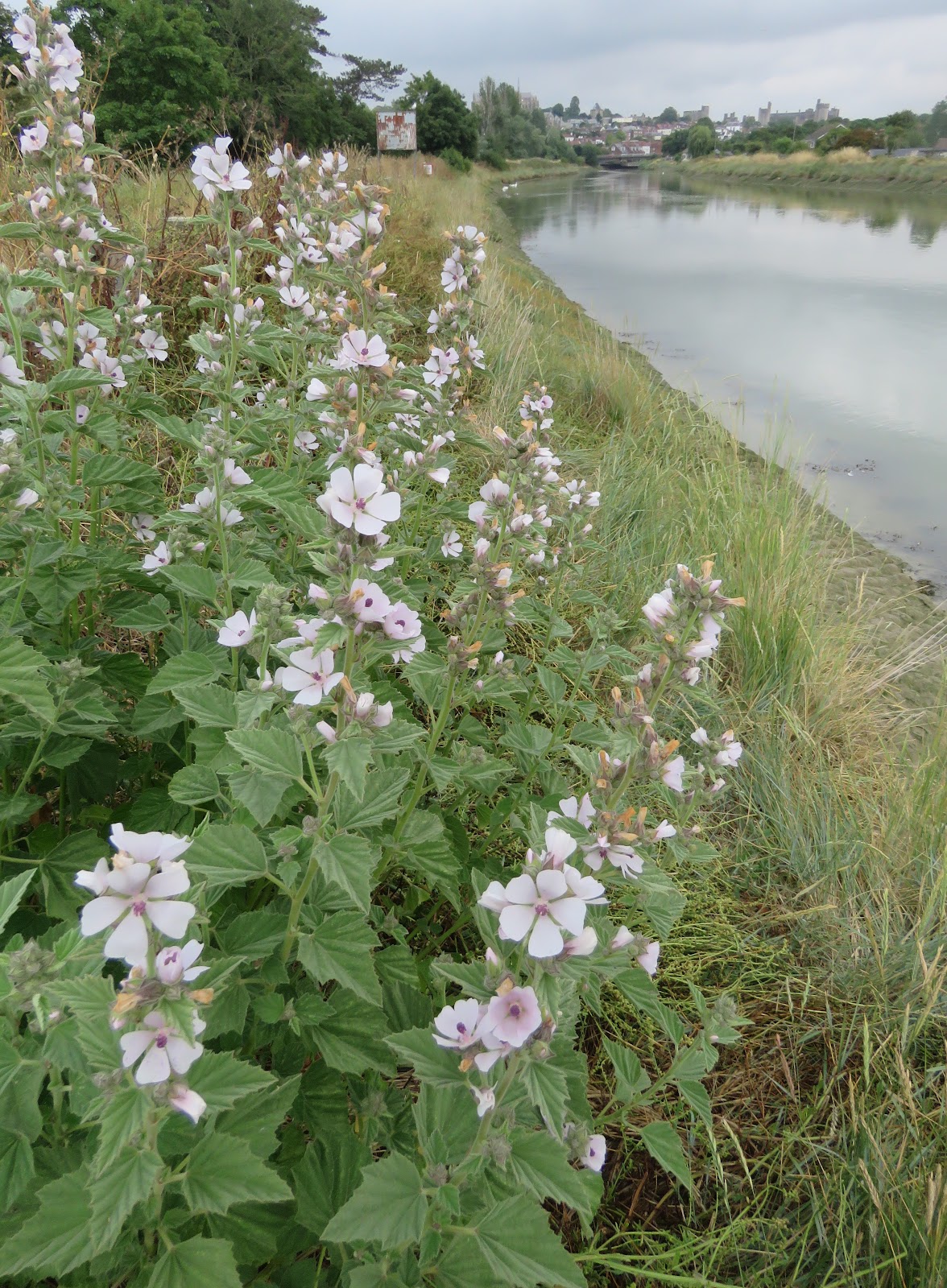
In February 1981 a carload of birders made the journey from Surrey to Anglesey to twitch a rare species of southern heron. We arrived at Aber to watch a Cattle Egret, making its way through a herd of livestock in a roadside field. Many of our fellow observers that day joined us in ticking the said species, a good lifer, one not to be underestimated - after all, they didn't come along all that often... Fast forward 41 years, and I am standing on a footpath that runs alongside the River Arun in West Sussex. From where I am I can see across the Arundel Wildfowl Trust reserve, and, scanning the far tree-line, it is possible to make out a number of white shapes perched within them. I counted 20, maybe 22 - every single one a Cattle Egret. 22! What a number - but I am expecting more. This is a known roost, and the numbers reported joining it each evening are higher still. My reckoning was that if I arrived early enough in the morning I could count them leave and so gain an accurate, simi...

Birding round the edges

Image
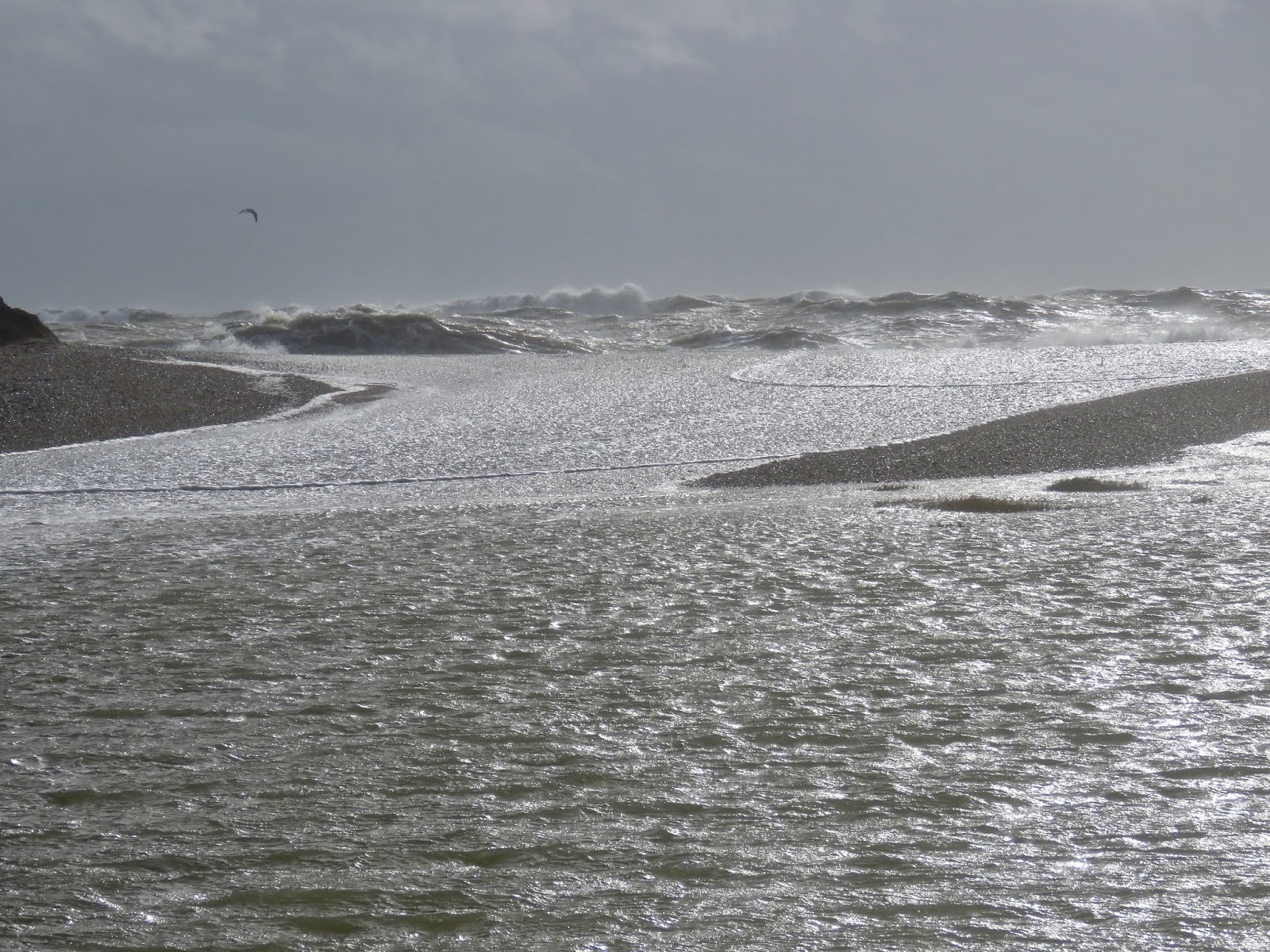
A brief three-day stay in the Dungeness area was courtesy of the Hollingworth Hotel (fine whiskies and good music a speciality!) Unusually for a birding visit to the area, little was actually done at the observatory, save for a brief sea-watch and a 'coffee and biscuit' morning with Jacques. Instead I was drawn to the outer limits of the shingle... Wednesday A strong southerly blow was whipping up a fierce sea, and as Chris P and I walked along the desolate 'green wall' between The Midrips and Galloways, our attention was largely drawn to the sea incursions along the shingle ridge. At times our resolve was tested, as one particular break in the beach at The Brooks was allowing the sea to stream through (see image above and video below). At times the waves rose above the top of the shingle and were many feet higher than us. Suddenly that wall of pebbles seemed insubstantial! We did keep an eye on the birds when we weren't marvelling at the sea, best of all bein...

A wild egret chase

Image
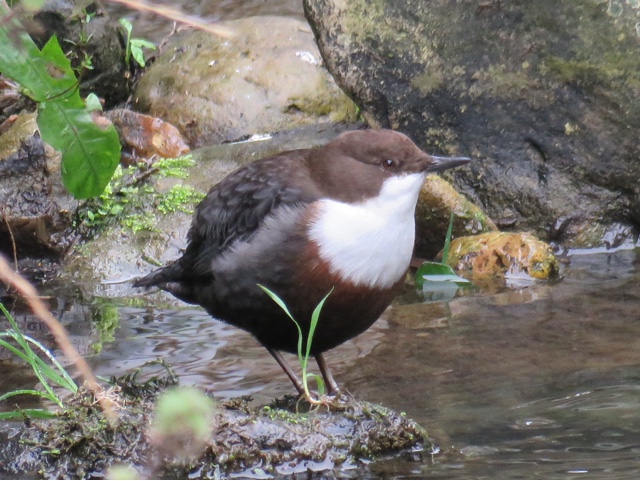
Even in the sleepy backwater that is Charmouth it is still possible to be gripped off. I was watching a Dipper (above) in nearby Lyme Regis when Richard Phillips kindly texted me (while on his way to Tresco) to inform me that there was a Cattle Egret in Charmouth. I may have only been down here for two days but now (ridiculously) think of myself as a local - I was gripped off! I had walked to Lyme so faced a lengthy journey back along the not easy to traverse beach. To cut a long story short I duly arrived at the Egrets last reported site (a field with cattle as to be expected) but of the bird there was no sign, although three Yellow Wagtails dodging the hooves were some compensation But fear not! My new found local knowledge had me walking up Old Lyme Hill to gain a panoramic view across the surrounding farmland, and BINGO, there it was, strutting its stuff some half-mile further east. I wonder if it will gather some mates? The garden MV supplied me with a Box Moth (they ...

Counting cattle

How can a flock of big white birds be so difficult to count? When Colin T located eight Cattle Egrets in a field close to Boulderwall Farm, the quickly gathering clans, scopes at the ready, attempted to match his count. The egrets chose a roughly vegetated field with plenty of dips and folds which, together with the cattle, provided plenty of hiding places. Eight became nine, soon ten, then finally eleven. Were there any more lurking unseen? Martin C's evening egret roost count numbered six Great and eleven Cattle, so some vindication was had for our final daytime total. 'Our' flock may be 40 short of the recent Devon 'mega count', but it was impressive all the same.

Egrets, I've had a few (reprised)

As the sun started to dip below the horizon I got into position, up against a large sallow bush overlooking the egret roosting site. After several days of buffeting wind it had finally abated, and in the stillness each group of bushes had a swirl of gnats above, as if they were quietly smouldering. Noise levels abated and I waited, careful not to move or breathe too heavily. Not dissimilar to taking a seat in an auditorium waiting for the show to begin, expectant, impatient, senses heightened. The warm-up act was a band of Starlings that entered stage right, put on a few aerial manoevers before being joined by others, each pass made with a 'whoosh' of wings before they ditched down into vegetation, finally silent, seemingly anticipating the main act. The house lights had dimmed and the curtain was about to be raised. The first to arrive was a Little Egret, which, after circling the roost decided not to enter alone and settled on a small island. It stood motionless waiting for...

My birds of the year

Image
There is nothing for you here if you are hoping for tales of epic twitches - my days of such tomfoolery are long gone. And even if I didn't trot off to see a Siberian Accentor or a Dusky Thrush, I feel as if I did, so numerous were the tweets and posts that conveyed the joy of doing so (plus a plethora of near identical images). We certainly celebrate our natural history headlines in one convulsion of sameness! Of course they were stunning birds, near mythical species that have now been consumed by those that wanted to feast upon them, but rarity is relative - after all, fewer people have seen Blue Tit in my garden than have seen Siberian Accentor at Spurn - (insert winky emoji face here). So, in my modest birding bubble, what species 'did it' for me in the UK in 2016? Away from Surrey, I spent a total of six weeks at Dungeness, a week in Dorset and made a handful of visits to Pulborough Brooks in West Sussex. Birding time was kind, although the shingle was hard work. How...

Cattle Egret - second for Surrey

Fate plays such a role in our birding endeavours - and today was such an example. I wasn't actually going anywhere with my bins this morning, as domestic chores beckoned. However, a last minute reprieve saw me with a couple of hours to spare, so I ran out the door and decided to just walk the ten minutes or so to Priest Hill SWT reserve on the Ewell/Banstead border. That was lucky break number one... Last Friday when visiting the site I had come across a small flock of Reed Buntings, and was keen to relocate them. My plan was to make one slow circuit of the largest meadow before heading back home. When half-way round I bumped into an old work-colleague who was walking her dog, so then found myself continuing on the loop, deep in conversation and not really birding at all. When I reached the end of the circuit (and my work-colleague had left for home) I decided to retrace my steps as I hadn't really given the area a good grilling. That was lucky break number two... On my sec...

2015 review: January - March; Egret nation

Image
Striking a pose - a River Hogsmill Little Egret The first three months of this year were all about thrashing the local patches. I'd set up this ridiculous notion of an 'Inner Uber patch', a scaled down version of my - well - larger Uber patch. Infantile, I know, but there you go, you can never fully remove the child from the man (or something like that). I had also gone into friendly competition with fellow-blogger Stewart Sexton, he who lives up North where they get things like Barred Warblers in the back garden. Rather than get into the car to cover these areas I largely walked. My fitness levels have rarely been better (although a mild dose of shingles in early January curtailed my efforts for a while). The most frequent sites visited were the River Hogsmill at Ewell (where a couple of showy Little Egrets and a Water Rail were wintering), Priest Hill, Ewell (which harboured up to six Stonechats), Canons Farm, Epsom and Walton Downs, Walton Heath, Colley Hill and Moga...

Egrets, I've had a few...

Image
I first visited Dungeness in 1976. Back then there had been but two records of Little Egret, whilst Great White Heron (as it was then referred to) and Cattle Egret (above) were not even on the Dungeness list. Fast forward 39 years and I find myself on the hallowed shingle, overlooking a line of bushes at dusk and counting incoming roosting egrets - not just one or two of them but LOADS of the snowy white beauties. The best totals were on February 17th, when 20 Little, 11 (eleven) Great White and 2 Cattle flew in - simply unfathomable just a few years ago. My five day stay produced a fine cross-section of species, including Black-necked Grebe, Bittern, Bewick's Swan, Whooper Swan, White-fronted Goose, Tundra Bean Goose, Scaup, Smew, Marsh Harrier, Merlin, Peregrine, Avocet, Black Redstart, Cetti's Warbler, Firecrest, Raven, Tree Sparrow and Corn Bunting. Most memorable were the wheeling flocks of Lapwings and Golden Plovers on the RSPB reserve and Walland Marsh, totalling 8...