Posts

Showing posts with the label Goldfinch

Charmed

Image
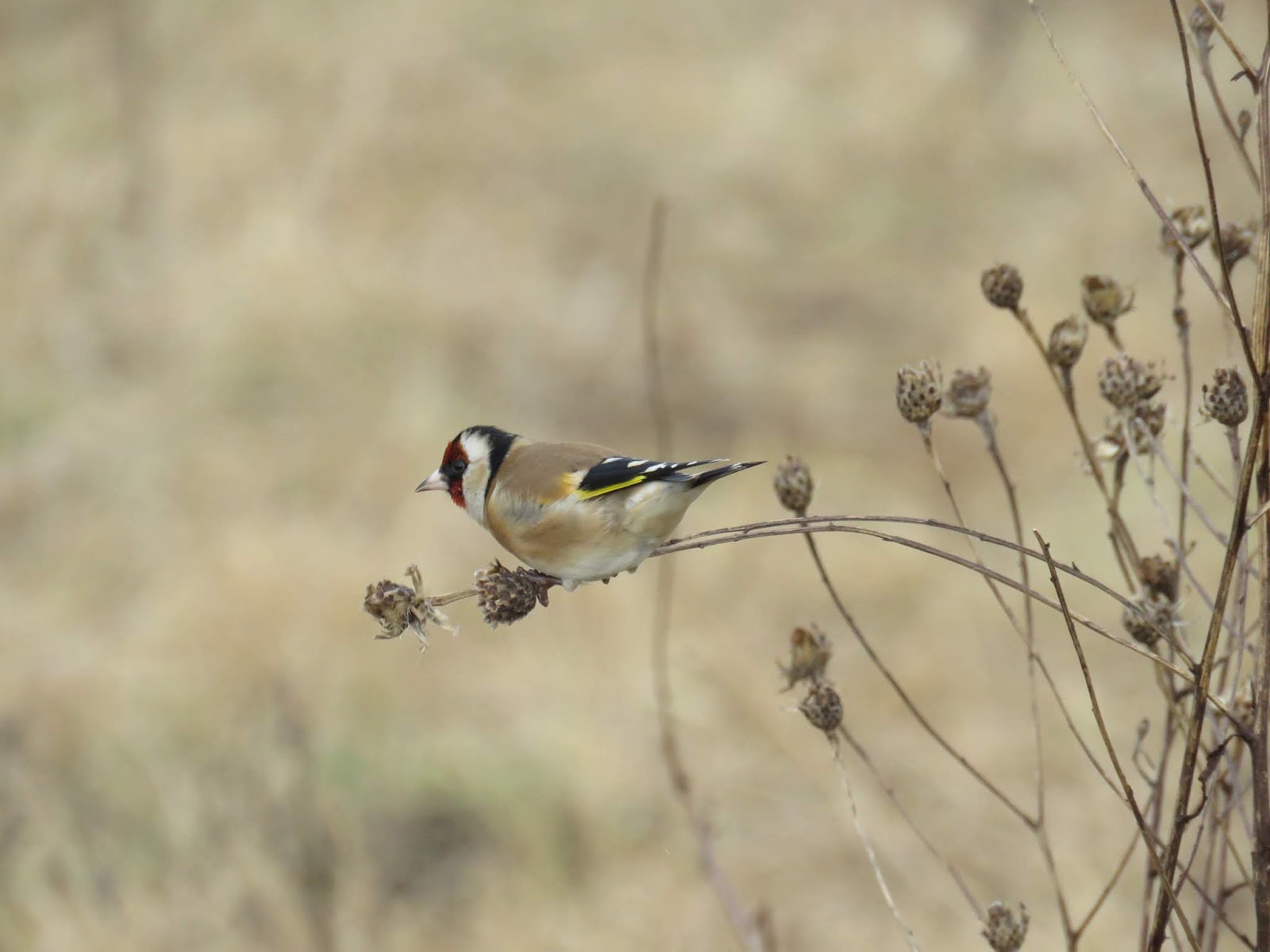
My most enjoyable natural history events of the past five years continues: 9. A swarm of Goldfinches  It dawned overcast, dry and mild at Dungeness on 19th October 2017. The wind was a gentle south-easterly and, on stepping out from the observatory back door and into the half-light, there were already birds calling high overhead. It seemed to me a morning to be watching the skies for visible migration! I took myself off towards the point, away from the background noise of the power station. Watching diurnal passerine movement at Dungeness is an imprecise art, although most birds during the autumn appear to hug the beach (either heading east or west) or straight down (or up) the peninsula. Any vantage point between the observatory and the fishing boats will normally do. I initially stood close to the old lighthouse to get a feel for where the birds were moving - it was soon obvious that Goldfinches were on the move, and coming down the west side of the promontory. After ten min...

Charmed

I could just write that over a two-and-a-half hour period we counted 6,175 Goldfinches moving E to SE, but the drama and spectacle of the event would be truly lost. Bare facts are not enough. They started moving by 07.30hrs, a steady procession of modest sized flocks, keeping low and flying into the SE wind. Their progression over the shingle was uncomplicated, across the open beach and either out over the sea or a continued coasting. A thousand had been counted through when Mark H suggested meeting him on the very point of the peninsula itself. As the wind was light and the weather dry, the open nature of this new place of observation was not an impediment on our ability to observe and count accurately. The birds were still coming, and with our 360 degree view they were coming in greater numbers. There was a sudden shift in volume - the flock sizes increased and they were arriving on a broader front. There were times when we had groups join together in front of us, at one point 300...

Just another day...

They started shortly after dawn, jostling flocks, compact, noisy with chiming calls like bubbling cowbells. Low, morphing in shape and urgent in nature. By mid-morning they had fizzled out and our morning count of Goldfinches had reached 1265, the vast majority heading into the easterly wind. They were joined by smaller numbers of Meadow Pipits, Pied Wagtails, Siskins, Linnets and Redpolls. Nearby a male Dartford Warbler was accompanied by a Wren (giving the Stonechats a day off), a late Willow Warbler pitched down into the lighthouse garden where three Firecrest entertained all comers. Whereas the Goldfinches had largely packed it in for the day, the Chaffinches had just started. Flocks of spaced out sedateness flowing overhead - again eastwards - with groups strung out in parallel or linear order. They defied easy counting, being lost against an opaque pearly-white sky. When visual contact was made it soon became obvious that others were higher, or lower, or further away. After two...

Modest turnover

Image
Although this mornings circuit of the Priest Hill fields seemed to be a case of the same few birds being present, there is evidence of turn-over. A male Stonechat (the first since early December) joined a single female this morning, and the count of 13 Reed Buntings (the third time this peak has been reached) included a male which was almost in full summer plumage - I've not seen him before. Little flying over, but expectation is still high. Where are those geese, Lapwings, larks, swans..? Up to a dozen Goldfinch  across the site - the Linnets seem to have moved on Sorry - another Reed Bunting - cannot help myself at times.

Local round-up

Image
I've not wandered far over the past week. My nearest 'patch', Canons Farm, has been quite kind, with an Iceland Gull, Mediterranean Gull and Dartford Warbler to keep me (and others) more than happy.  The chances are that the farm will revert back to its sleepy self, although in truth there is always something going on there - this morning saw an increase in thrush and finch numbers, together with a further three Stonechats (below), following on from the three of last week. They are an expected, and most welcome,  part of early spring in north Surrey. The back garden has been a hive of activity also. The birds are going crazy for the sunflower hearts, with Goldfinches to the fore, but also Greenfinches and Chaffinches joining in the feeding frenzy. Star birds at the feeders though have been a male Siskin and two female Blackcaps.

Goldfinches and Lavender

Image
We have three medium-sized Lavender bushes in our back garden. Throughout the summer the flowers (which last for several months) are a magnet for insects and give off a most restful aroma. As tempting as it is to cut the dead stems in the autumn, we always leave them, as we know that during the late winter we will get visitors to feed on the seed heads... This video was taken from the kitchen window this morning. We will normally see one or two birds over a few days, but have had up to 14 at once. We never tire of watching them. Lavender is a wonderful plant to have in the garden, with year round natural history benefits. So what are you waiting for? They are readily available at a garden centre close to you right now! There is an historic association with Lavender in this part of northern Surrey and south London. Lavender fields have been harvested for many years, with one particular field close to Woodmansterne being very popular with day trippers. A significant proportion o...

Benign winter birding

Image
Winter. What, as birders, do we want from this particular season? If it is a hard one, with snow and freezing temperatures on the continent, together with biting easterlies sweeping across the North Sea, we can hope for an influx of wildfowl, thrushes and who know's what else. But as exciting as such times are, the birds will undoubtably suffer. Do we really want that to happen? The flip side is for there to be benign, unremarkable weather - a bit like what we are 'enjoying' in 2014-15. Not too cold, not too wet and not too windy. But with the 'ease' that such weather brings, the birding is largely predictable. Locally it seems as if nothing much has changed since late November. There are few flocks out on the fields but they are unremarkable in number and composition. The finch and thrush numbers are poor - just where are the Redpolls, Siskins and Bramblings? But we carry on looking, we still scan the flocks, and we still skywatch just in case. .. I spent a goo...