Posts

Showing posts with the label pan-species

The pipes of pan-species listing

Image
‘ Pan Species Listing - How to Become a Super-naturalist’ has recently been published by Pelagic and is authored by Graeme Lyons. Regular visitors to ND&B will be familiar with Graeme as his blog appears in my blog list (found to the left) and he has featured on these very pages more than once. I think that I can safely refer to Graeme as a friend as we have spent time in the field together on several occasions (including some one-to-one sessions) and have conversed on subjects beyond those of natural history. I was therefore more than intrigued to find out what form his book on the subject would take. When he told me that he had been commissioned to write it I assumed that it would be mainly about his personal journey - I was wrong. Having now read the book and lived with it for a few weeks I feel in a position to review it. Putting it simply, it is a book that all naturalists should invest in whether they are a pan-species lister or not. It might only be late March but I feel co...

PSL complete

Image
Back in the mists of time (or at least the turn of the millennium) I sat down and worked out my UK list of lifeforms that I had identified. This was primarily made up of birds, plants, butterflies and moths, although I was able to dig up plenty of additional filler, such as dragonflies, easy to identify insects and a whole host of miscellaneous creatures that I could remember having seen. I kept it in a notebook and now and again would suddenly remember something from the past and add it to the list. The list was purely for a bit of fun, and as far as I were aware there was nobody else that kept such a pointless tally - but I was so very, very wrong. I cannot remember the moment that I became aware of other 'lifeform listers' although I'm pretty sure that the name Mark Telfer was involved. He, too, kept such a list and not only that, he was on the lookout for other like-minded souls, to gather (and publish) a league table of totals. Even though my competitive listing days w...

PSL reborn

Image
It must have been some time in the early 2000s that I first counted up all of the life forms that I had identified and recorded in Britain. This fledgling list was largely made up of birds, moths and plants with a few large, colourful and obvious insects thrown in for good measure. I thought of it as an enjoyable sideshow in my natural history studies, and, as a maintainer of lists rather than a chaser of them, it kept itself firmly in the background, coming out to play whenever I had a few ticks to add to it. I'm at a loss to remember the precise moment that I discovered that there were others out there that kept a similar list - maybe through an internet search or a discussion while out birding, but I soon found myself in touch with Mark Telfer, who was organising a web-site devoted to such matters with an accompanying league table of recorder's lists. I needed no second invite to post my efforts and, very briefly, found myself in the top 10 of the innaugaral table. I soon st...

Can I count it? Er, sometimes...

Image
Sussex Emerald - fortunately seen away from pots and fridges Recently, within the pan-species listing community, there has been some discussion as to the rules and regulations behind what is acceptable as a lifer. For example, is it enough to identify (and count) a leaf-mine (without seeing the life-form that actually created it?). Should you be allowed to 'have' a moth that someone shows you in a pot in a fridge? Can you count a bird that is only seen whilst being ringed? And does it all matter? If you are part of a professional enterprise, if you are taking part in an competition or are a member of an organised society, then you are agreeing to abide by the rules and regulations of that body. When you play such 'sport' there are agreed rules to adhere to, to ensure that the playing field is a level one and that any result and resulting league table has credibility and meaning. With pan-listing (at the moment), there does exist a list of rules but comes with a...

Guess who's coming to dinner?

Image
A couple of evening's ago, my wife let me know that "one of your beetles is in the kitchen". This is a great improvement on her screaming and thrashing the insect dead with a shoe, newspaper or drying up cloth. It was a weevil, but beyond that I couldn't be more specific. After a bit of internet dithering I believe it to be Otiorhynchus sulcatus (no doubt someone out there will correct me if I'm wrong). The picture above shows our kitchen visitor in all its glory, looking like a Doctor Who-themed giant insect-elephant. From the Planet Telfer, most probably. If correct, it takes the pan-species total onto 3,184. At this rate, I'll top 3,185 by the year's end...

Pan-listing update

Image
Click here to see an updated list of all of those geeks, saddos, boffins and freaks who make up Mark Telfer's pan-listing league table. I'm proud to count myself among them, even if my slide down the list makes me aware that I need to undertake a bit of serious field action this year to stabilise my position. Maybe it's time to get that pesky mosses and liverworts book off the shelf once more. I'm currently on 3,182 species. I would hope to haul my sorry arse up into the 3,500+ region by the years end. Talking of books, Peter Marren's Mushrooms book is nothing short than a shot of pure mycological adrenalin into the arm that has got me really excited about looking for fungi again. I did quite a bit in the autumn of 2011 but haven't since - don't ask me why. He doesn't make any bones about the difficulty of identification within some groups but makes it clear that he thinks it's alright to walk away if confused. Not many writers consider this ac...

Odds and ends, bits and pieces, this and that

Image
This post is nothing but a round-up of the bits and pieces that are currently in orbit within my head at the moment. So expect the cerebral equivalent of 'carpet sweepings'... Micro-moth field guide . The latest issue of British Wildlife lets slip that 'The Field Guide to the Micro-moths of Great Britain and Ireland' is coming soon! No publication date as yet, but the wording suggests that it will be soon. The team behind it includes Phil Sterling, Mark Parsons and Richard Lewington. Can't wait! Pan-species. At the start of the year I swore that I would leave mosses alone. I've been out in the field a few times and have come across luxurious banks of mosses that look so, so inviting. I'm weakening. I actually want to start on them in earnest. I've got the field guide. I've got a hand lens. I've got small plastic bages to collect them in. Watch this space. Other blogs. I'm going through a bout of blog envy at the moment. It seems to ...

Made it!

Image
It may not be a spectacular looking species, but Bitter Bracket became my 3,000th pan-species yesterday morning whilst on the hunt at Reigate Heath. I would have liked that honour to have gone to Ceratiomyxa fraticulosa , a species of slime mould that I was rather taken with, but that came in at 2,998. That's it to right of Sir Winston (above). Before any of you go thinking that I've suddenly become an expert in slime moulds, I haven't. I know as much about them as I do 19th century Russian ballerinas - it just so happens that this species is illustrated in a mycology book that I own, and my double-checking online suggests that the identification is correct. Reigate Heath also supplied White Brain, Liver Milkcap, Yellow Fieldcap and Turf Mottlegill. Above all of this fungi action, two male Crossbills entertained me feeding in conifers only yards away. I then went on to Juniper Bottom, taking in Box Hill and Juniper Top. The new fungi species kept on coming, with Cabbage ...

2713, as if you care...

2713. That's my new pan-species list total. A proper, and I mean proper overhaul of my lists saw some winners (five additional species of bird!) and losers (three fewer moths). The bird additions were all splits from the past few years that I just hadn't added - and I dare to call myself a birder... There was big excitement in the garden when a ground beetle was foolish enough to hide under some old rush matting. Armed with Luff and a hand lens I confidently identified it as... truth be told I bottled it. I was pretty certain on the id, but a couple of things weren't quite right. I had visions of Telfer and Lyons looking over my shoulder, checking on my ability, scornful that a bit of stringing just might be about to be perpetrated. So, my ground beetle virginity remains intact for the time being. I am hoping to top 3000 by the years end. If I can grasp beetles, lichens and mosses, then it will be a shoe-in.

(Whisper it), it's a Pan-species post

Image
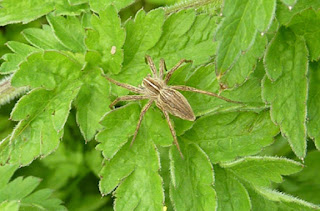
It's been a while since I mentioned my Pan-species list. The last time I did, it produced a stream of bile from a self-procalimed 'normal person' in Kent. So, if you don't like the idea of blokes identifying anything that moves (and plenty of other things that don't), look away now... At the moment, my list stands on 2671, comprising: Flora (1360), Moths (675), Butterflies (50), Birds (370), Dragonflies (33), Fungi (28), Mammals (32), Marine life (11), Other invertebrates (56), Amphibians (5), Reptiles (4), Fish (17), Snails (4), Mosses, lichens and liverworts (23), Grasshoppers (2), Others (1). I could have added many species over the weekend, especially when walking through the knee-high emerging vegetation at Beddington, where plenty of small beetles, spiders and other creepy-crawlies were on show, but I had no net, no containers and, if I'm honest, no chanceof pinning a firm id on them. One that didn't get away was the spider Pisaura mirabilis , pi...