Posts

Showing posts with the label photography

The loss of wonder

These days it is unusual for any bird rarity to not be accompanied by a mobile ornithological paparazzi. From the boys (they mostly are boys) with the big lenses to the boys (they mostly are boys) with the bridge cameras. There might even be some retro snappers with their compact cameras jammed up against the eye-pieces of their telescopes. And they too will be mostly boys. Billions of pixels will have gone to make up the tens of thousands of images that will have been created at the altar of the recent ‘big’ rarity, the Desert Warbler in Northumberland. And many - many - of these images will have been let loose into the public domain via Twitter, What’sApp groups and blogs. Most of them will be of an exceptional quality. It wasn’t long ago that such saturation of high quality images of rarities was unheard of. When I started birding in the mid-1970s there were but a handful of rarity photographers and some of them were still shooting in black-and-white. A lot of the equipment bein...

A bridge far enough

Image
Once upon a time, in a birding world far, far away, if you wanted to take meaningful photographs of birds, then you needed to invest heavily in photographic equipment - camera bodies, various lenses, tripods, film, developing and printing - you needed to start with a small fortune and forgo pure birding and focus almost entirely on photography. In fact, you were either a bird watcher or a bird photographer . In my birding youth there were but a handful of well-known bird photographers, largely shooting in black-and-white, with JB and S Bottomley and Eric Hosking springing most readily to mind. More affordable equipment, increased leisure time and a swelling in the interest in rarities encouraged a blossoming of 'birders with cameras' at the end of the 1970s and the turn of the 1980s. You still needed to fork out a few bob, but many did so. It became a staple part of a twitch to see these photographers selling their prints of recent rarities, and some of them made a tidy sum ...

Too close?

Image
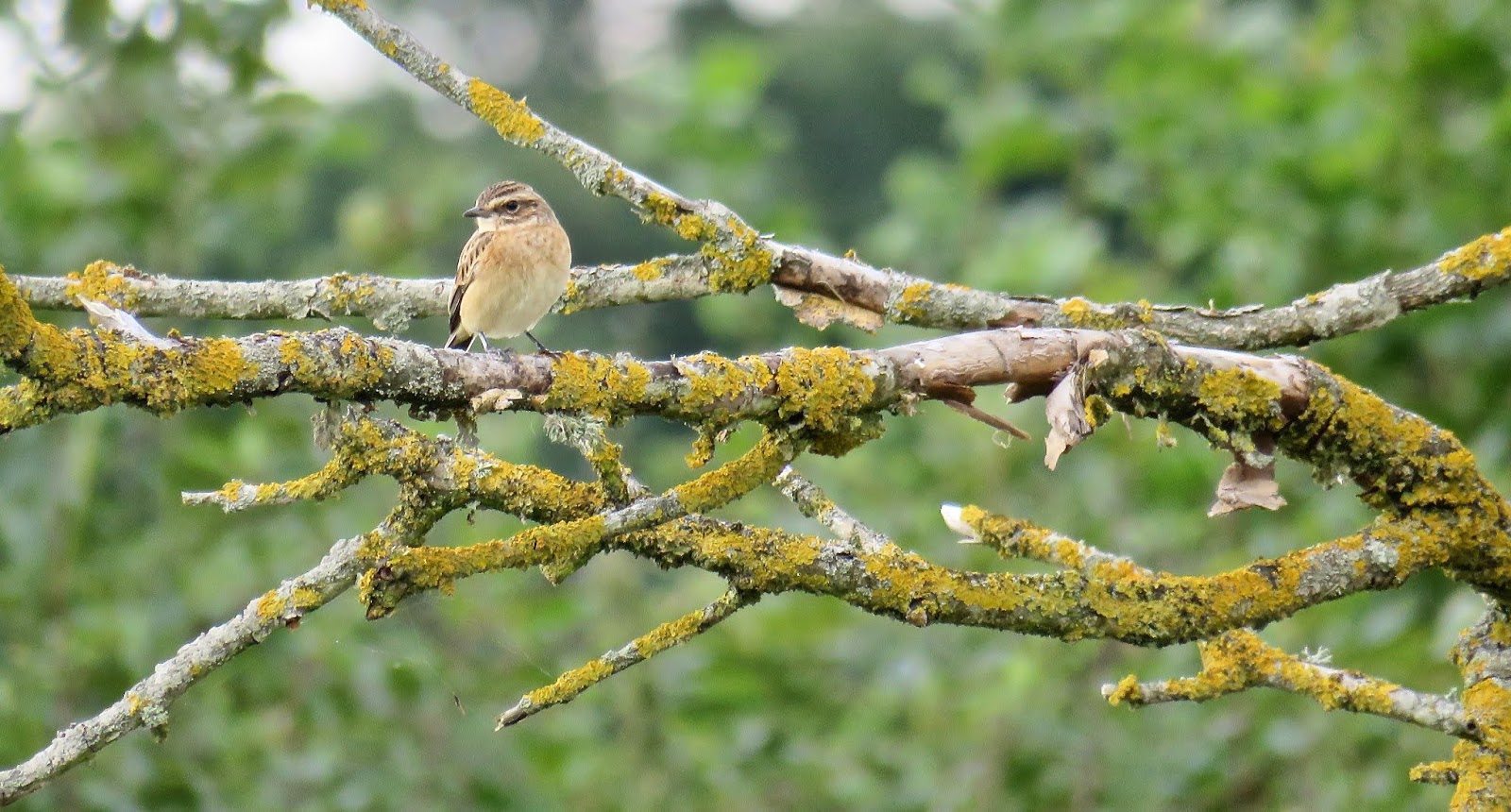
There was a good tweet posted on Twitter yesterday, basically suggesting that photographs of birds placed in their habitat are far more pleasing than a close-up shot of the species. I couldn't agree more! Now, it could be that I agree with this sentiment because it is easier for me to obtain decent 'bird/habitat' images with a bridge camera (as with the migrant Whinchat shown above) than it is to get feather-by-feather detail  - however, there is something undeniably satisfying with a picture where the bird is just a part of the composition. It somehow breathes. By the way, have you noticed how quite a few people are now referring to the taking of a photograph as a 'capture' and using it in verb form too? Not to keen on that myself.

Old camera outing

Image
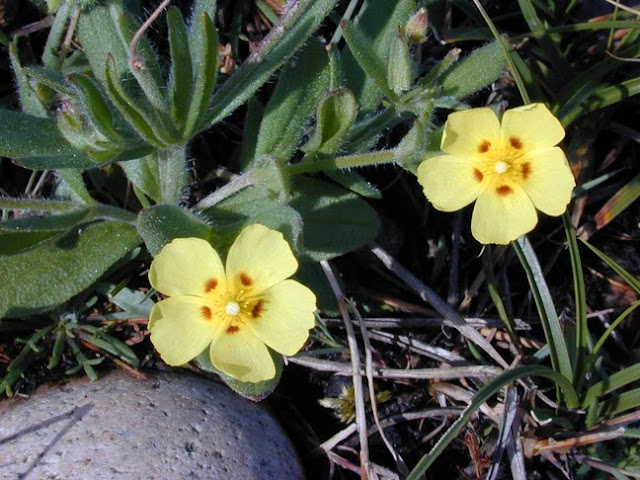
I have an old DSLR - a Canon 400D - that must be getting on for 12 years old now. At the time of purchase I also obtained a Canon 60mm macro lens - mainly for taking photos of moths at rest. For a while I studiously set the camera up on a tripod, used a remote control thingy and made sure that the depth of field and light was good enough to obtain passable results of the said resting moths. And then I got lazy... My compact Panasonic camera could take excellent shots with minimal fuss, so I just used that - no setting up, no trial and error, just click and move on. A bit soulless though. The other day I dusted down the old gear and took it out into the field at Box Hill. Pointed the 60mm at a few plants. Shown here are Sainfoin (top and middle) and Common Milkwort (bottom). Was quite pleased with the results. Of course depth of field is an issue (they were taken with an automatic setting) but in some ways it is quite effective having all but a focus point 'blurry'. I...

Watch the birdie

I am envious of those birders that manage to capture inspiring images of the birds they see before them. From the, quite frankly, highly professional quality of Jono Lethbridge's work (if he left the banking world he could easily forge a career in photography) to the stealth-like lens-assassin that is Roger Browne at Beddington, we are offered on-line photography to die for. I, too, would like to be able to join in with them... but, I realise that it takes more than the shelling out a few thousand quid to obtain the right camera body and lens. It takes time. It takes patience. It takes an eye for composition. It takes an uncanny knack of knowing where to look and when to trigger the shutter. Time I'd rather spend doing other natural history related things. I do own an old (and I mean old) Canon SLR body - a 400D. I also have a collection of lenses, some quite decent (a Canon 60mm macro, Canon 10-22mm wide angle; Canon 17-85mm - all of these more than passable), plus a Raynox ...

Smaller still

Image
I first became aware of the Raynox DCR-250 a couple of years ago, via Leicester City's very own mascot, Mark Skevington - you can read his initial thoughts here . It is basically a magnifying lens that is clipped onto an existing DSLR or bridge camera lens. Skev's results with this combination are, I think, spectacular. Because many inverts are so small, and, when you look at them close-up, beautiful, I've longed after the means of obtaining some worthy images. This week I took the plunge and purchased one - and at around £40 it is not silly money. Time was a bit tight this morning, but I wanted to try it out. I clipped it onto the end of my 60mm Canon macro lens (itself attached to my now old Canon 400D). Everything was set up for autofocus, so I knew that the depth of field would be shallow. The result was very pleasing. This is, I think, Pinalitus cervinus (and if you know better, please let me know). It is tiny and to my failing middle-aged eyes lacked any colou...

665

Image
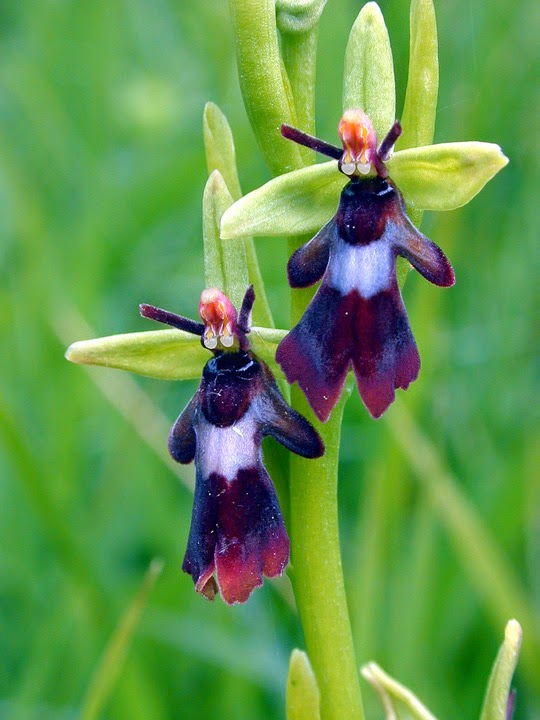
Fly Orchid at Yockletts Bank in Kent - one of the better ones 665. The number of Bee-eaters that Martin Casemore has missed at Dungeness this spring? How many managers Tottenham Hotspur have employed in the past 10 years? Or is it the number of plant species that I have taken photographs of in the UK? Yes, proving that I've got more time on my hands than is healthy, I counted up the number of plant species that I've photographed across the UK. Most (but not all) are half-decent, some have come out rather well and a few of them are just record shots (have you tried taking a photograph in pouring rain and force 6 winds on top of a Scottish mountain?) With thousands of images just resting on a hard-disk, waiting to be opened and looked at irregularly, I thought it would be worthwhile letting them out into the big wide world. So, if you (or somebody you know) wants to use any of them for personal means, to illustrate a talk or presentation, or just use as wallpaper for y...

How to bluff at bird photography

Image
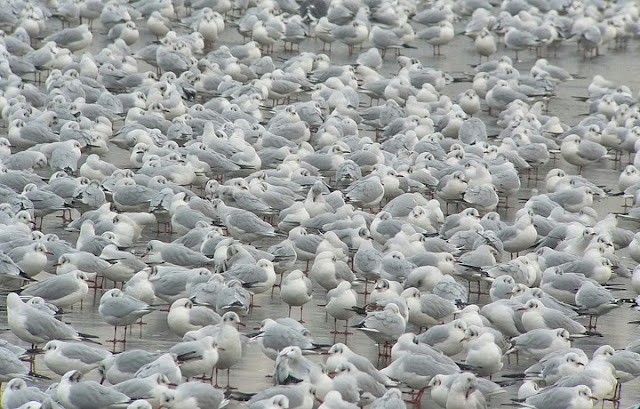
So, you own a camera. It might be a small compact camera, or maybe you've got a SLR with a standard lens on it. You know that you can get OK results by taking pictures of things that keep still and that allow you to get close to them - such as plants, fungi and moths at rest - but as for birds... well, the bloody things won't keep still and, when you do get close enough, the results are, quite frankly, disappointing. There are many blogs out there that are full of stunning images of birds. I could name a few but I'm not going to as they make me feel impotent. But, there is a way out for the naturalist/birder whose photographic equipment is modest or who doesn't have the patience to keep still for ten hours to get a picture of a Kingfisher sitting on a stick. Sheer number. A single Black-headed Gull at this range would be a very poor shot indeed, but when it is in the company of hundreds of others, it takes on an altogether more arresting image. Like one of those...

Do photographs help us or hinder us?

Image
Do we spend a disproportionate amount of time taking pictures of wildlife rather than observing and appreciating what is before us in all its glorious reality? I think that quite a few of us are guilty of such actions. A camera can be a lazy man's tool. We snap away at a plant, moth or butterfly which will then be appreciated and consumed at a later time. Something that I constantly find myself doing is, when confronted with a 'prize', panic until I have the pictures in the camera, by which time the moth, butterfly or beetle has most probably flown or scuttled away. Plants are not so problematical, but if the first reaction upon seeing them is to reach for the camera, then our mind is not really attached to the personal moment of initial contact. We have lost something. Can I be accused of using wildlife as a commodity to consume, catalogue and forget, to then move on to the next thing in line. Admittedly, the picture can be used as proof of our having seen what we are ...

Cameras are the new guns

With the rise of ownership and ease of use of digital cameras, the number of birders wandering the field armed with the means of taking a photograph has never been higher. The quality of the results is, as to be expected, mixed - from the professional quality seen on some blogs to those blurred shapes that float in a sea of noise defying identification. This vast tide of image has had many benefits, one of them being a number of good species that have been nailed, that would have, in the past, got away... Beddington Sewage Farm has been fortunate to have Roger Brown patrolling the lakes with, rather than a telescope, a telephoto lens (that is longer than most small children). He is also blessed with the sharpest pair of eyes that I have come across. Small dots in the distance to most mere mortals appear as frame fillers to him - and he most probably was able to pick these dots up a quarter of a mile further away than the rest of us. But I slightly digress. Roger has a habit of seeing a...

Ring flash?

A plea to my fellow bloggers and anyone that has randomly come across this post. I want to start using my DSLR for macro photography and am aware that I need to illuminate the subject that is having its picture taken. I have a Canon 450D (the dust is being blown off as I type) and a Canon 60mm dedicated macro lens. Is a ring flash the simplest (and best) solution? Any thoughts would be welcomed...

Laid back - a study in russet

Image
It is a rare event when I go out into the field and not treat every living thing that I come across as something to identify (or at least try to), to write it down in a notebook and commit it to the giant database that I maintain at home. Today was different... I have been aware for some time that my DSLR and various lenses have lay dormant, unused, and unloved. With all of the spectacular autumn colour on offer I was moved (yes, very Byronesque, I know) to get out and take some photographs. I used to dabble with illustration, and have been looking for a subject that will grab me enough to rekindle this lost art. Pattern and form have always been areas that I have gravitated towards, rather than realism. The natural world is full of both. So, this afternoon I wandered into Banstead Woods, sans binoculars set the camera function to manual, and snapped away. I was quite pleased with the results. Muted colour on an overcast afternoon which has the basis for a number of illustrative pro...