Posts

Showing posts with the label Lixus iridis

Inverts on the downs

Image
Banstead Downs sits just to the south of the Greater London boundary - in fact, if you cross the road at its northern limit you will be straying into the London Borough of Sutton. This relatively modest area of chalk downland has a decent record of natural history recording (no doubt due to the close proximity of London) and so for the local naturalist there is the pleasure of being able to browse historical species lists across several groups. Having lived in the general area for 55 years my ventures onto this particular downland were primarily in search of its birds, plants and butterflies, but recently that has shifted to dipping in-and-out of the wonderful array of invertebrates that it has to offer. This morning I had a small window of opportunity to go exploring. There is one small area on the eastern flank that I make a bee-line for, with low vegetation choked with Bramble, Stinging-nettle, Cow Parsley and Hogweed (with a dash of Horse-radish for good measure). It is next to a l...
More invert action

Image
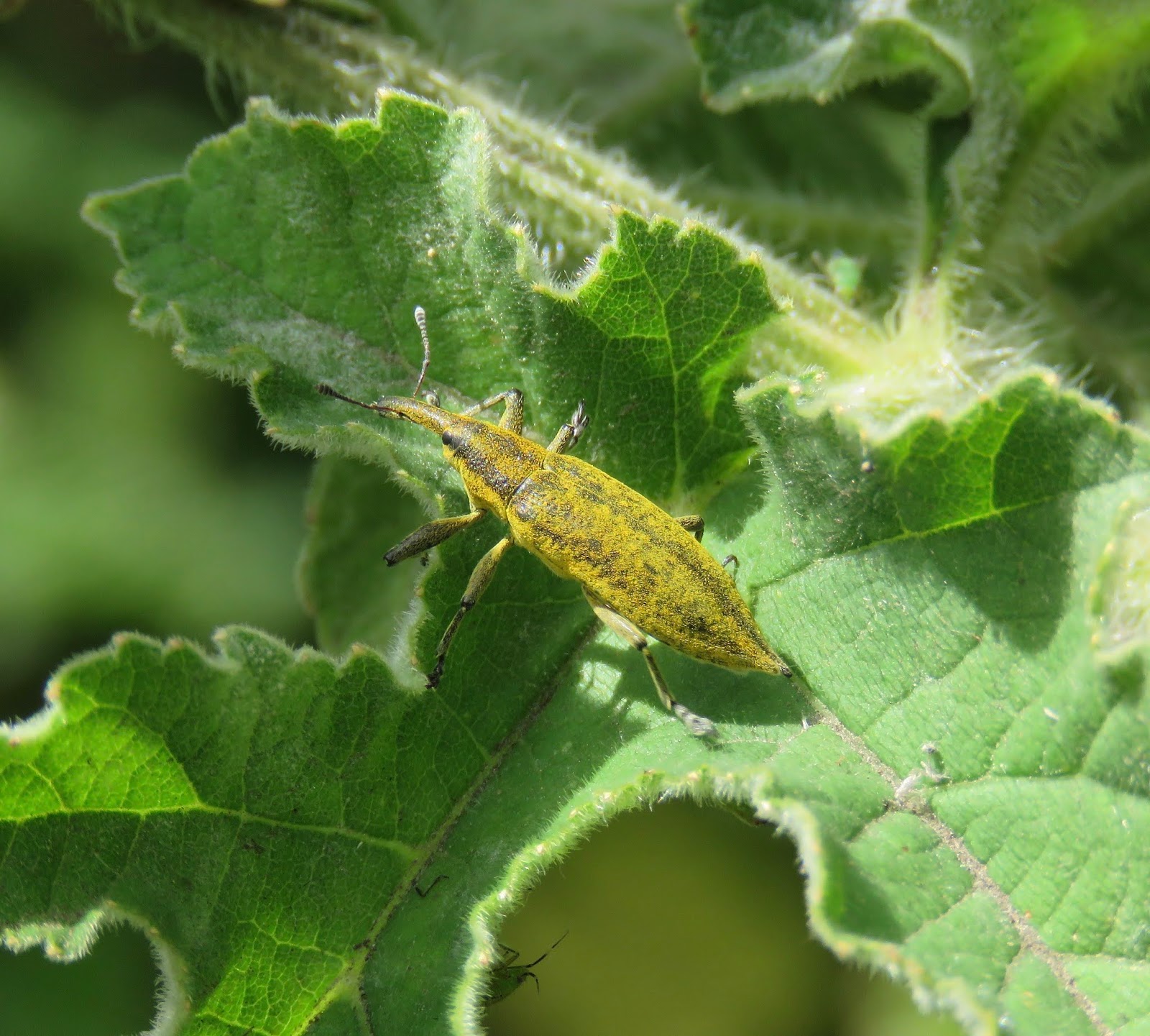
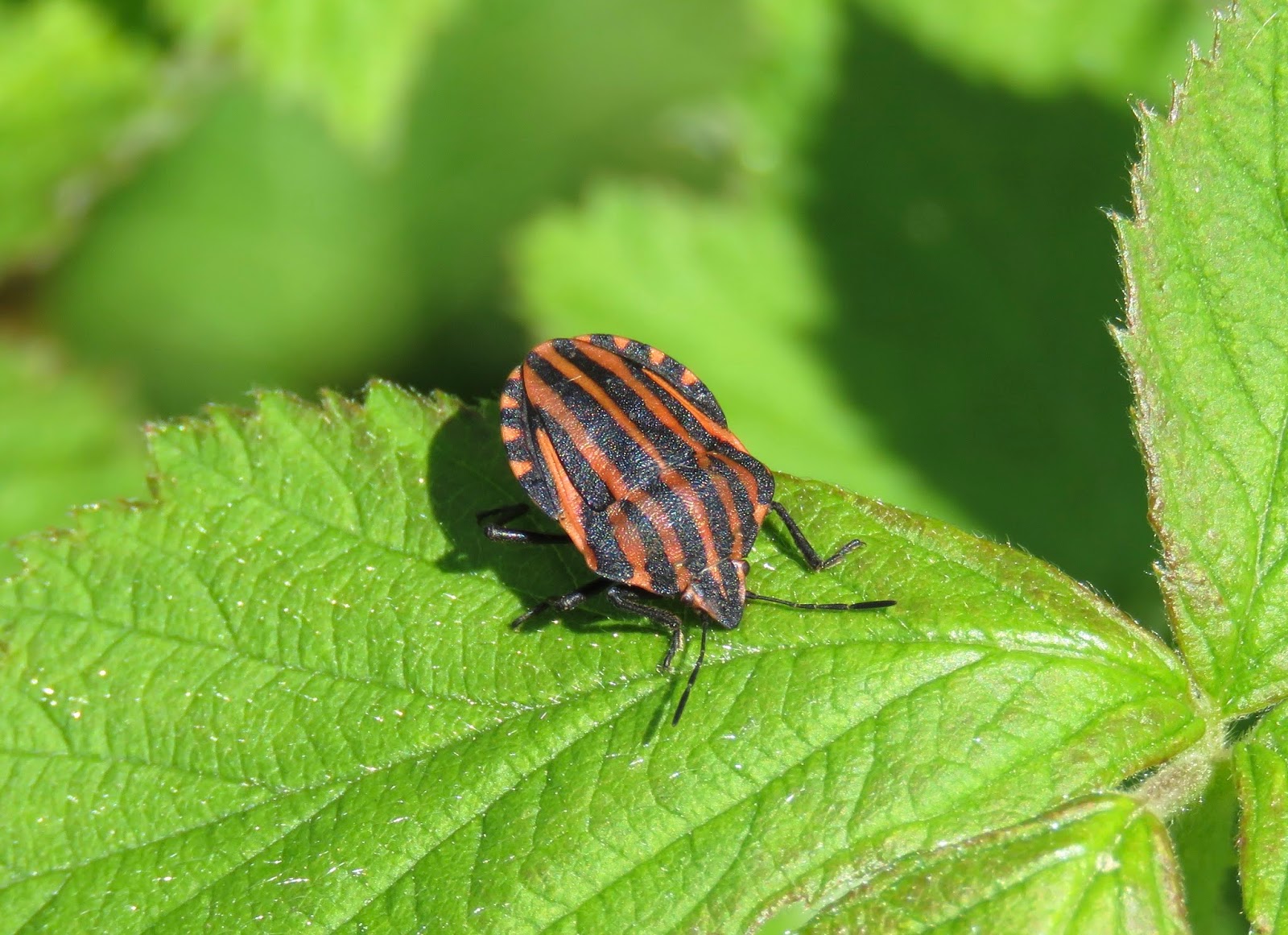
Sometimes, just a nose about locally is all it takes to produce the goods. After a morning of gardening I took myself off to check Banstead Downs for Striped Shieldbug (above). I didn't find them where I have had success before, but did come across three individuals within 3m of each other at a new site (TQ2664260543) some 500m south of the original Freedown Lane colony.  I also came across Lixus iridis (above) at four sites, all shown on the map below. Each of these areas are open in character with a heavy ground vegetation. The weevil seems to like Hogweed. Today, all three Striped Shieldbugs were on Bramble. Apart from the Striped I also recorded Brassica, Dock, Hairy and, best of all, Woundwort Shieldbug (below), my favourite - just like delicate precious jewels. The chances are, if you are in the Banstead, Wallington, Chipstead, Coulsden or Croydon areas, a check of any stand of Hogweed might provide you with either of these colonising inverts. That's my summer sorted out ...

Invert interlude

Image
A morning that started as a search of the many horse paddocks to the north of Banstead (which failed to yield the hoped for chats and wagtails) and ended up as a successful hunt for invertebrates, mainly due to my checking of the Lixus iridis Banstead Downs location. To the uninitiated, this is a rare, southern-European species of weevil, large in size and of indeterminate status in the UK. Whether it is here under its own steam is in question, but now that it maintains a foothold in northern Surrey, we may see it expand further (image above). At least six were found in a small area of Hogweed with casual searching over 30 minutes (no sweeping or beating). This site is also 'home' to Striped Shieldbug, although none were forthcoming, and I also checked a further site where I had recorded this rare hemipterid last summer. No joy there either. There were good numbers of Dock Bugs, with smaller counts of Sloe, Brassica (below) and Pied (bottom) Shieldbugs. 

Incoming inverts

Image
Another one of those end of year round-ups, part celebration, part blog filler. Today’s post features four invertebrate highlights, all of them either new colonists or species making a comeback.  First up is Striped Shieldbug (Graphosoma italicum). In mid-June I’d been tipped off that a specimen had been found close to Banstead Downs, so armed with a grid reference I went in search. My first attempt drew a blank (although see below), but seeing that the site was close to home I went back again on 20th July  - managing to find a singleton before I even arrived at my destination, on Hogweed, on Banstead Downs itself. I was destined to see this species again, in the same general area, on two more occasions, with one being a nymph, (in the company of Graeme Lyons), on 31st August. This shieldbug, found in the Mediterranean region, has been sparingly recorded in the UK. This species appears to be spreading north from its core range. On my initial failed hunt for Striped Shieldbug I...

Lose glasses, find iridis

Image
It was a pleasure to once again meet up with Sussex-based freelance ecologist and all-round good bloke Graeme Lyons ( you can visit his highly instructive and entertaining blog here ). He has been conducting an invertebrate survey at Chipstead Bottom over the summer, and invited me to accompany him on his latest session yesterday. I jumped at the chance. Graeme's natural history knowledge is exceptional and his desire to encourage and inspire others to look at all the natural orders is infectious. We met at 09.00hrs. It had been over six years since we last met, but immediately struck up the easy going relationship that we had previously enjoyed, chatting non-stop during the following seven hours as I followed him around, watching the master at work. Graeme was armed with a sweep net, suction sampler and beating tray, utilising all this equipment (plus more) to entice the myriad of hiding invertebrates out into the open, ready to be catalogued and identified. There were five s...

Want some more?

Image
Oh, alright then. I went back this morning for thirds and obtained some better images of that beast of a weevil, Lixus iridis. You can keep your Blyth's Reed Warblers...

A big rare weevil

Image
I was poking around a clump of Hogweed, close to home this morning, when I came across a weevil that stopped me in my tracks. I know very little about weevils, but this one was striking, being large, exhibiting an elongated cigar-shaped body and was a bright orange-brown colour. It was so obvious that I assumed that I would find it illustrated in one of the generalist insect guides back at home. I was wrong. I then went online. I checked all that I could, including Mark Gurney's fine photographic references, and felt confident enough to assign it to the genus Lixus - but as to species, I could not decide. It seemed to me on what little literature I could find that the five species of Lixus on the British list were all either exceedingly rare or very local. I needed help. I put out a tweet, together with a couple of poor images that I'd grabbed with my phone, and was delighted to have responses from Billy Dykes and Mark Gurney, confirming the identification as Lixus iridi...