Posts

Showing posts with the label Night-flowering Catchfly

A botanical time-capsule

Image
Scarlet Pimpernel of the blue-flowered form We've reached number two in the countdown of my 10 most enjoyable natural history events of the past five years. 2. Arable overload Nationally rare plants within a couple of miles from home is not a prize that is bestowed upon too many naturalists, but when the site that they occur on is opened up for access - and then proves to be an even better site than first thought - it is the stuff of botanical dreams. For the past five years I have had the absolute pleasure of visiting such a place. Langley Vale Farm occupied a large part of the chalk downland of Walton Downs. It was farmed sensitively and maintained a tremendous arable flora. For many years just a couple of footpaths crossed this land, with access onto the fields prohibited, but there were one of two spots where a wander along a field-edge could be made. And then, in 2014, the farm was put up for sale and purchased by The Woodland Trust (WT). The reaction to the buyer was...

Penn Field catchfly

Image
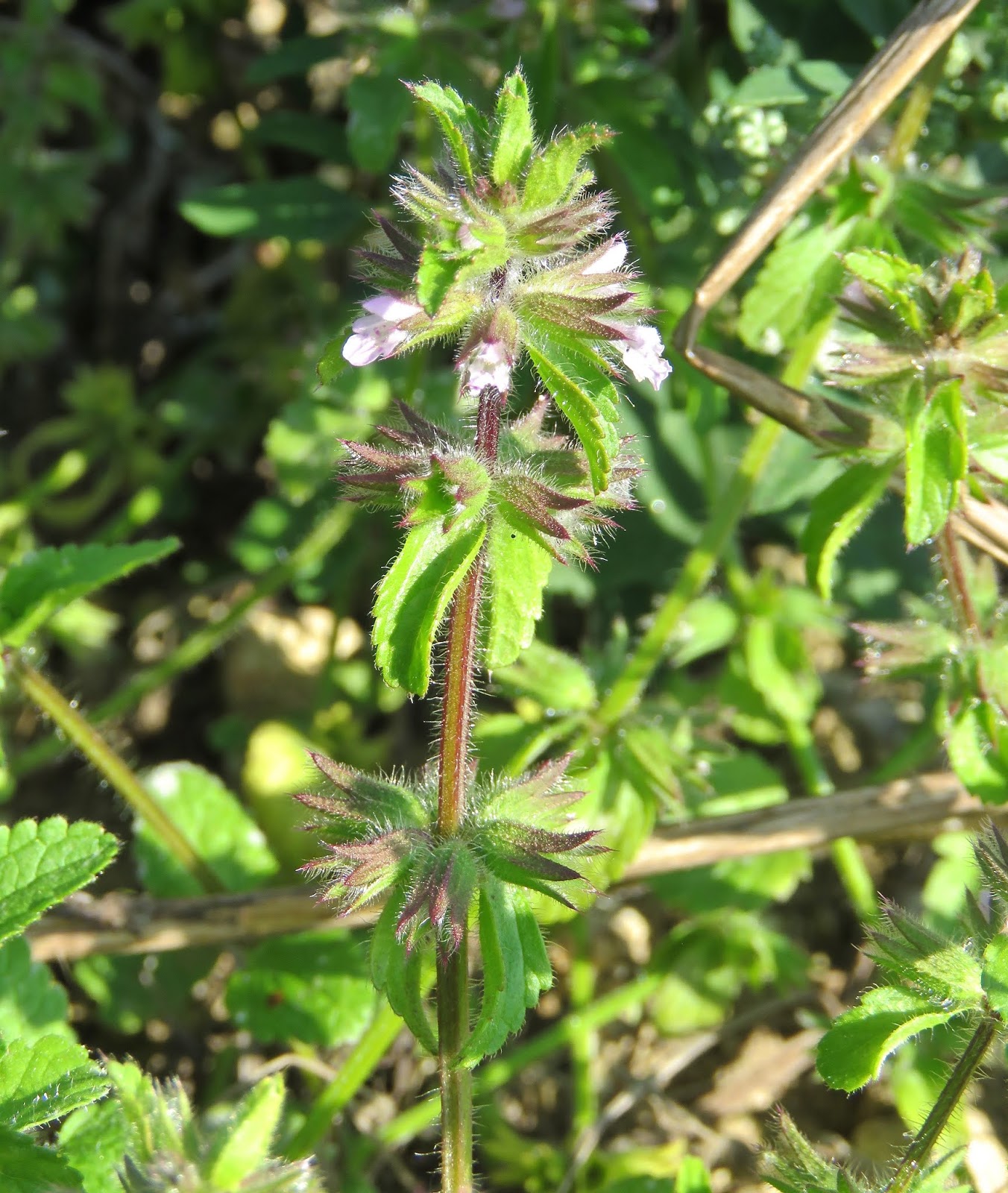
Another trip to Langley Vale, this time to have a good nose around Penn Field, where back in August I was able to see Peter Wakeham's Field Woundwort. I spent a couple of hours criss-crossing the site and was delighted to find a minimum of 56 Night-flowering Catchfly plants, the most that I've seen together - there was a loose group of 32 along a 20m strip, the rest scattered across the field in ones, twos and threes. Most of the plants were in good condition, many in flower and, once my eye was in, easy to pick out even from distance. They really are a different beast to White Campion (of which there was quite a bit).

More Langley Vale magic

Image
A few day's ago Peter Wakeham, that most diligent of local botanists, found a small clump of Field Woundwort (above) in Penn Field, Langley Vale. As far as I know this was a new record for the area, and as any reader of this blog will know, I am very keen to see anything that decides to pop up and flower in these local fields. This morning, armed with directions, I found the plant(s) with little effort - and for my troubles was rewarded by bumping into a fine Night-flowering Catchfly (below) on the way across the field. What else lurks within it? It is a large field and looks ripe for a good going over. I will be back.

Dragon's-teeth and chalky corners

Image
Cut-leaved Gremander Wild Candytuft There's a chalky corner of north-east Surrey where a couple of caring botanists have cultivated a number of scarce plant species from Surrey-sourced seed. This has been done with the blessing of various organisations. This 'nursery' acts as a back-up to the vulnerable wild populations, so that if ever they should disappear (at the likely hand of man), the species will still exist within the county and could be repopulated by the offspring of those very same missing plants. This chalky corner is tended to rather than managed, and it is incredible how well some of the species that are present just set seed with wild abandon (unlike at their 'wild' sites). Broad-leaved Cudweed, Wild Candytuft, Basil Thyme and Cut-leaved Germander are spreading away from their original seeding sites with vigour. Night-flowering Catchfly, White Mullein, Prickly Poppy, Rough Poppy and Hairy Rock-cress are just some of the other plants being lo...

Langley Vale in 2017

Image
Common Poppy in profusion, Langley Bottom Langley Bottom, Langley Vale, call it what you like - Walton Downs would do - the farmland that blankets much of this area has had a lot of coverage from me over the past few years. To recap: this farm was put up for sale and purchased by the Woodland Trust some three years ago. They plan to release the area into the public domain as a woodland reserve and intend to plant up a great deal of the open farmland, in so doing connecting existing copse and woodland together. So far, so good you may think - after all, private farmland is going to become countryside for the public to access and enjoy. Yes and no. Langley Vale has been farmed sympathetically down the ages, with a tremendous arable flora present as a consequence. It is like a botanical time capsule. When the Woodland Trust released their plans there was a great deal of fuss created by the counties botanists - why plants common trees on top of rare flowers? Meetings were arranged, ...

More botanical gems at Langley Vale

Image
This morning I met up with local botanist Peter Wakeham to partake in what amounted to a spot of plant 'twitching'. The farmland at Langley Vale had once again come up trumps, with two species of local (and national) rarity having recently been found by the eagle-eyes of Dennis Skinner. Before we made our way to these newly discovered gems, Peter showed me a couple of Night-flowering Catchfly plants that he had come across last week, in a field corner where they had not been seen before. They included one highly robust, fully-flowered specimen, that had a mixture of open and closed flowers. Both are pictured above. These flowers were also strongly pink, the Langley plants being normally coloured white. Our first target was nearby - a single statuesque Jersey Cudweed (below). Although a coloniser of 'nearby' London streets, how this individual made it to a chalky field on the Surrey downs is anybody's guess. Ground-pine (below) is becoming exceedingly...

A Langley Vale morning

Image
Night-flowering Catchfly - hanging on in a field ear-marked for tree planting Catmint - just the one plant where many appeared three years ago Cut-leaved Dead-nettle, widely distributed across the farm Quinoa - remnant of game cover, alongside plenty of Millet Another alien, one that I'm calling Common Amaranth Dwarf Mallow, understated and one of my favourites

A local extinction?

Image
Night-flowering Catchfly at Langley Vale Farm. Not seen there since 2014. There are few greater pleasures than walking along the edge of a field and working your way through a mass of arable plants in flower. It is colourful. It holds hidden gems. It is also disappearing. I am lucky enough to live close to a marvellous site, where such species as Night-flowering Catchfly, Venus's Looking-glass, Red Hemp-nettle, Cat-mint, Narrow-fruited Cornsalad, Sharp-leaved Fluellen, Round-leaved Fluellen and Dwarf Spurge can be found. It is called Langley Vale Farm, situated on Walton Downs in Surrey. They are all in danger of being lost forever. Any regular visitor to this blog will have read my previous posts about the purchase of the farm, in 2014, by the Woodland Trust. They plan to use the site to create what will be known as Langley Vale Wood, in commemoration of the centenary of the start of the First World War. A series of environmental and ecological surveys were commissioned, ...

A plea for an arable time capsule

Image
Langley Vale Farm, that nestles close to Epsom Downs race course, is a botanical jewel. Unfortunately, it might just become a former botanical jewel. Up until a couple of years ago all of the field margins were ploughed and game cover strips were maintained for pheasant shooting. These margins played host to a wonderful selection of arable plants, a disappearing group of flowers that cannot survive with the application of modern agricultural methods. My personal list of species recorded here is wonderful: Field Gromwell, Venus's-looking-glass, Night-flowering Catchfly (left, photographed there in 2006), Sharp-leaved Fluellen, Round-leaved Fluellen, Cat-mint, Rough Poppy, Narrow-fruited Cornsalad, Small Toadflax, Dwarf Spurge - enough to get even the most hardened of botanists salivating! Last year Red Hemp-nettle was found, a true rarity in Surrey. The farm came up for sale two years ago and was purchased by the Woodland Trust, whose worthy aim is to plant a woodland to commemo...