Posts

Showing posts with the label Corn Bunting

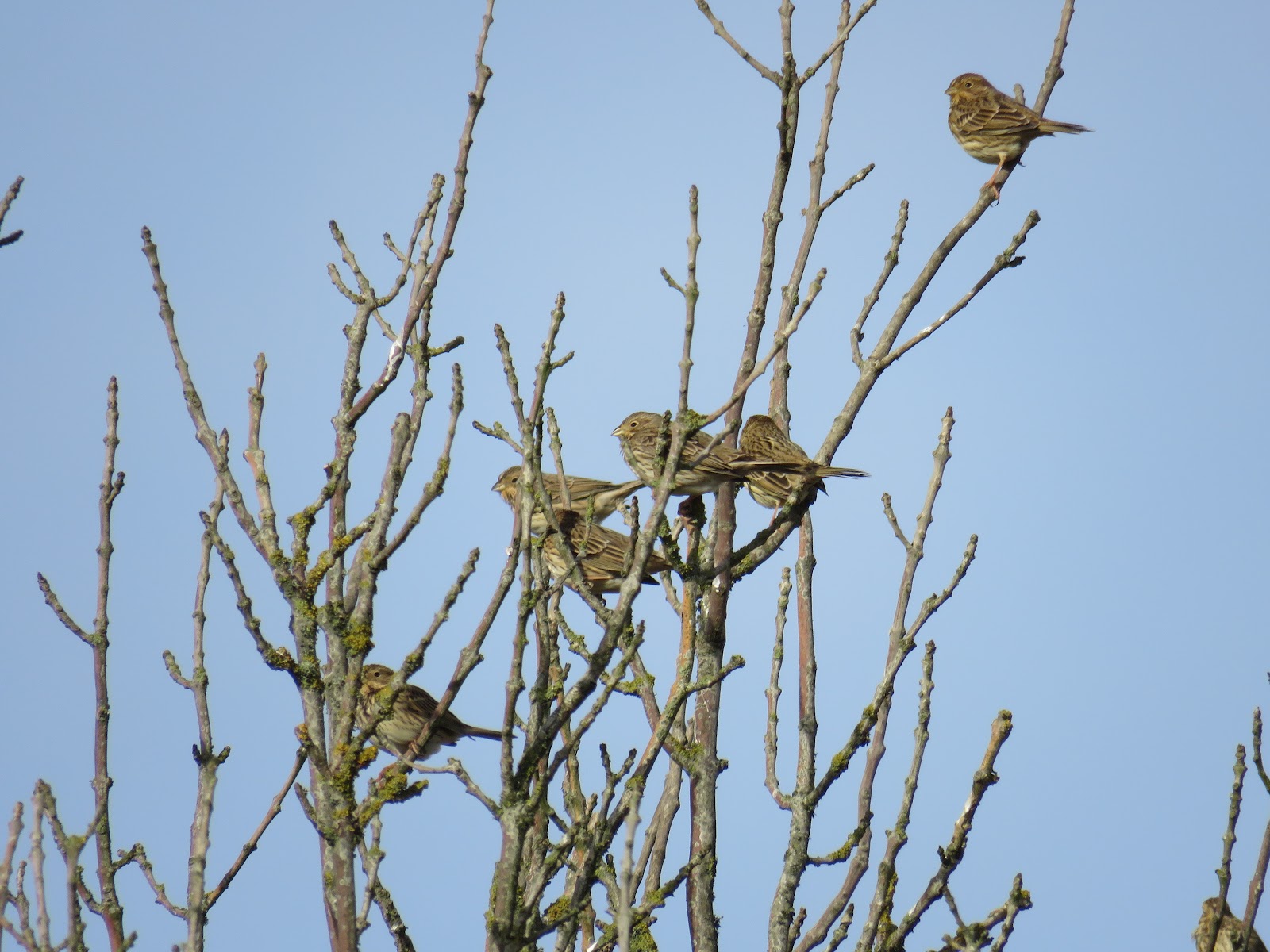
Corn Buntings on the South Downs
Image
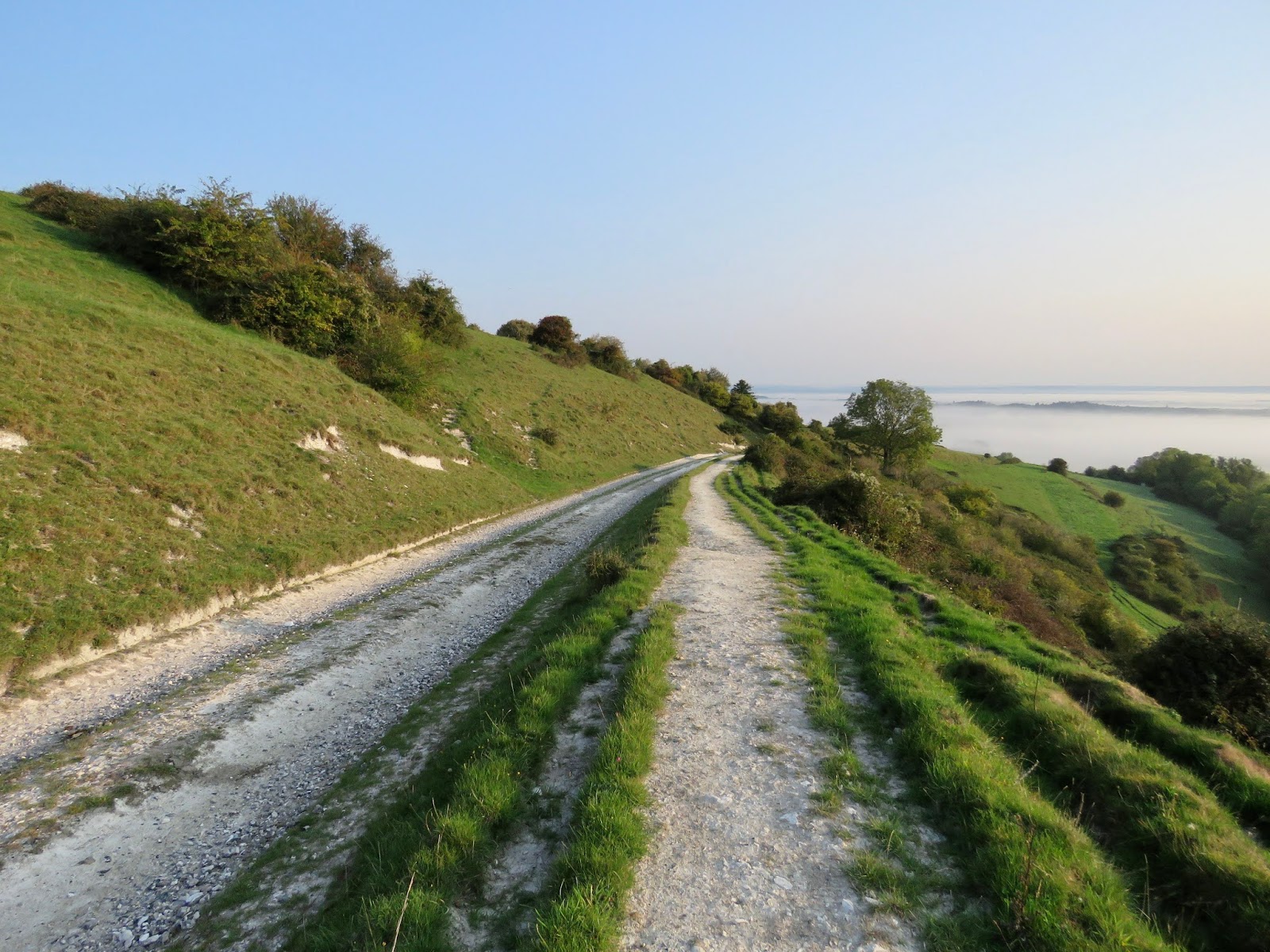
The West Sussex South Downs seem a wilder place than 'my' Surrey North Downs - more open than the wooded north, with steep slopes either side of the narrow ridge which suggests higher ground, and thus the views are spectacular, whichever way you look. It is also full of birds. I'd intended to park at the the top of Kithurst Hill, but a road closure sent me on my way to Amberley. After parking the car and making my way up the hill, a Marsh Harrier appeared above my head, heading off towards the Wild Brooks - a good start to the day. The footpath took me up to Amberley Mount, where I followed the South Downs Way eastwards. The open grassy fields here were full of Common Gulls, in their hundreds, feeding on the turf along with Starlings. Any scan southwards would find more gulls, mostly drifting east, often dropping down or wheeling above the hidden valleys that are cut into the undulating farmland, the land resembling the swell of a vast grassy ocean. The path also undulated,...
Cornwall in November

Image
Two weeks on the north Cornish coast in November? To me, that suggested plenty of wind, chilly temperatures, rain, wet clothing and plenty of reading indoors to escape the weather. Our ‘postponed’ family holiday could not have been any different - apart from the odd flurry of drizzle it was dry; the temperature was never anything other than remarkably mild (I even found myself dressed in a t-shirt whilst sitting on an exposed headland one balmy morning); and the wind did not get up above force 4, many days remaining in the 1-2 region. Although not a birding holiday, the bins, scope and tripod came along, and every day saw me wander off to do a bit - on a few occasions more than just a bit. 80 species were recorded in our 12 days, not bad for the time of year and all seen within walking distance from our base. I went everywhere on foot, exploring the coastal headlands, valleys, set-aside fields and winding lanes that characterise the Porth area, a small town east of Newquay. We were sta...

Garlic buntings

Image
A chilly north-easterly wind, clear blue skies and a harsh sunlight all added up to provide an underwhelming morning's birding. Again, perversely, I chose to bird 'the road less travelled' which equated to a few hours of seeing very little, although this is what is to be expected when the places I visit are not all that 'birdy'. If I'm staying local it just seems a more adventurous option than to visit the crowded footpaths at Beddington or Holmethorpe. There are plenty of eyes already watching these north-Surrey hotspots - all I would do is add to that mass (although I plan to visit them both soon enough). This morning's highlight was botanical, as down by the banks of the River Mole, close to Mickleham, one of spring's highlights was unfurling - the mass flowering of Ramsons (above). These bright white flowers zing out against the oh-so green leaves, the whole experience joined with the unmistakable smell of garlic. This show will look even better in a...

South Downs and beyond

Image
The eastern flank of Sullington Hill - full of warblers Compared to the North Downs, the South Downs generally has steep slopes on both flanks (with a narrow summit) and largely lack woodland at their tops. This creates a dramatic, open and wild landscape. This morning I walked from Washington to Amberley (West Sussex) and back. This section runs roughly parallel with the English Channel, that can be clearly seen some six-and-a-half miles to the south. First light was surprisingly muggy. Chiffchaffs were already calling and were joined by Skylarks, Yellowhammers and the rhythmic chugging of Red-legged Partridges. A largely uneventful walk to Sullington Hill was livened up by the scrub on the eastern flank being full of birds, mostly Blackcaps and Chiffchaffs. The latter was going to be a feature of the day, birds observed moving eastwards at vegetation height along the South Downs Way, using the thin strip of hedgerow as a fly-line. At least 60 were recorded. At Chantry Post it...

A bridge far enough

Image
Once upon a time, in a birding world far, far away, if you wanted to take meaningful photographs of birds, then you needed to invest heavily in photographic equipment - camera bodies, various lenses, tripods, film, developing and printing - you needed to start with a small fortune and forgo pure birding and focus almost entirely on photography. In fact, you were either a bird watcher or a bird photographer . In my birding youth there were but a handful of well-known bird photographers, largely shooting in black-and-white, with JB and S Bottomley and Eric Hosking springing most readily to mind. More affordable equipment, increased leisure time and a swelling in the interest in rarities encouraged a blossoming of 'birders with cameras' at the end of the 1970s and the turn of the 1980s. You still needed to fork out a few bob, but many did so. It became a staple part of a twitch to see these photographers selling their prints of recent rarities, and some of them made a tidy sum ...

Kernow round-up

Image
A last dip into my recent stay in Cornwall, via the medium of photography... Beautiful Demoiselle - the name says it all Little Egret - the Ganel Estuary played host to several Ravens were present in good numbers along the clifftops between Porth and Mawgan Porth Corn Buntings were breeding in the fields at Whipsiderry There is something of the 'art installation' about this group of Wild Carrot plants

Cliff-top Carrot

Image
Breakfast was taken to the accompaniment of c2,400 Manx Shearwaters heading SSW, with, a few hours later, a juvenile Yellow-legged Gull through. The afternoon was spent on the cliff-tops between Porth and Bre-Pen, with the highlights being breeding Corn Buntings, more Corn Marigold in set-aside, both Wall Brown and Dark Green Fritillary, plus a dribble of Swifts and Swallows south, all set in spectacular scenery. I couldn’t resist taking the photo of this group of Wild Carrot, all flowering at different times and in subtle variations of colour.

Aug - Dec: photographic highlights

Image
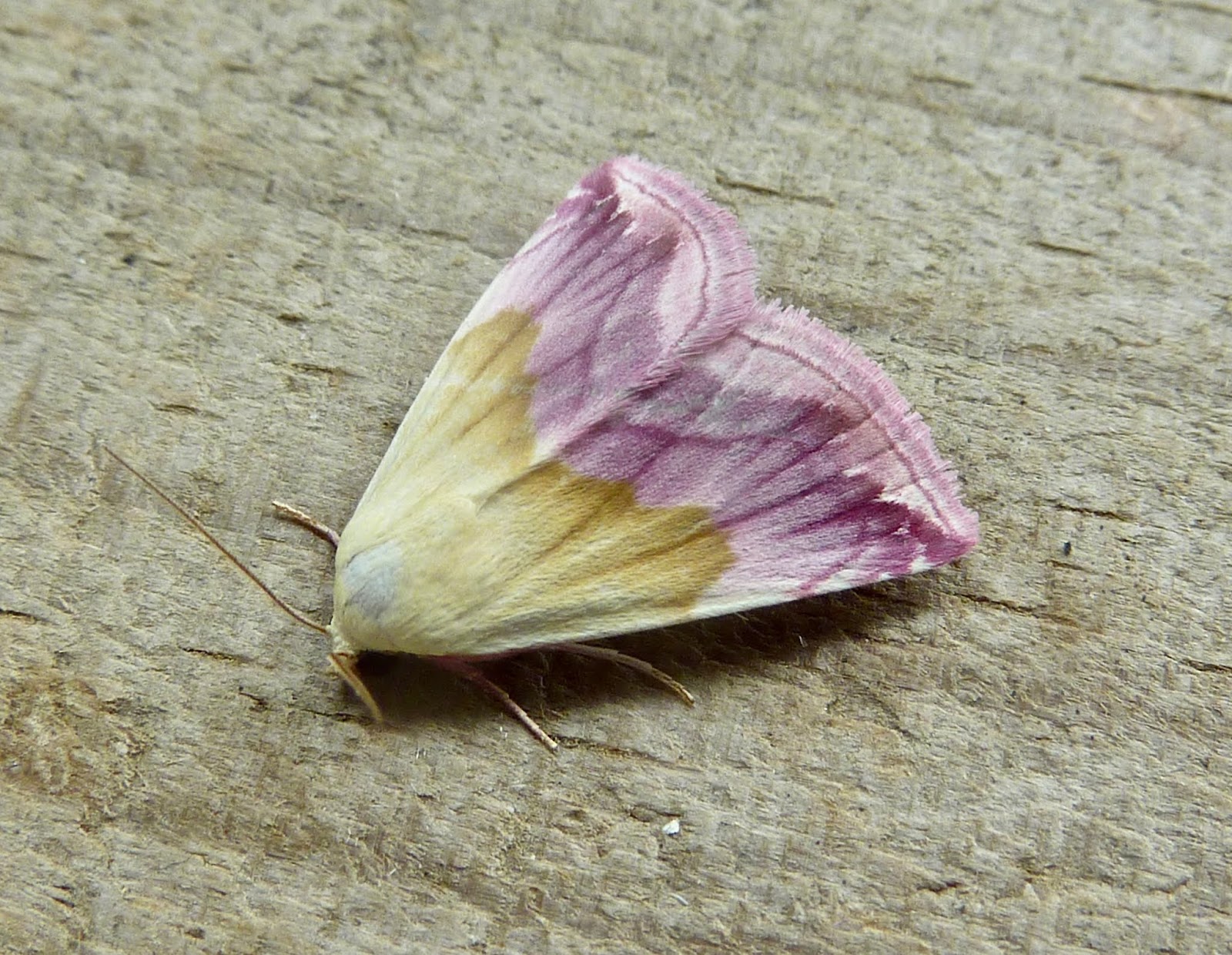
To end up this lazy blogger's review of the year I thought a few of the more arresting photographs would suffice. They are all taken with a bridge camera, so if you want to see 'big boy's' stuff, go and visit Jono (Wanstead Birder) or Martin (Ploddingbirder). You will find them both under the 'Worthy Blogs' panel to the right. AUGUST: Dungeness This Beautiful Marbled has been on my wish list ever since I first became aware of it back in 2004. Although still very rare, the number of moths being recorded seems to be on the increase. It didn't disappoint. SEPTEMBER: Scotney, Kent Only just Kent, as this Slender Hare's-ear was found growing by the roadside just a few metres from the county boundary sign. A more modest plant would be hard to find, but has bucket loads of charm when you really look. AUGUST: Dungeness This American Black Tern decided to make the RSPB Burrowe's Pit home for over a week. The dusky flanks, dusky underwing and sm...

Corn Buntings at Whipsiderry

Image
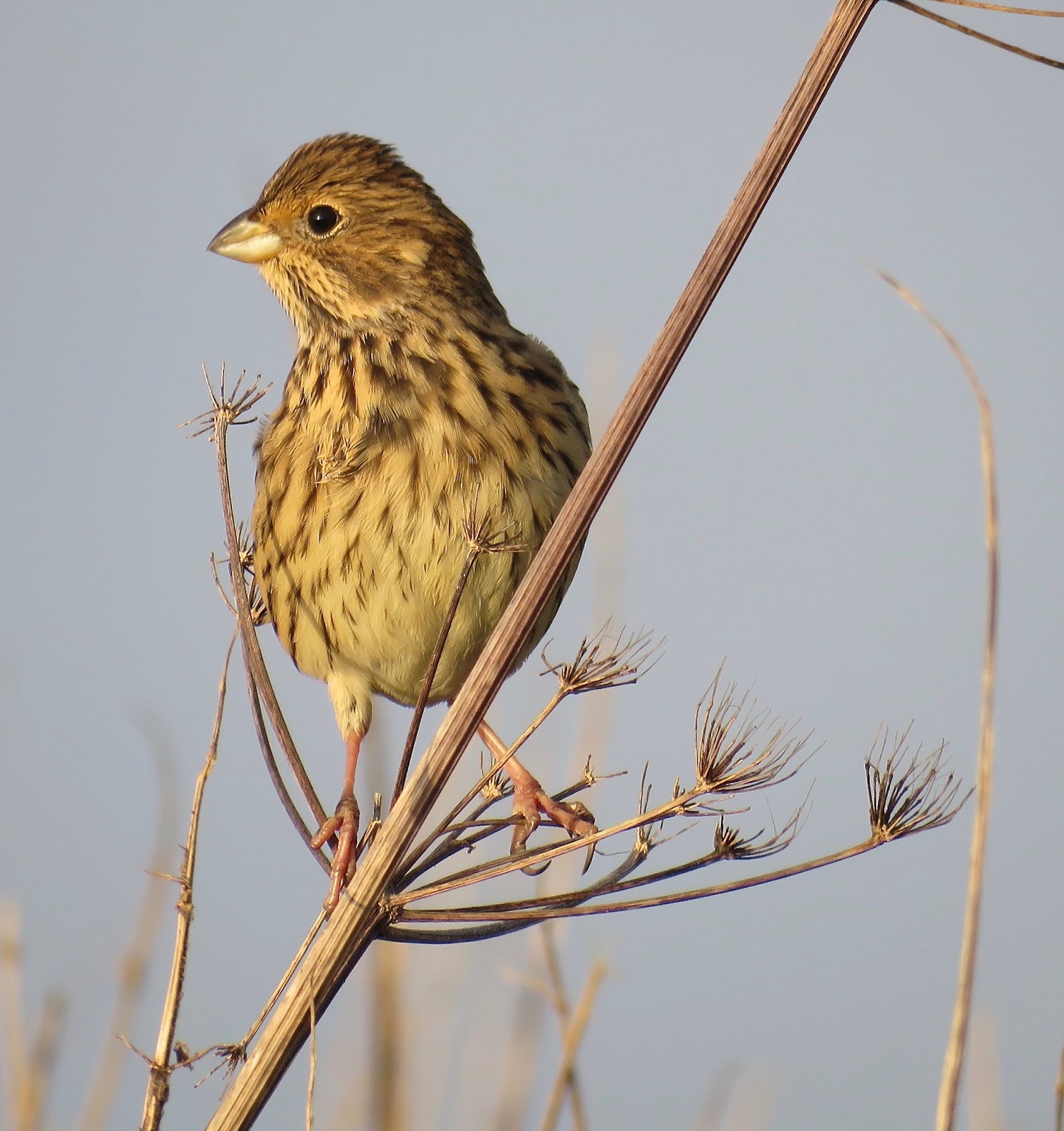
I was very pleased with managing to capture these images of Corn Buntings in the set-aside fields at Whipsiderry near Porth, Cornwall. No enlargement needed, just a bit of sideways crop.

Set aside success

Along the cliff top, just above Whipsiderry Beach, is a stretch of 'set aside' fields some 800m in length. Signs alert you to this being 'Bunting habitat' and in particular that of the Corn Bunting. Like elsewhere in the south, this species has become a lot more uncommon, so it was good to see such measures having been undertaken to safeguard its future. The fields held plenty of birds, with Linnets, Goldfinches, Skylarks, Meadow and Rock Pipits utilising the long grass and wildflower seed (I did see some Corn Marigold still in bloom). And Corn Bunting? Yes, five of these chunky passerines, one in song and an obliging individual that allowed me to obtain some quite good (for me) pictures. I will post them soon.

The birds in Spring 2017

Image
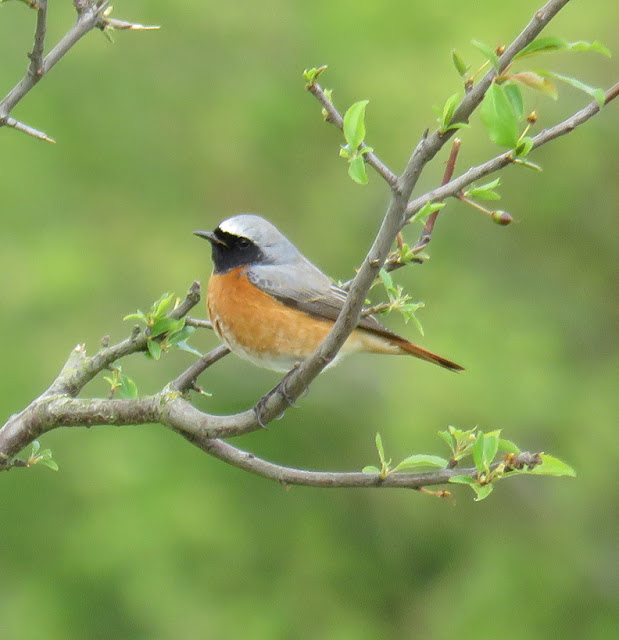
Common Redstart, Priest Hill, April Well I did put a lot of effort in locally, honest! For a change and to 'bird off piste' I adopted an area of abandoned playing fields between Banstead and Ewell known as Priest Hill. It has recently been handed over to the Surrey Wildlife Trust to manage, although there is not an awful lot that can be done bird-wise, save fence off areas from the hordes of dog-walkers and their canine friends in an attempt to protect the handful of Skylarks that breed there. Almost daily visits throughout the spring did produce a few passage migrants, most notably Jack Snipe, Common Snipe, Ring Ouzel, Grasshopper Warbler, several Common Redstarts, plenty of Wheatears and a very healthy population of Common Whitethroats were in song throughout mid-April and into the summer, with the odd Lesser Whitethroat for good measure. I neglected Canons Farm, but did manage to bump into a Ring Ouzel on May Day. Northern Wheatear, Priest Hill, May Common Wh...