Posts

Showing posts with the label Moths

Taking stock

Image
The vegetation in the region of Banstead (Surrey) can best be summed up by using the following adjectives - crisped, wilted, stressed, exhausted; and the same exercise for flowers throws up spent, sparse, finished and missing. The 'fifth' heatwave across our country has done in a lot of the greenery (have you seen the colour of grass recently?) and dried out the rest to a point where a stray spark can ignite a major event. This seems to be the first year in which many people have finally climbed down off of the 'climate fence' and have started to take the whole subject more seriously. Many will climb back up on to it if we get through the remainder of the summer without further drama, especially if we have a wet autumn. Worrying times. The hot weather has been responsible for a large number of migrant insects to appear in the UK in numbers that were previously the stuff of fantasy. A few sites have clocked up 500-1,000+ Small Mottled Willows in a single night and - reme...

Inland migrant moths

Image
For the inland moth trapper the chance of recording a scarce migrant moth is much higher than an inland birder recording a scarce migrant bird. I like to think of Vestals, Bordered Straws and Delicates as the lepidopteran equivalent of Yellow-browed Warblers, Red-backed Shrikes and Wrynecks - maybe not quite equals but I'm sure you get my drift. The latest heatwave has managed to send some more migrant moths to my modest inland garden in Surrey, with the first record of Ni Moth (pictured) plus two Small Mottled Willows - and on the back of two Striped Hawk-moths so far this year (plus a good few months of possible action to come) 2026 is turning out to be a decent year for continental wanderers. I have been recording the moths here in Banstead since 1987 and thought it a worthwhile exercise to tot up all of the migrant species that have come my way. I left out the much commoner species, such as noctuella, ferrugalis, and Silver Y, plus a few others that may have been pure migrants ...

Moth people

Image
With so little to blog about as far as birds are concerned, and with my botanical hat seemingly put away for the rest of the year, it falls upon the lepidoptera to once more provide the subject matter for this latest post. Last time up it was all about my early mothing memories, but what I neglected to mention was the part that people played in nurturing and encouraging my interest. This will put that right. First up is Sean Clancy. As my last post mentioned, it was his actinic trap set up in the moat at Dungeness that was the spark that set alight my early interest in moths. Sean was a little younger than me, and was somebody that I had first met birdwatching at Beddington SF (when he was just 13 years old) in the company of a school-teacher of his, one Barry Banson (of more later). Sean's regular appearances at Dungeness often coincided with mine, and we soon became good friends, taking birding trips together. I knew of his interest in moths, and although I had had my own moments...

In the beginning (moths)

Image
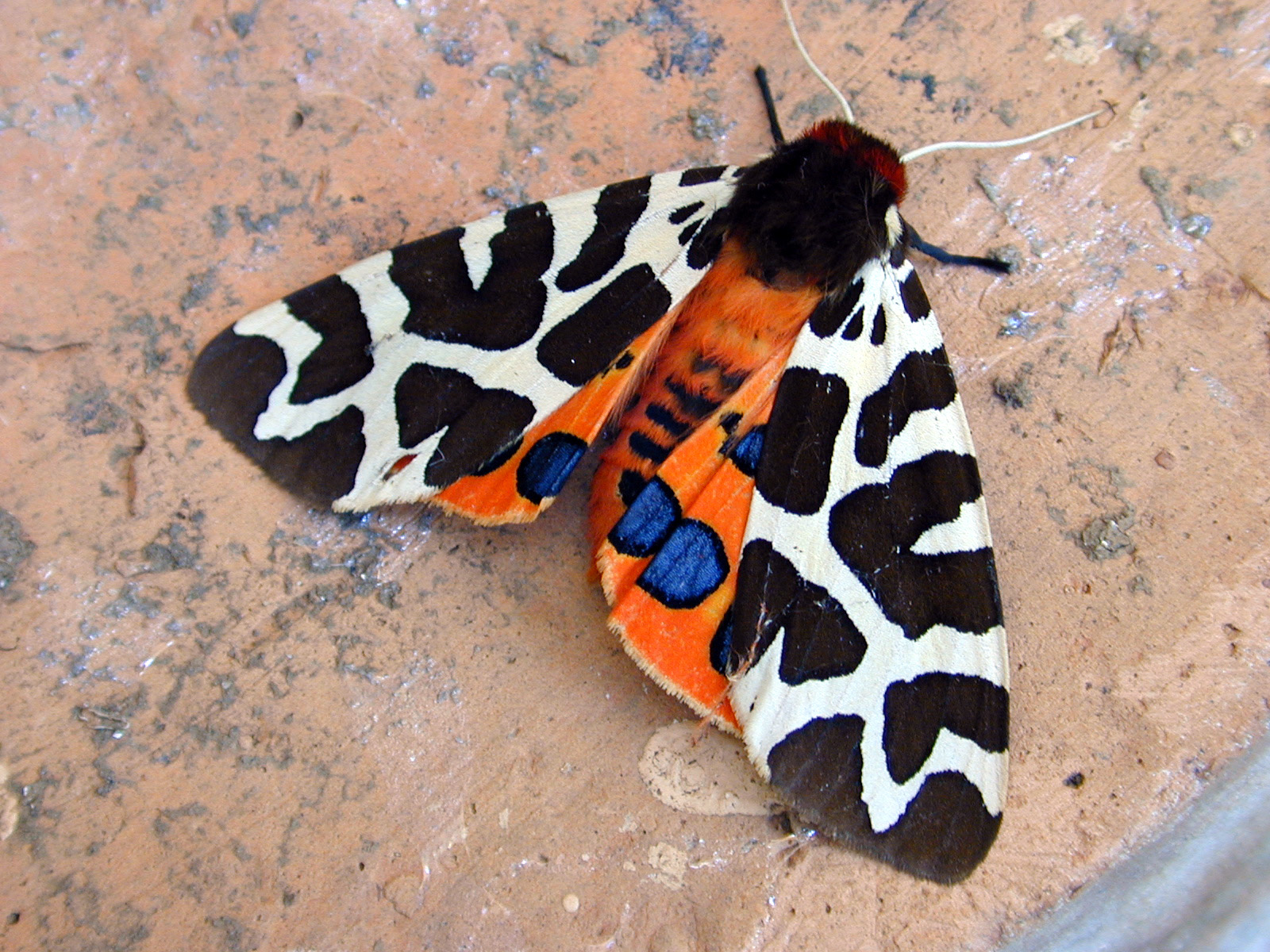
The first moth that I have any recollection of appeared as if a short, stubby, pink cigar, hanging onto a pile of freshly laundered clothing that was spilling over the top of a washing basket. At first I wasn't sure what this 'thing' was - a medley of pink bubblegum and mossy green - was it really a living thing and not some toy misplaced by a younger sibling? But on closer examination it was real enough. It moved. And it had wings. Even then, without any known education or experience, I somehow knew that this was no butterfly but a moth. It was the summer of 1973 and I had no real interest in natural history, but that was about to change... As if priming me for what was about to unfold, a second moth came to me that summer. A big thing, all chocolate brown discs on a white background, with splurges of orange. Two moths and two absolute belters. I needed to know more. And so, like so many schoolchildren before me, I sought enlightenment via one of the ubiquitous Observer Bo...

The rise and now the fall

Image
The last post - looking at the successful colonising moth species to my Banstead garden - generated a comment from Dorset birder (and avid moth convert) Gavin Haig as to whether or not I would be up to creating a post that looked at those species that are declining here in my corner of Surrey. Good idea Gav! What follows is all a little bit cobbled together, using some hard data with a large dollop of gut instinct. As background, we moved into our current home in 1987, set in a suburban area nestled between Banstead and Epsom Downs. The garden is about 100ft in length and well established (which goes for most of those close by). I have recorded the moths here since day one: an actinic from August 1987 until December 1989; then an MV from January 1990 onwards. Effort has been largely constant, although there were a couple of lapses that lasted just a few months. I used to count (and identify) each and every individual macro moth, but stopped doing that in 1993 due to time constraints. W...

Our ever-changing moths

Image
This morning saw the capture of a Clancy's Rustic (above) at the MV - the first to be recorded here in Banstead and my 652nd species (of which 413 are macros) for the garden. This species was unknown in the UK until my friend Sean Clancy caught and identified one in New Romney, Kent in 2002. As much as it is a moth that has only been reliably recorded in the country for 21 years, it is no longer a rare migrant but has now become a colonising resident. It's appearance in Banstead was not unexpected, in fact was overdue, having colonised southern coastal counties and is now making inroads into Surrey and the London area. Our moth fauna is in a state of flux - of course, no group of creatures stays still, but the range of many moths have exhibited great changes in recent years, particularly migrants colonising the south-east of England. Others, pure residents, have suddenly increased in numbers so that they now appear in areas that they shunned not that long ago. I thought it migh...

From the deep, dark forest

Image
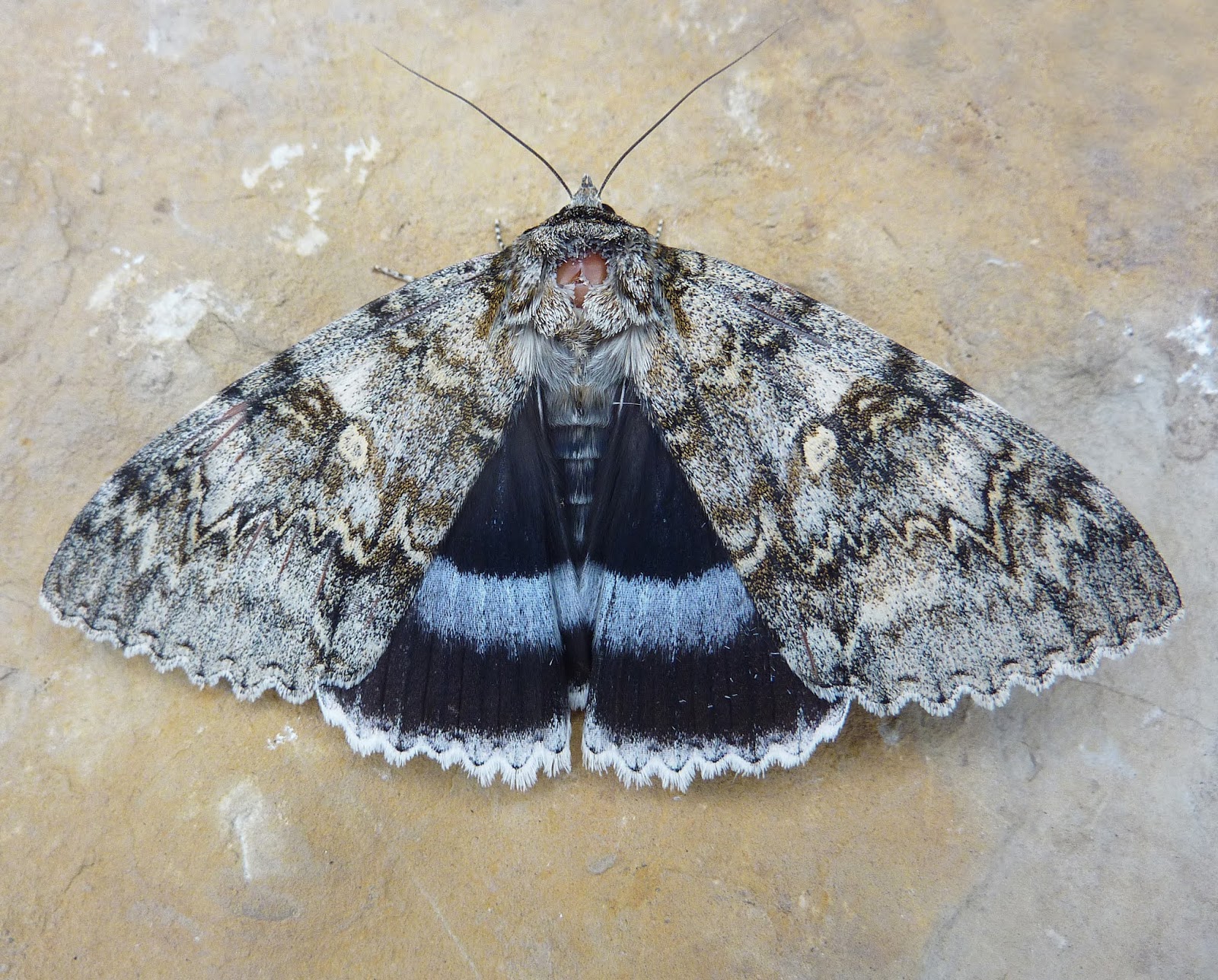
When I first started to take an interest in moths over 40 years ago, there were certain species that appeared to me wrapped in myth and awe - I would stare at the colour plates in my two volumes of 'South' and wonder if I would ever be fortunate enough to see them - the pairing of Dark Crimson and Light Crimson Underwings were amongst them. Both of these species were large beasts, whose hidden underwings displayed shocks of red. Part of their allure rested in the fact that they were rare residents, the only chance of discovery being if you visited the New Forest after dark, and even then only if you were privy to local knowledge. They seemed to come more readily to tree trunks that had been 'sugared', a dark art that involved the lepidopterist painting a strip of liquid concocted with all sorts of wondrous provisions - black treacle, beer, brown sugar - with such recipes being closely guarded secrets. I had visions of being lead blindfold down a forest clearing at midni...

Red-necked Footman

Image
Most people who run a moth trap in their garden will have a list of species that they believe will 'one day' come and visit them. After 36 years of switching on the MV here in Banstead quite a few of these have come to pass. Last night another species joined them. Red-necked Footman is quite a striking creature - slim winged, coal black, save for a reddish-orange collar and abdomen. It has undergone a range expansion in the UK in recent years and is considered, at times, also an immigrant. With a recent influx of moths from the continent this could be a part of that immigration. This is the 648th species of moth recorded in the garden, with 411 of those being macros. The hot weather is due to continue for a few days yet. With quite a few migrant moths wandering southern England at the moment there will still be a chance to pull out a prize in this lepidopteran lucky dip.

First moths origins

Image
Since 1987 I have recorded 409 species of macro moth in the garden. I thought it would be interesting to see what new species I have recorded over the past 15 years and a breakdown of their possible origins. 2006   Striped Hawk-moth (01/09), Pinion-streaked Snout (22/09), Pine Carpet (14/10), Blair's Mocha (28/10) 2008   Buff Footman (01/06) 2009 Dingy Footman (02/06) 2010 Toadflax Brocade (23/05), Orange Footman (04/06), Hoary Footman (25/07) 2011 Rannoch Looper (03/06), Tree-lichen Beauty (02/08) 2012 Jersey Tiger (17/08), Gypsy Moth (18/08) 2013 Royal Mantle (16/07), White-point (04/09) 2014 Grass Rivulet (07/06), Dark Spectacle (03/09) 2015 Cypress Carpet (26/06) 2017 Yellow-legged Clearwing (13/06), Orange-tailed Clearwing (18/06), Scarlet Tiger (19/06), Scallop Shell (08/07), Clifton Nonpareil (23/08), Delicate (25/09) 2018 Great Oak Beauty (09/06), Kent Black Arches (06/07), The Mocha (07/07), Oak Processionary (19/07), Gold Spot (06/08) 201...

Moth targets

Image
At the end of each December, I look back on my 'moth year' and take stock of what happened. Was it a good year for migrants? How did my efforts at identifying micros go? And, what are my targets for the following year? The first two questions can be answered quite succinctly: "so-so" and "not too bad". I can expand on the third. As for the garden MV, there are still a few gettable macro species that have yet to appear here, such as Poplar Kitten, White Satin Moth, Red-necked Footman, Sprawler, Dusky-lemon Sallow, Pale-lemon Sallow (pictured left), Oak Rustic and Hedge Rustic, although the latter is on a downward spiral and is becoming harder to rely on each year. All those mentioned are moths that I've seen elsewhere, but there are others that could appear in the garden and would be totally new for me, such as Juniper Carpet, Maple Prominent, Four-spotted Footman, Dark Crimson Underwing, Black-spotted Chestnut  and Double-line. Some of those are pushing ...

Another world revealed

The first time that I knowingly took an interest in moths was during the evening of Saturday August 2nd 1975. I can be that precise as the day had been spent at Lords Cricket Ground, as a spectator watching 'our' boys take on the Aussies in the Ashes test. That Australian team were full of greats - Ian and Greg Chappell, Rod Marsh, Dennis Lillee and Geoff Thomson to name but five. On that particular day though the plaudits went to England batsman John Edrich, who completed a century. But I digress. That evening I attended a family wedding reception in Tring, Hertfordshire. I had only been birding for a matter of months, and my interests in other aspects of natural history were in their infancy to say the least. But as darkness fell, something happened at the bare windows of the village hall that caught my attention. The black panes of glass were alive with fluttering forms attempting to get inside with us. They were moths.  Moving over to the window it was clear that these moth...

Satellite of hope

Image
A mild spell of weather during the 'dark' months of November, December and January will alert most keen students of moths to switch on the MV/actinic trap. Apart from the small selection of species that are still on the wing during the winter there is the chance of picking up a few migrants, especially if the mild weather is due to the airflow coming up from North Africa and Iberia - and that is the case right now. There have been migrants coming to the Banstead MV over the past couple of nights, but so far have been confined to just the expected - a few Silver Y and Udea   ferrugalis . However, hope is high, as there are plenty of high value moths being recorded along the south coast and in SE England. Last night's haul here was fair, with a cast of late-autumn regulars that included this Satellite. The trap is on once more. My walk out to inspect it in the morning will be one filled with more hope than usual.

Wonder of the day

Image
The Merveille du Jour is a striking species of moth, as the photograph of the individual above, that came this morning to the Banstead MV, attests. The direct translation of its French common name is 'wonder of the day' - most apt. The first one that I laid eyes on was at Spurn Bird Observatory in October 1985, when birding legend John Cudworth walked into the common room with one perched on the end of a finger. A 'wow' moment if ever there was one, as he was crowded by a mob of appreciative birders. For some it would have been the first time that they had ever taken notice of a moth. Here in Banstead they are not quite annual, so when one comes along they are rightly treated with reverence. As we get to the back end of the autumn the number of moths, both individuals and species, drops off. But the lepidopterist cannot pack up the MV yet! It is a good time to jam in on a migrant or two, especially if a plume of warm air comes up from the south of Europe. There are also...

Heathland wanderer

Image
A pulse of hot air over the south of England often results in an unexpected visitor to the garden MV, usually a resident species that has wandered from specialist habitat. In the past these have normally been chalk downland - or wetland - specialists. This morning saw a wanderer from heathland, the aptly named Heath Rustic. The closest sites that host this species are a good 20 miles from Banstead, being the west Surrey heaths. Needless to say, a first for the garden.

The one that almost got away

Image
These warm, oppressive nights might make sleeping difficult for us humans, but night-flying insects positively thrive in them - just check a moth trap the morning after one! The past two nights have seen obscene numbers of Jersey Tigers at the garden MV - 53, followed by 59 - which is small fry compared to some totals that have been posted. Last night's highlight was a new macro moth for the garden, a Dewick's Plusia. A former rare migrant, it is now slowly establishing itself (maybe just temporarily) in south-east England. Beddington Farmlands, some six miles to the north of me, is one such location and I had expected one to show up here eventually. This is the 627th species of moth here in Banstead, of which 407 are non-micros. As I went to pot it, it flew off. Had this been 30 years ago I would have been hyperventilating as it would have been a very rare migrant. As it was, a shrug of the shoulders accompanied my smile. The photograph above, in true Blue Peter style, wa...

Anticipation

Image
The day is hot and the weather forecasters are suggesting that we are in for a very sticky night - in fact, until the middle of next week, they are forecasting that we are in for night time temperatures not dipping below 17-18C, combined with light breezes and a smidgin of cloud. Ideal moth weather! Add into the mix that this pulse of warm air has come in from the continent and that there are plenty of migrant moths being trapped (some being screaming rarities), then there is much for this inland moth recorder to be getting excited about. I'm not being greedy. Just a small slice of the action would be good. Hot weather spikes have been kind to me over the years, with wanderers turning up in the MV that should not be here - Scarlet Tiger, Royal Mantle and Gold Spot spring to mind, along with a fair scattering of 'commoner' scarce migrants. I've enjoyed the challenge of trying to identify all of the micros this summer, some straightforward, others with the help of ...

A returning micro

Image
I was chuffed to find this is the garden MV this morning, Lyonetia prunifoliella, which has an interesting history in the UK. Here's what the excellent UK Moths website says about it: "Formerly locally resident in parts of southern and central England, this moth seemed to have died out as a British species, and had not been reliably encountered since around 1900. The first recent record appears to be in 2007, since when it has been encountered with increasing frequency in a number of counties including Dorset, Norfolk and on the Isle of Wight, Hampshire." My photograph is not up to scratch, being taken under dark skies and a slight drizzle, and this moth is tiny. Still, it gets across the delicate markings that clinched the identification.

Moist ginger cake

Image
I first realised that my eyesight was becoming in need of 'a little help' when assisting Barry Banson in checking his Greatstone moth trap. My moving of the egg-boxes back and forwards for my eyes to better focus had him imploring me to give in and buy a pair of reading glasses. That was in 2012 and I was 53 years old. The purchase swiftly followed. For a number of years it was just the reading of small print and the observation of micro-moths that needed a pair of spectacles to be utilised, but over the past 12 months my close vision has been getting steadily worse. Unless the printed word is of a fairly robust size I will struggle with it. And as for micro-moths... It has come to the point where I can see the micro-moth, but make very little detail out on it, bar a general ground colour or obvious mark. The modus operandi is to pot them without any attempt at identification and put them aside. Obviously there are familiar, or large micros that will not be potted, so o...

Two steps forward, one step back

Image
There I was yesterday, in a quietly modest way, considering that I'd had quite a good day with the micro-moths. I'd tweeted a few out, composed yesterday's blog post and all was well. This morning my identification frailties have been exposed. In a very polite message, Bill Dykes (who really knows his stuff) pointed out that my tristrigella was, in fact, an ohridella, and that the Gypsoma that I'd called a dealbana was an aceriana. These have now been rectified. However, I was able to get one positive confirmation from Bill as I had sent him a picture of a moth that I suspected was Recurvaria nanella. Thankfully he agreed. It can be frustrating this moth business. Macros are normally - but not always! - forgiving, whereas micros are just a multitude of tiny scales that vary considerably even within a species. They call for a cool head, an analytical mind and patience. I've just placed an order for all three! In the meantime, here is a smart micro that I am prett...

600 in the garden

Image
The garden MV has not been all that productive so far this summer, although last night did provide some interesting micros, a few of them featured below. Last night also saw the passing of 600 species of moth for the back garden - it sounds a lot, but I did start recording here in 1987. As always, if you think I've made a schoolboy error on any of the identifications, please let me know. Catoptria pinella Dichomeris marginella Gypsoma aceriana Parachronistis albiceps