Posts

Showing posts with the label Holmethorpe

Balm for the soul

Image
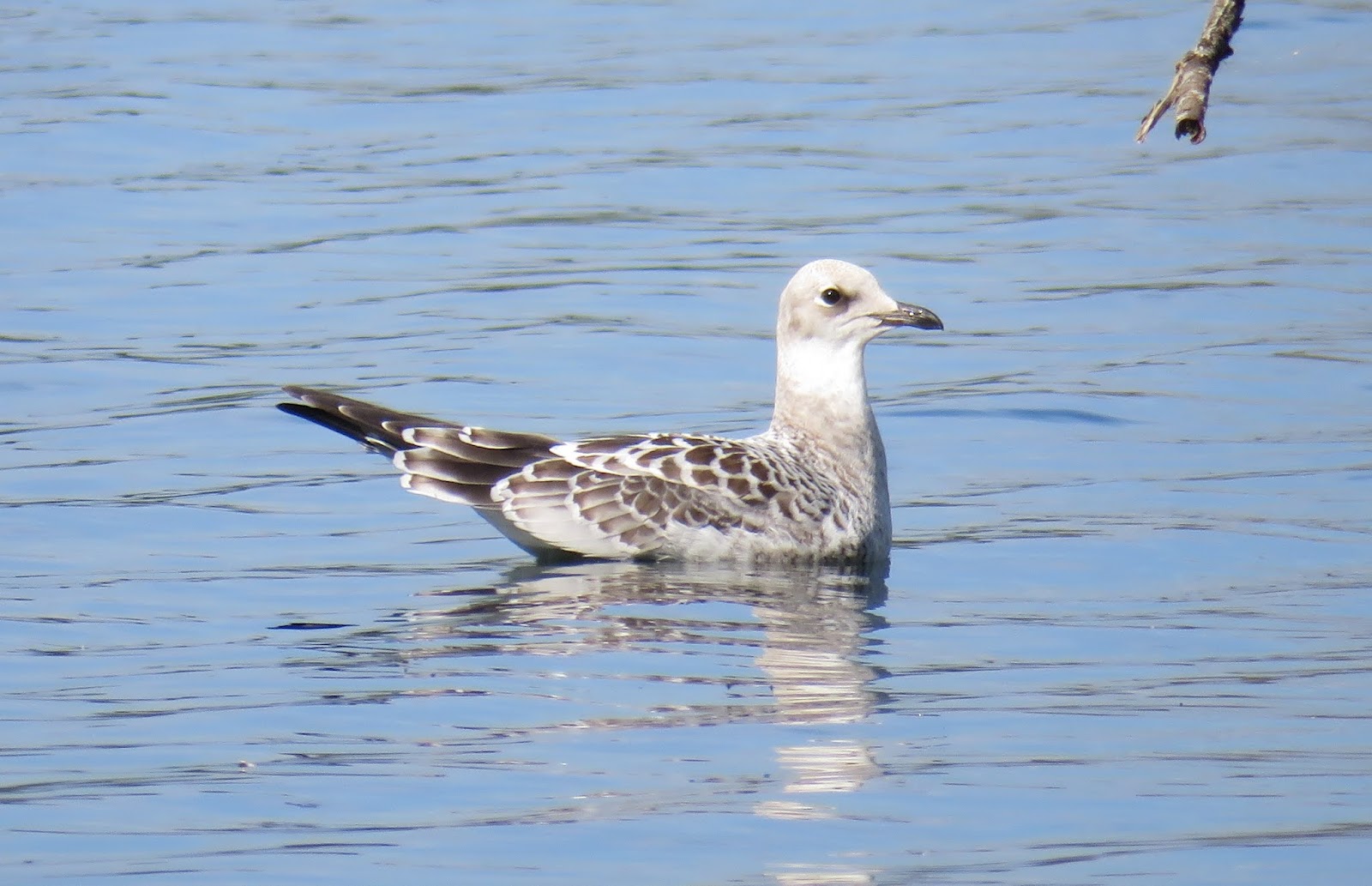
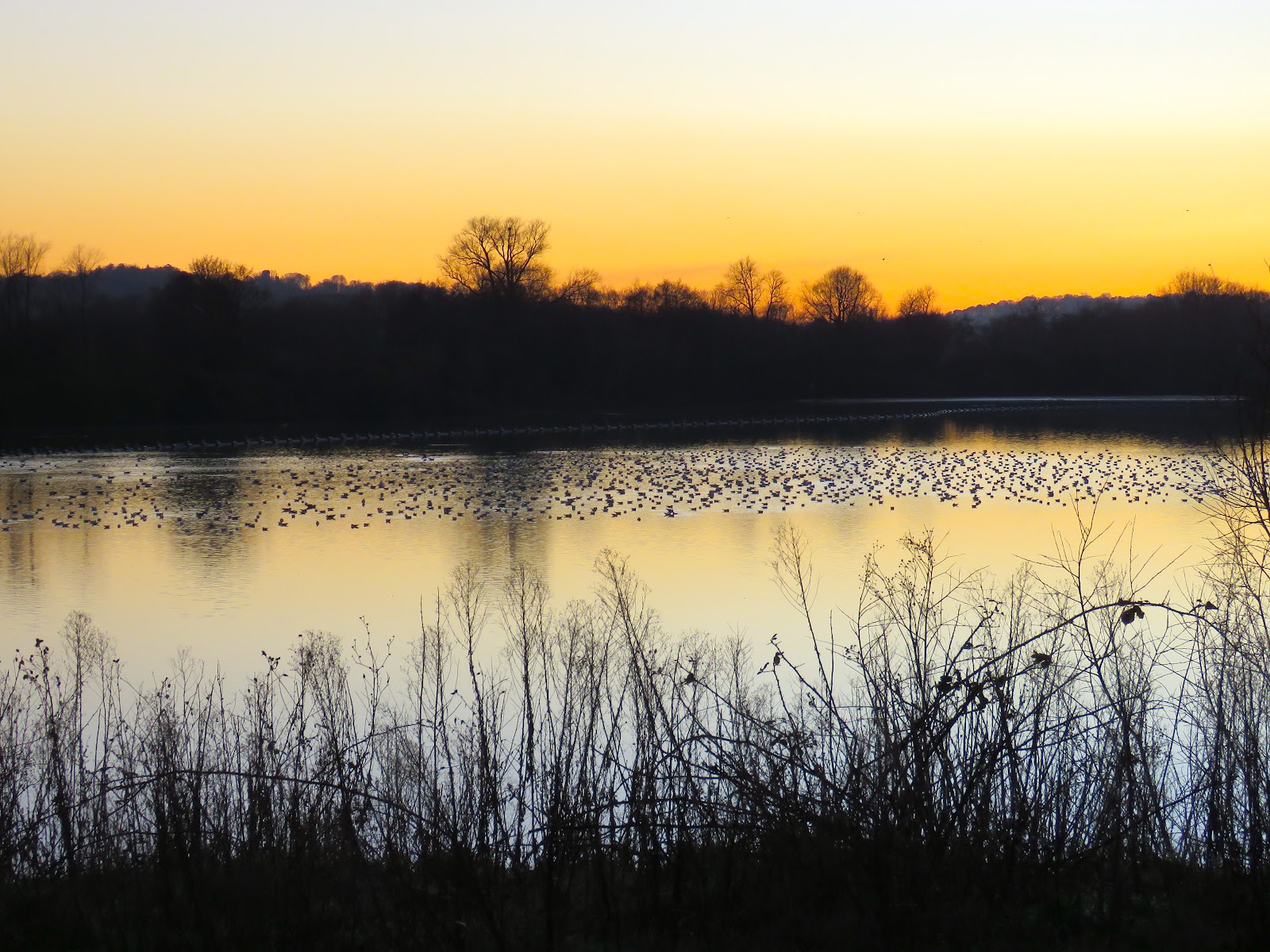
That period of the day between sunset and darkness is a bewitching one, particularly when the air is still and cold. A tobacco-stained sky and a faint whiff of vegetation in the nostrils almost painted the day in the colours of Spring, no doubt enhanced by the contrast between this brightest of days and the overriding gloom of most of the past few months. Gordon and I were scoping the roosting gulls at Holmethorpe, try as we might we could not locate any of the first-winter Caspian Gulls that have paid this site a visit recently. We made do with the 101-flavours of Herring Gull (no two the same in the 500 present) and over 1,000 Black-headed Gulls that were settling on the inky waters to spend the night. A cacophony of roosting Jackdaws and Ring-necked Parakeets was our accompanying soundtrack, but even these raucous birds started to quieten down as we trudged back to our cars in the darkness, the grass already frosting up in anticipation of another cold night. As we approached Mercer...

After the rain

Image
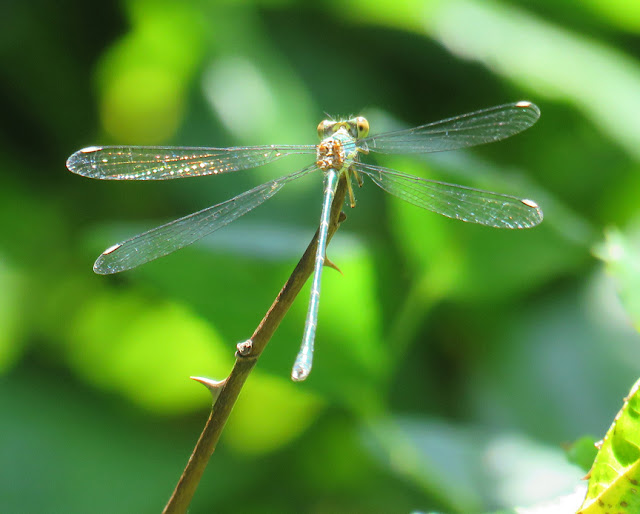
At last a bit of dry and sunny weather! I hot-footed it off to Colley Hill where the butterflies were on show, with 350 Meadow Browns, 175 Chalkhill Blues and 10 Silver-spotted Skippers the highlights from the steep chalk slopes. A couple of Hobbys spent a bit of time sparring with the local Kestrels. The afternoon was spent at Holmethorpe SP, with the vegetation between the M23 and Spynes Mere busy with Small Red-eyed Damselflies (at least 60) and two Willow Emerald Damselflies (both species pictured below.) A pristine Brown Hairstreak was in the same area, but didn’t settle to have its picture taken.

Huffing, puffing, ranting

Image
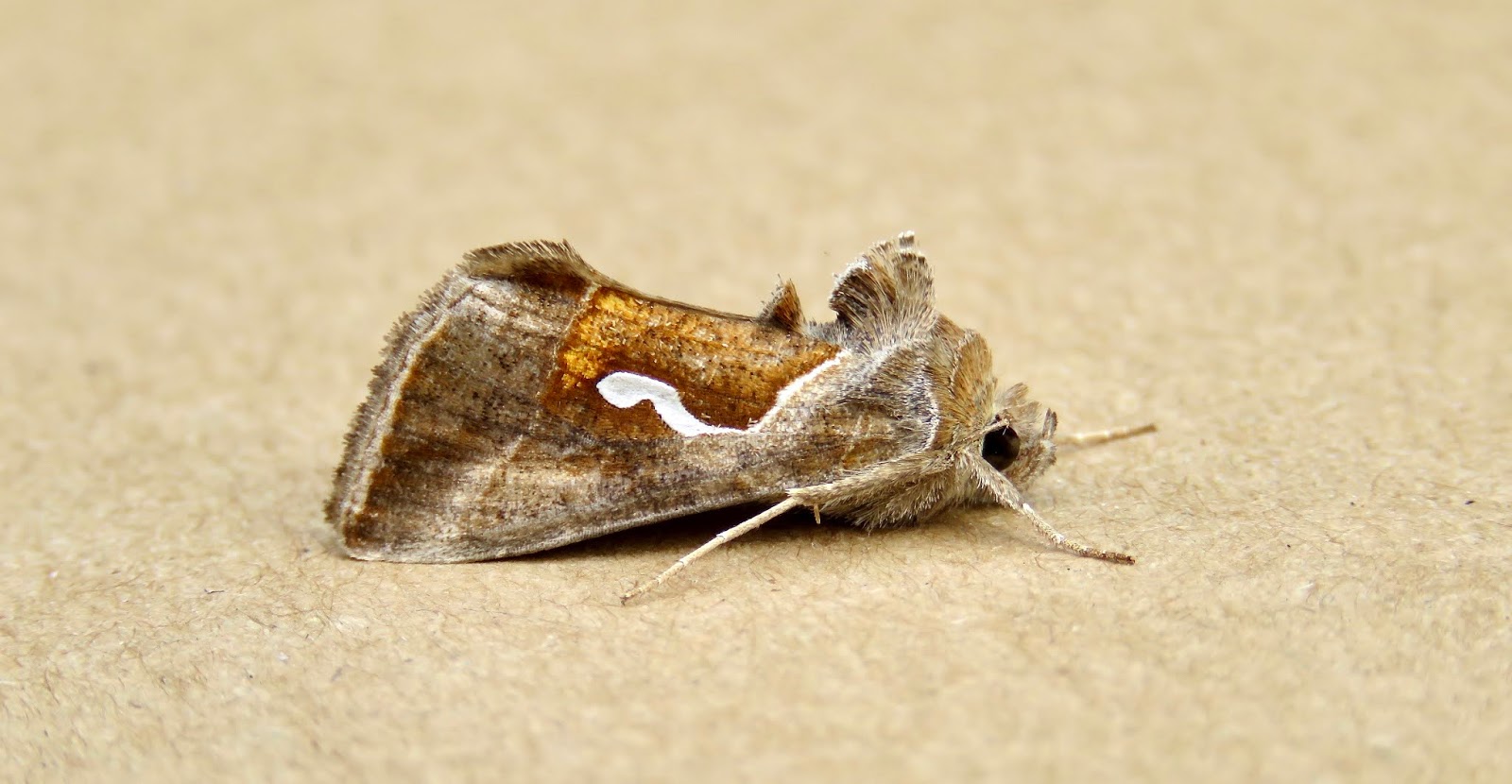
I have been engaged in a lot of huffing and puffing around the local patches for little birding reward - however, the inverts have saved recent days, with a male Lesser Emperor at Spynes Mere (Holmethorpe) yesterday afternoon, and a smart Dewick's Plusia (above) in the garden MV this morning. This is the third Banstead record in 12 months, leading me to suspect that it is now established in the area. I haven't had a rant on here for a while, as the solidity of my inner calm defences has been strong enough to deflect all of the negative bullets and arrows that have been fired my way, but yesterday's visit to Holmethorpe tipped me over the edge. For those of you that have not visited this group of sand pits before, let me give you a bit of background. The area has been plundered for sand and Fuller's Earth for many years. There are two substantial waterbodies, Mercer's Lake and Mercer's West. The former used to be viewable from a footpath that runs around its circ...

Holmethorpe Med

Image
After several days of uncomfortably hot temperatures, it was back to just having to endure a moderately 'hot' day, with the added bonus of a moderate easterly breeze. Yesterday afternoon, Gordon Hay took on the role as a 'Mad dog' or an 'Englishman' by going out to Holmethorpe in the midday sun, and finding a Lesser Emperor, a species of Odonata that we both thought long overdue at the sand pits. This morning, I tried to emulate him. On arrival there was not an awful lot yet on the wing, so I walked along the northern side of Mercer's Lake and kept one eye on the water's edge for any dragonfly action. A few were flying as I reached the north-eastern corner, so edged down to be closer - Black-tailed Skimmers and Emperor Dragonflies, with a few Common Blue Damselflies for company. A fallen tree, partially submerged and only 25m from where I stood, was acting as a perch for a number of Black-headed Gulls. I idly scanned them, realising that in the water alo...

Not through want of trying

Image
Today saw a 12-hour birding session at one of my former regular patches - Holmethorpe Sand Pits. It was a day orchestrated by a chill north-easterly breeze, dirty grey cloud and frequent light rain showers. It ended with me feeling damp, achy and underwhelmed. I was joined in this most worthy of ornithological quests by 'Mr. Holmethorpe' himself, Gordon Hay. We tried. Honestly, we tried... The area is characterised by several waterbodies, farmland, copse and a barren ridge that was once landfill. Our list of today's 'highlights' will not overly impress - 1 Little Egret, 2 Teal, 3 Gadwall, a Little Ringed Plover, a Lapwing, a Common Snipe, a Greenshank (above), a Common Sandpiper, 15 Swift, a Kingfisher, 150+ Sand Martin, 50+ Swallow, 25+ House Martin, 5 Yellow Wagtail, 2 Cetti's Warbler, a Sedge Warbler, 5 Reed Warbler, a Lesser Whitethroat, 8 Common Whitethroat, 30+ Blackcap, 4 Garden Warbler, 7 Chiffchaff, a Willow Warbler and 10+ Yellowhammer. Hardly a red-le...

24 year grip-back

Image
On January 1st 1997 I had spent a memorable morning at Holmethorpe Sand Pits in the company of Gordon Hay. We had found an Iceland Gull, at first light on Mercer's Lake; a Peregrine had blasted through above our heads (it was still a notable species then); recent cold weather had left a whole suite of wildfowl to pick through, that included Scaup, Pintail and Smew; unfrozen ditches had given up Water Rail, Jack Snipe and Woodcock - it was a splendid few hours of local birding. I had to return home for an afternoon family get-together, so left Gordon on his own shortly before mid-day. And just after mid-day he was treated to the sight of six Whooper Swans fly in, circle the lake, and fly out again. To say that I was disappointed to have missed them is not to be down-played. In fact, only yesterday I was thinking about them, and still managed to give out a huff.  News broke this morning that five Whooper Swans had been found yesterday (18th) on Earlswood Lakes, just outside of Redhil...

Mr Holmethorpe's significant birthday

Image
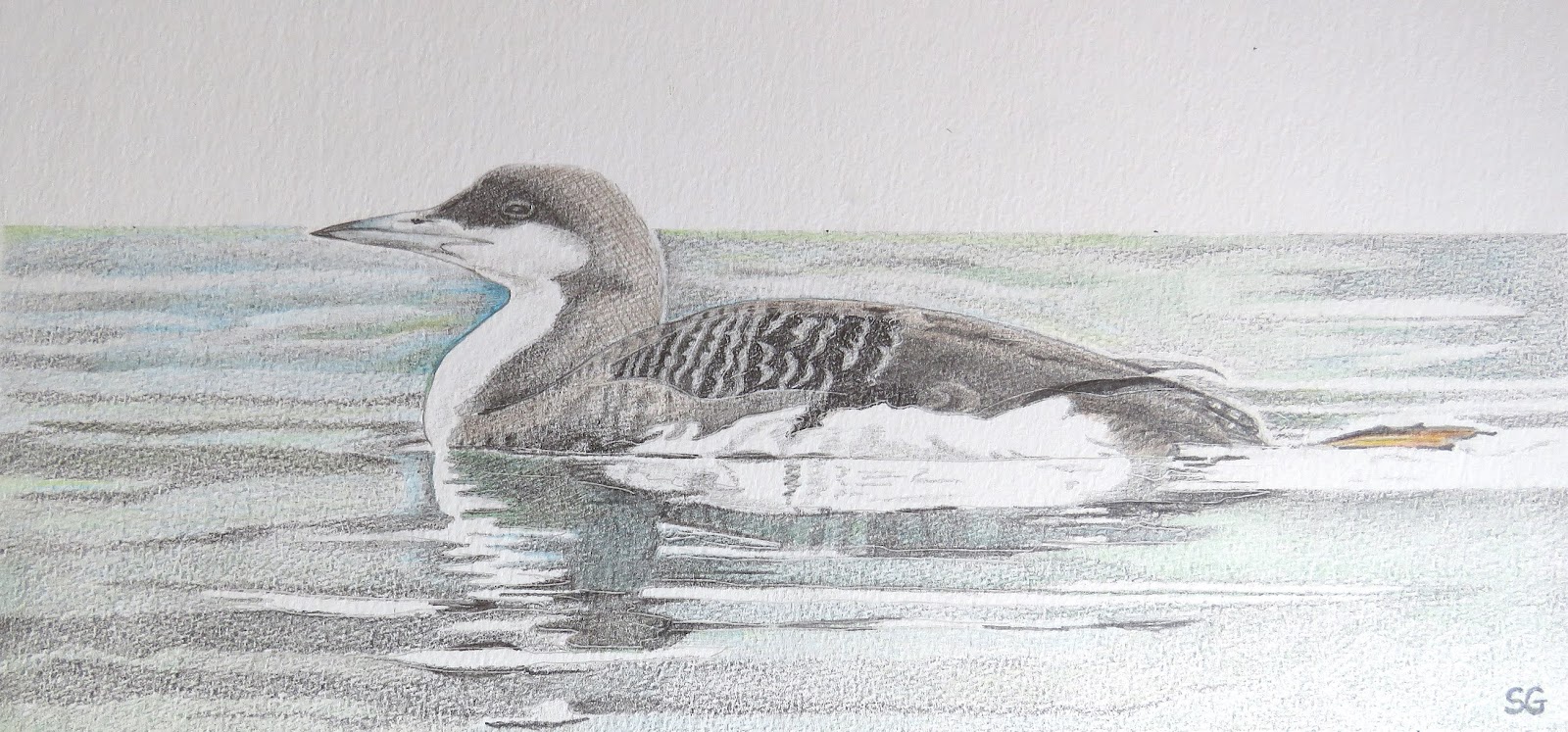
Our great friend Gordon Hay reaches a significant age tomorrow, so to mark that occasion the pencils came out and he was, this evening, presented with the artwork above. It is of the Holmethorpe Black-throated Diver that, back in February 2019, provided him with his 200th species of bird at those very same sand pits. Happy Birthday Gordon!

Treading water

Image
Sometimes, birding locally can get to you. Today is such a day. It is a given that my bit of dry, northern Surrey is not going to measure up against Spurn or Dungeness (or Beddington or Holmethorpe for that matter), but when every other London park and Surrey heath is recording multiples of Pied Flycatcher - and I'm not - it starts to get personal. The last five days has seen me visit Canons Farm, working all the copses, hedge-lines and weedy field corners. The last five days has seen low numbers of migrants. A few passing Chiffchaffs, a flock of four (and a one) Whinchat, a Stonechat, a single Willow Warbler, that's about it. I strongly suspect that all of the Whitethroats and Blackcaps are locally-bred loafers. My effort has been full on, my patience freely given. But each day I've left the farm with a sense of knowing that, even if I had stayed out in the field for an extra hour or two, nothing would have happened. Sometimes it goes like that. After a barren three...

Due a good day

Image
Dawn at Holmethorpe. Under a clear sky there was never going to be a bumper drop of migrants, but within an hour it was clear that Gordon and I were going to have to dig deep to unearth any highlights. Apart from a modest suite of warblers (Cetti's, Reed, Sedge, Blackcap, Whitethroat, Chiffchaff and Willow), a Common Sandpiper and a paltry handful of hirundines it was hard work. A two-hour mid-morning skywatch from Nutfield Ridge was characterised by rising temperatures, a southerly flow of gulls (500+ Herring and 30 Lesser Black-backed) and three pristine Yellow Wagtails. A stop off at Mogador on the way home was soporific on many counts, not least the lack of birds, although the two Swallows in the photograph above posed for a picture. We spend all Winter dreaming of Spring, and when it comes a lot of our birding time is taken up wondering where all the birds are and whether or not the odd surprise will be thrown in for good measure. I'm due a good day...

Backlit bulrushes

Image
Sometimes the birding can get stodgy - little is on show, you seem to be watching the same birds, inspiration is in short supply - and at times like these you grab at anything that excites. This morning found me squelching through the mud at Holmethorpe, a little bit jaded, when I came across the Bulrush bed at Spynes Mere. It was a delight on the eye, the backlit bulrush heads revealing cotton-wool edges to the cigar shaped tops. All that was missing was a feeding Penduline Tit...

Second helpings

Image
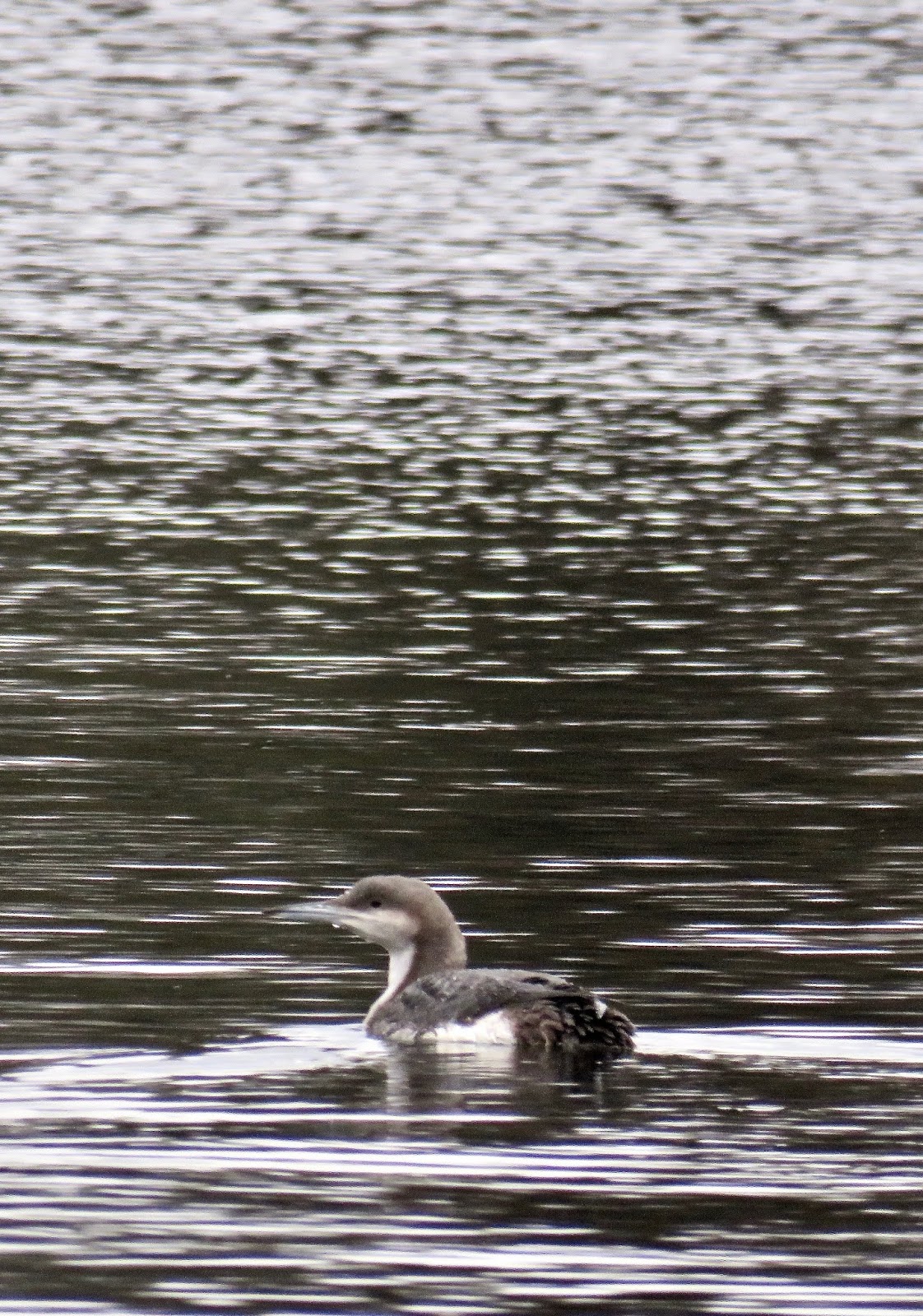
It would have been rude not to pay my further respects to the Holmethorpe Black-throated Diver, which is now in its third day of residence on Mercer's Lake. It stayed close to the south-western corner this afternoon and spent quite a bit of time quietly floating just off-shore. Other highlights included a Kingfisher, one Jack Snipe, 16 Common Snipe and the mixed gull roost that, although numbering c2000 gulls (almost half and half Herring and Black-headed) did not include the second-winter Glaucous. It was also great to catch up with long-time Holmethorpe stalwart Dennis Moore - long time no see!

Mr Holmethorpe

Image
Gordon Hay started birding at Holmethorpe Sand Pits back at the end of the 1980s. It was a different place to what it is today - the only appreciable waterbodies were to be found at Mercer's and Glebe Lakes, sand was still being commercially extracted (from where Spynes Mere and Mercer's West are today), and access across the Moors was unrestricted. It is fair to say that the site had just come off of the back of a 'golden period', when extensive workings had created a mosaic of pools which provided rich pickings for the small band of birders. Mercer's had then been subsequently flooded and the sand extraction reduced. Gordon found an area where the birding was on the wane. Although never the sole birder, for much of his 30+ years covering the site, he has been the only ever-present and the most frequent - and the most frequent by some way - in fact almost daily, and at times several times a day. He has had great successes, finding Hoopoe, Red-rumped Swallow, Y...

Shine

Image
The early birder certainly does catch the worm Glaucous Gull. The second-winter beast that has been feeding/loafing during the day at the Beddington Landfill Cafe has decided to take up overnight lodgings on Mercer's Lake at Holmethorpe. It was reported coming into roost yesterday afternoon so I knew that an early arrival should secure the bird - it was, after all, a species that I had not seen before at Holmethorpe. I arrived in darkness, but still set up the scope and scanned the blackness - there were gulls already flying overhead and much calling from the water - and even in what could at best be described as pre-light, the gulls were shining out as they bobbed about on the lake surface. One bird shone out far more than the others - the Glaucous Gull (pictured above). I'm sure you can all tell which bird it is... The gull roost was quite spectacular, with 2,500 Herring and 1,500 Black-headed making up 99% of the larids on show. The birds were leaving very quickly, w...

Benign birding

These mild undramatic winters might be good for our birds welfare (and the heating bills,) but they play havoc with the inland birder. No hard weather = very little to see, or at least that is the case in my part of Surrey. Few thrushes, fewer finches, empty hedgerows, abandoned fields, quiet woodland - you get the picture. Today I visited an old stomping ground of mine, Holmethorpe Sand Pits. The respectable-sized waterbodies were largely undisturbed by wildfowl, (with, needless to say, no bonus sawbills) and my quest to winkle out a Jack Snipe or Green Sandpiper proved futile. I returned home (via a similarly quiet Mogador) somewhat crestfallen. Until the iron grip of Winter falls across continental Europe then there will be no birds fleeing westwards into our welcoming arms.

More Willow Emerald Damselflies

Image
Earlier today, Katrina and I met our good friends Gordon and Mieko Hay for a pub lunch at the Inn on the Pond, Nutfield Marsh. This is just a stone's throw from Holmethorpe SPs, and - it just so happened - Gordon and I had taken our optics along for the outing... cue post lunch walk, which took in a loop around Spynes Mere. The still, muggy air was most conducive to a bit of odonata action, with the most numerous species present being the 15-20 Willow Emerald Damselflies. They were happy to perch for the camera, but as a subject were difficult to capture well with the bridge camera. The best of my effort is above. If you want to see good quality images, take a look at what Marc Heath produces here   -  just shows you what skill, patience and top notch equipment can result in, three elements in which I sadly lack.

Holmethorpe damselflies

Image
It may only be eight miles from home (and they may have been there for a few years), but I had yet to pay my respects to the Holmethorpe colony of Willow Emerald Damselfly, a recent colonist of our shores. Too laid back? Not keen enough? Whatever the reason, my visit this morning coincided with warm and sunny weather. It took a good couple of hours to find one, and after a quick look at the ridge dewpond (see below), an early afternoon return found a further four individuals. None of them were anything other than flighty, with most taking themselves up into the top of the mature vegetation that flanks the perimeter path of Spynes Mere (above). The dewpond (above) that I referred to is most probably too grand a term for this small water body, a depression on old landfill that holds seasonal water. It was alive with odonata this morning, including a minimum of 20+ Small Red-eyed Damselfly (below).

Two owls and a piece of cake

Image
A far more agreeable visit to Holmethorpe today, with my whinges of four days ago largely gone - the ground was drier, there were not nearly as many human beings getting in the way, I managed to find several extra viewpoints that opened up the larger water bodies to my scope and even the noise appeared to have lessened - results all round! The calm, dry and mainly sunny weather bathed everything in a positive light and it was then only up to the birds to play their part in the proceedings, which they largely did. Two Ravens that flew over the farmland and up onto Nutfield Ridge were a long overdue site tick for me, with other notable counts/sightings being: Little Egret (1), Wigeon (13), Gadwall (63), Teal (52), Shoveler (11), Tufted Duck (219), Common Buzzard (3), Coot (210), Snipe (6), Black-headed Gull (2000), Common Gull (100), Lesser Black-backed Gull (75), Herring Gull (2250), Great Black-backed Gull (5), Little Owl (1, above), Kingfisher (2), Grey Wagtail (1), Fieldfare (30...

Modest in the mud

Image
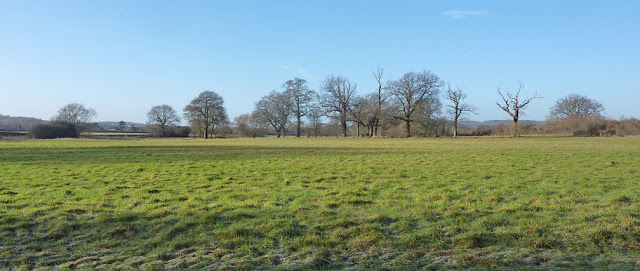
The ND&B birding year began a day late, with yesterday being a pleasing mix of family strolls and the fact that my resolution survived 24 hours without the need for alcohol or any 'naughty' food. I don't expect the willpower to last... The birding kicked-off with a trip to Holmethorpe Sand Pits, a site that I have visited with some intent in the past. It is the nearest 'proper' waterbody to my home, and over the years I have seen Black-throated and Great Northern Diver, Slavonian, Black-necked and Red-necked Grebe, Bewick's Swan, Ferruginous Duck, Common Scoter and Red-breasted Merganser there (plus plenty more that I cannot recall at the moment). It has sizeable water bodies, plenty of scrub, several small reed and bulrush beds, a stream, and is flanked by the North Downs and Nutfield Ridge. It also boasts farmland, which in places looks like this... ... large fields bordered in places by mature tree-lines and small copses. Twenty years ago the winte...

Return to Holmethorpe and a gull twitch

Image
It's been two years since I've lifted my bins at Holmethorpe Sand Pits. That's far too long - this is a very good place for a north Surrey birder to spend some time, and nobody has spent more time treading the sand than Gordon Hay, who has been finding stuff there for thirty years now. It was good to walk around the patch with him this morning. I have 'previous' at Holmethorpe. I have adopted it as my main local patch several times, particularly during the early to late 1990s and for a few years in the early 2000s. During these spells it delighted and infuriated me in equal measure, but after spending too much time plodding around the dry farms and heaths of Banstead, going back there is like returning to Minsmere! There is water!! There are wildfowl!!! Time has never stood still at Holmethorpe, and in the 25+ years that I have been visiting much has changed. Whole copses have been felled, abandoned farm buildings gentrified, fields mined for sand, large hole...

Waterworld

Image
"Don't forget your wellies" That could be 2014's catchphrase and never more appropriate than at Holmethorpe. I did my zig-zagging wander over the whole recording area, testing the waterproof quality of my Muckboots and playing 'chicken' with the flooded footpaths, using my tripod to test the depth of the water ahead of me. Oh, and I did some birding. It wasn't without a few highlights - Shelduck (2), Wigeon (1), Smew (2 redheads),  Jack Snipe (1, a fortuitous flush), Common Snipe (31), Green Sandpiper (2). The picture above is of The Moors, part of the Holmethorpe empire. Normally you might be hard pushed to see a puddle standing in this spot. There is a serious problem with water levels across this region. All of the sandpits are close to bursting point, and the rise of water in Mercer's Lake is staggering - we are talking 15 - 20 feet or more over the past few years. The recent rains are not the cause of this situation but are obviously addi...